
ALP MPs make it clear that the party platform is optional when it comes to government policy. Hamish McPherson calls for members to rebel to have their voices heard.
The Australian Labor Party has started formal consultations to draft a new National Platform – the document that is supposed to direct the actions of Labor in government.
The Platform will be debated and adopted at the 50th National Conference to be held in Adelaide over 23 to 25 July 2026. The National Conference is composed of more than 2000 delegates including equal numbers of delegates from affiliated unions and ALP branch member delegates.
Elections for ALP member delegates are being conducted by state branches using different methods. Victorian delegates are elected by a statewide postal ballot, while in NSW delegates are elected seat by seat.
National Policy Forum – opaque and clipped process
Overseeing the National Platform drafting process is the National Policy Forum, which is composed of the Prime Minister and National ALP President as co-chairs, an NPF secretary, drawn from federal caucus, two NPF deputy co-chairs, also both federal MPs plus 20 elected from the ALP membership, 20 delegates of affiliated trade unions and 20 more MPs from the federal caucus.
However, it is very difficult for members to even find out who has been elected or sits on the NPF. The ALP website lists the categories of its 65 delegates, but names are withheld. For such a central policy body within a mass membership party, this lack of transparency is extraordinary.
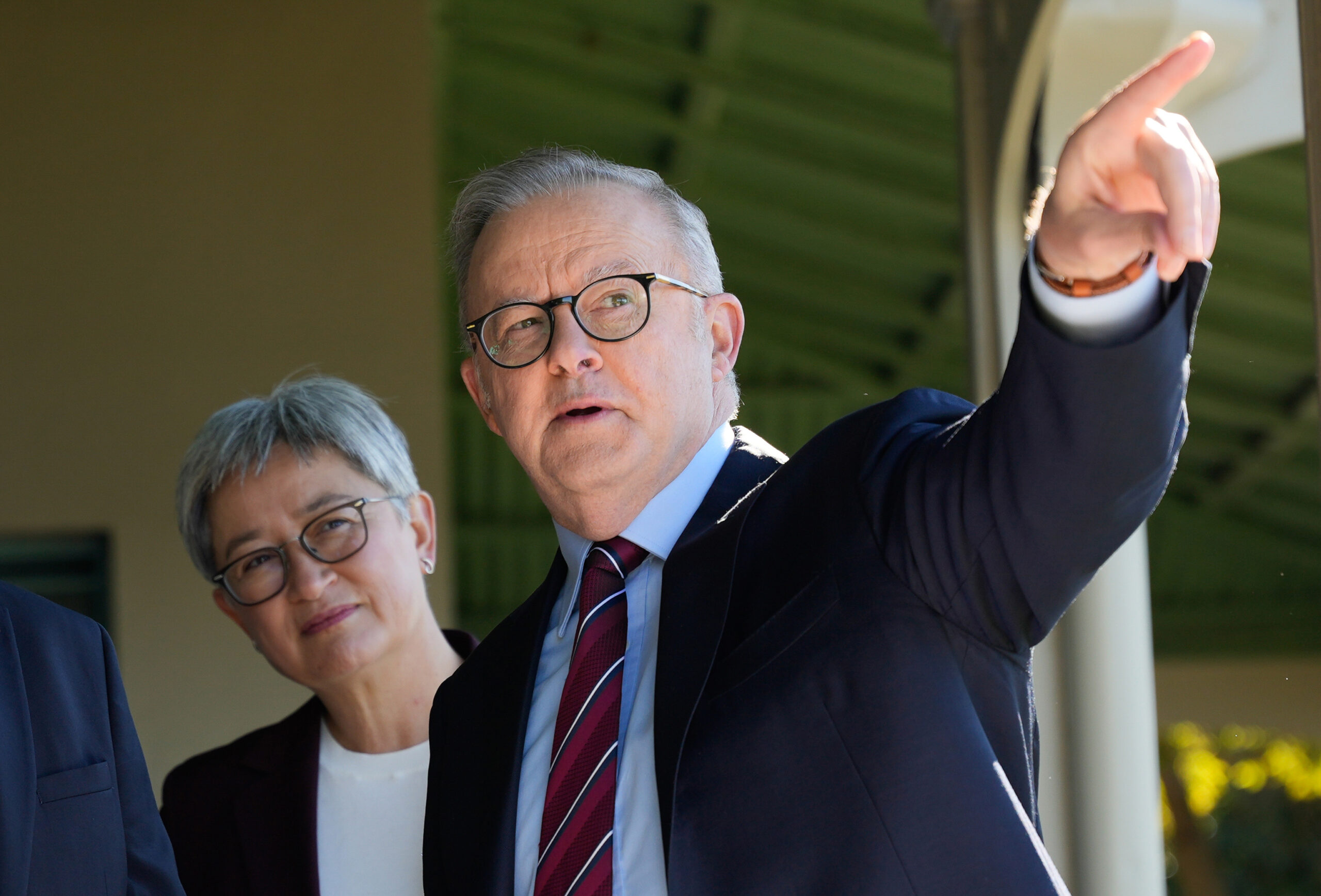
The NPF has held an initial consultation meeting, the opening of which was addressed by the Prime Minister, Anthony Albanese, who emphasised his political strategy – the need for incremental but not overly ambitious or bold reforms, in order for Labor to achieve long-term government.
This caution and self-limitation appears to shape the tone of discussions at NPF, with delegates under pressure to raise modest ‘achievable’ demands and avoid open political debate. There has been no report back to members of what was discussed at this event.
Backing this up are written instructions to delegates about what the National Platform should avoid: references to specific countries, specific spending initiatives, deadlines for policy implementation, commitments to hold reviews or inquiries or about the “machinery of government”.
These conventions are basically an arbitrary invention of party power-brokers designed to limit the democratic process and keep all power of action in the hands of MPs, not the party membership.
Pseudo consultation: membership spoken at, not with
A series of online members’ consultation forums with ministers has been rolled out, presented as opportunities for rank-and-file Labor members to shape the party’s core policy document.
But anyone attending these forums expecting real discussion, democratic debate, or meaningful influence over the party’s direction has discovered something else entirely.
The forums quickly reveal themselves to be tightly stage-managed affairs. Rather than spaces for discussion between members, they are more like passive audience question and answer sessions. Members sit and listen while ministers offer generalities, warm words and lengthy monologues. Questions are pre-submitted, vetted and often read out by facilitators in softened, depoliticised form. Many are classic Dorothy Dixers – safe, predictable, and designed to fill time.
At the first one last week, Foreign Minister (and acting Prime Minister) Senator Penny Wong spoke for the ‘Australia’s Place in a Changing World’ chapter session. About 220 people logged in. The forum chair stated that many questions had been lodged about both Palestine and AUKUS, but these did not take up much time of the meeting.
Labor Friends of Palestine had submitted three questions. Only two were read out. The third – calling for an investigation into potential war crimes committed by Australians fighting in Gaza with the Israeli Defence Forces – was overlooked, despite this being passed as policy by Queensland Labor the week before.
On Palestine, Minister Wong spoke in media bite generalities and avoided answering the substance of the questions about Australia’s obligations to act to prevent genocide or against unlawful occupation.
However, at the end of the pinched hour-long session, room was made for a question about which Asian country has the best food. The message was unmistakable: real political content is unwelcome.
Penny Wong on AUKUS: four minutes, one revelation
Foreign Minister Wong devoted just four minutes of the hour to AUKUS and Australia’s relationship with the United States – arguably the most consequential strategic decision Australia has made in decades.
But those four minutes were telling. Wong made explicit what ministers usually imply: AUKUS is not about defending Australia. It is about “deterrence”. Against whom it was not made explicit.
In her words: “Deterrence means that you want to put into the mind of any aggressor, of a particular aggressor, you want to put the question mark of whether the cost of the conflict is worth it.”
While not mentioned, there was no mystery about who the “particular aggressor” refers to. The strategic doctrine underpinning AUKUS is directed squarely at China – locking Australia further into the US military machine and great-power rivalry, in the interests of the USA, not in the interests of Australians or the many millions of working people in Asia.
On nuclear weapons, a familiar evasion
Asked about Australia signing the Treaty on the Prohibition of Nuclear Weapons (TPNW) – which is already ALP policy – Wong followed the now-standard line used by Defence Minister Richard Marles: transform any question about disarmament into a monologue about non-proliferation. She did not answer the question. She did not even gesture toward answering it.
This is made all the more appalling given that the departmental secretary of defence last week accepted that AUKUS arrangements means that US submarines carrying nuclear weapons could dock at Australian ports.
Rhetoric around a Pacific ‘family’ v transactional reality
Wong also repeated the government’s oft-used phrase that Australia’s approach to the Pacific is based on “family.” She insisted the relationship is not transactional. Yet moments later she described a highly transactional model: Australia “sits down with each of our partners” to ask what they need and what Australia can deliver – all within the context of competition with other “partners of choice”.
Again, no prizes for guessing who that might be.
A platform without power, safe for the ruling class
Across these forums, one theme echoes: the weak authority of National Conference itself. Marles has repeatedly said – and Wong has echoed – that conference sets guidelines, while Labor in government implements policy.
Speaking to ABC Four Corners last month, Marles said “Conference understands that this [whether or when to sign the Treaty on the Prohibition of Nuclear Weapons] is a decision of government, of Labor in government. And the decision that Labor has made in government has been to follow the non-proliferation treaty.”
It amounts to a public declaration that even the modest, blunt pressure that can emerge through Labor’s own structures has no binding force on the government. As long as this doctrine stands, the National Platform becomes an aspirational pamphlet at best, not a binding democratic mandate.
The entire process – limited NPF debates, staged consultation forums, ministers refusing to answer questions, disclaimers about conference’s power – acts as a political buffer. It protects the government from the organised pressure that could arise from the party’s working-class membership and from affiliated unions. It ensures government policy remains “safe” for the ruling class.
Transformation needed
For Labor activists committed to genuine democratic socialism, the lesson is not to withdraw but to fight for a transformed Labor Party – a mass, democratic united front of the working class.
That means a Labor Party where:
- Members and unions, not ministers or factional mandarins, determine policy
- Trade unions elect their Labor delegations democratically
- MPs are accountable to the movement
- National Conference is the supreme decision-making body, not a staged rally
- Open political debate replaces back-room deals
- Elected representatives take an average worker’s wage and serve at the pleasure of those who chose them
This requires a cultural and organisational transformation of the Party from top to bottom – against careerism, against parliamentary cretinism, and the pro-capitalist, pro-imperialist right wing. The consultations for the 2026 Platform reveal how far the party still is from this vision – and how urgent the fight is to remake the ALP into a democratic instrument of working-class politics.
Over coming months activists and socialists in the Labor Party will be nominating and campaigning for election as delegates to the National Conference. This is an opportunity to argue for and support an alternative vision for the party – democratic, driven by members and unions and assertive in fighting for the clear interests of working class people and the great majority in society.
The ALP National Conference will be on 23-25 July in Adelaide.
It will decide the National Platform of the ALP. Rank-and-file members and unions must mobilise to ensure the platform is transformed – to oppose AUKUS, to fight for socialism and withdraw from the US alliance