
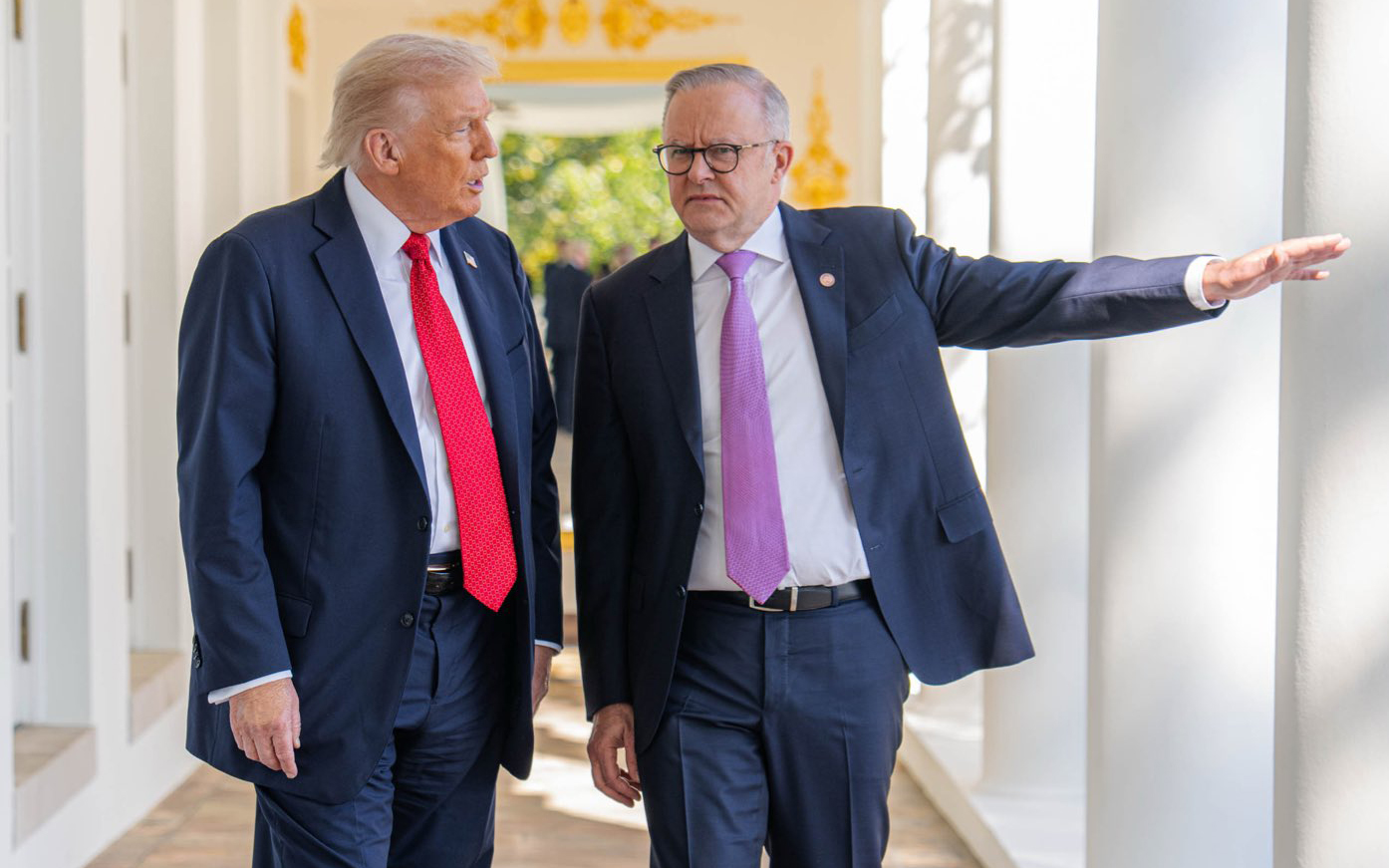
After the ‘rupture’ in international affairs described by Canadian PM Mark Carney’s truth bombs at Davos, Hamish McPherson calls for a working-class foreign policy.
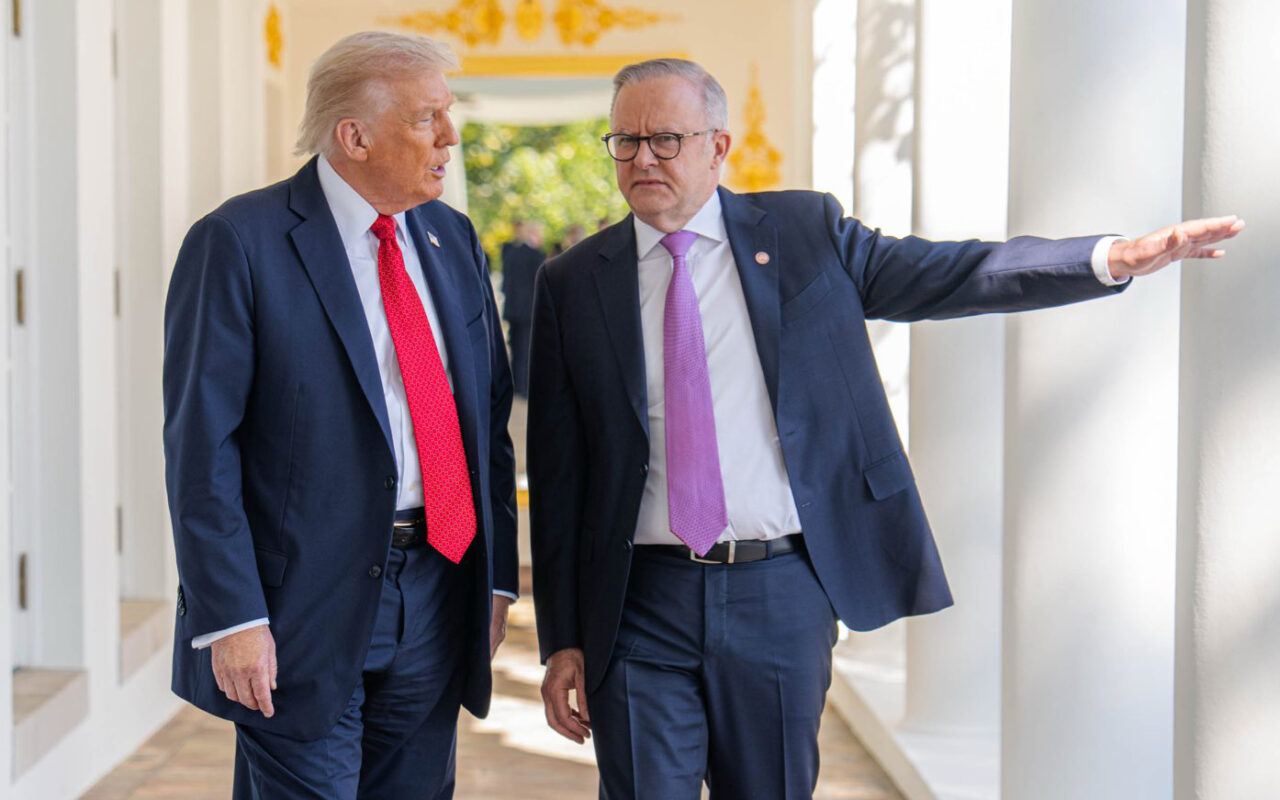
The icecaps of Greenland are melting, but not as fast as the so-called international rules-based order that has existed since 1945.
Trump’s unilateral ‘America First’ approach to Venezuela and the Gaza genocide has applied a blowtorch to the multilateral and UN structures and legal codes governing the relations between nation states and the conduct of war that have existed since the Second World War.
Despite the changing situation, Prime Minister Albanese and Foreign Minister Wong continue to invoke platitudes about respect for ‘international law’ and the ‘rules-based order’ in response to the latest acts of violent state aggression in Palestine or Venezuela.
Now a fellow centrist national leader has blown the whistle on this whole charade.
Canadian PM Mark Carney, in a speech at the international ruling class Davos conference, delivered a stunning rebuke to ‘nostalgia’ for the international rules-based order.
Carney stated that “we are in the midst of a rupture, not a transition” and delivered a withering critique of the existing world order, demanding that fellow leaders,
… call it what it is: a system of intensifying great power rivalry where the most powerful pursue their interests using economic integration as a weapon of coercion.
Mark Carney, Prime Minister of Canada
Referring to a 1978 essay by Czech dissident Václav Havel, called The Power of the Powerless, Carney compared the commitment of western elites to the ‘rules-based order’ to the false consent provided by Czechoslovak citizens to the old Stalinist regime.
In the essay Havel describes how a Czech greengrocer places a sign in his window: “Workers of the world, unite!” as a sign of compliance, even though he doesn’t believe it.
In Carney’s words,
Because every shopkeeper on every street does the same, the system persists, through the participation of ordinary people in rituals they privately know to be false.
Havel called this “living within a lie.” The system’s power comes not from its truth but from everyone’s willingness to perform as if it were true…
Friends, it is time for companies and countries to take their signs down.
Carney also frankly admits,
For decades, countries like Canada prospered under what we called the rules-based international order…
We knew the story of the international rules-based order was partially false. That the strongest would exempt themselves when convenient. That trade rules were enforced asymmetrically. And we knew that international law applied with varying rigour depending on the identity of the accused or the victim.This fiction was useful. And American hegemony, in particular, helped provide public goods: open sea lanes, a stable financial system, collective security and support for frameworks for resolving disputes.
So, we placed the sign in the window. We participated in the rituals. And we largely avoided calling out the gaps between rhetoric and reality.
Mark Carney is speaking here as a ruling class insider. Prior to his term as Canadian PM and leader of the Liberal Party, he held senior roles at investment firm Goldman Sachs before serving as Governor of the Bank of Canada (2008-13) and Governor of the Bank of England (2013-2020). That he speaks with a clarity many on the reformist left dare not use should shock them into self-awareness.
Albanese ‘living within a lie’
Carney’s speech is a wake-up call for fellow centrist and social democratic leaders to abandon their falsehoods, illusions in a ‘fictional’ international order and deference to the US.
Anthony Albanese has invited Carney to speak to the Australian Parliament in March and said, “I agree with him, and it’s consistent with what I said at the United Nations and with our engagement as well with middle powers”[1].
This is window dressing. While Albanese may agree about middle power diplomacy, he is likely to completely ignore Carney’s more critical messages.
When Carney speaks of deference to “American hegemony” he could be speaking about Australia’s embrace of the AUKUS pact and unwillingness to challenge US aggression in Venezuela.
Anthony Albanese and Penny Wong are still firmly “living within a lie” that the best interests of the Australian people are secured by a combination of unswerving commitment to the US and selective appeals to international law to resolve conflicts.
This was never true and is now ludicrous in the Trump era.
The Davos conference was dominated by open conflict between the US and European leaders over Trump’s demand that Denmark sell Greenland to the US. Trump had threatened wider sanctions on EU nations and a military take-over if a deal could not be reached. While some deal may be made, these tensions raised the real prospect of a split in the NATO alliance.
Conservative commentator Greg Sheridan, writing in The Australian (22 January 2026), describes the shifting sands under the Albanese approach, stating that any NATO split, “would be a disastrous result for Australia, for almost no nation in the world is more completely dependent on the US alliance as we are. And if Trump shatters NATO, it’s very difficult to imagine that AUKUS could possibly survive, not that AUKUS shows much sign of life anyway.”
Sham rules-based order
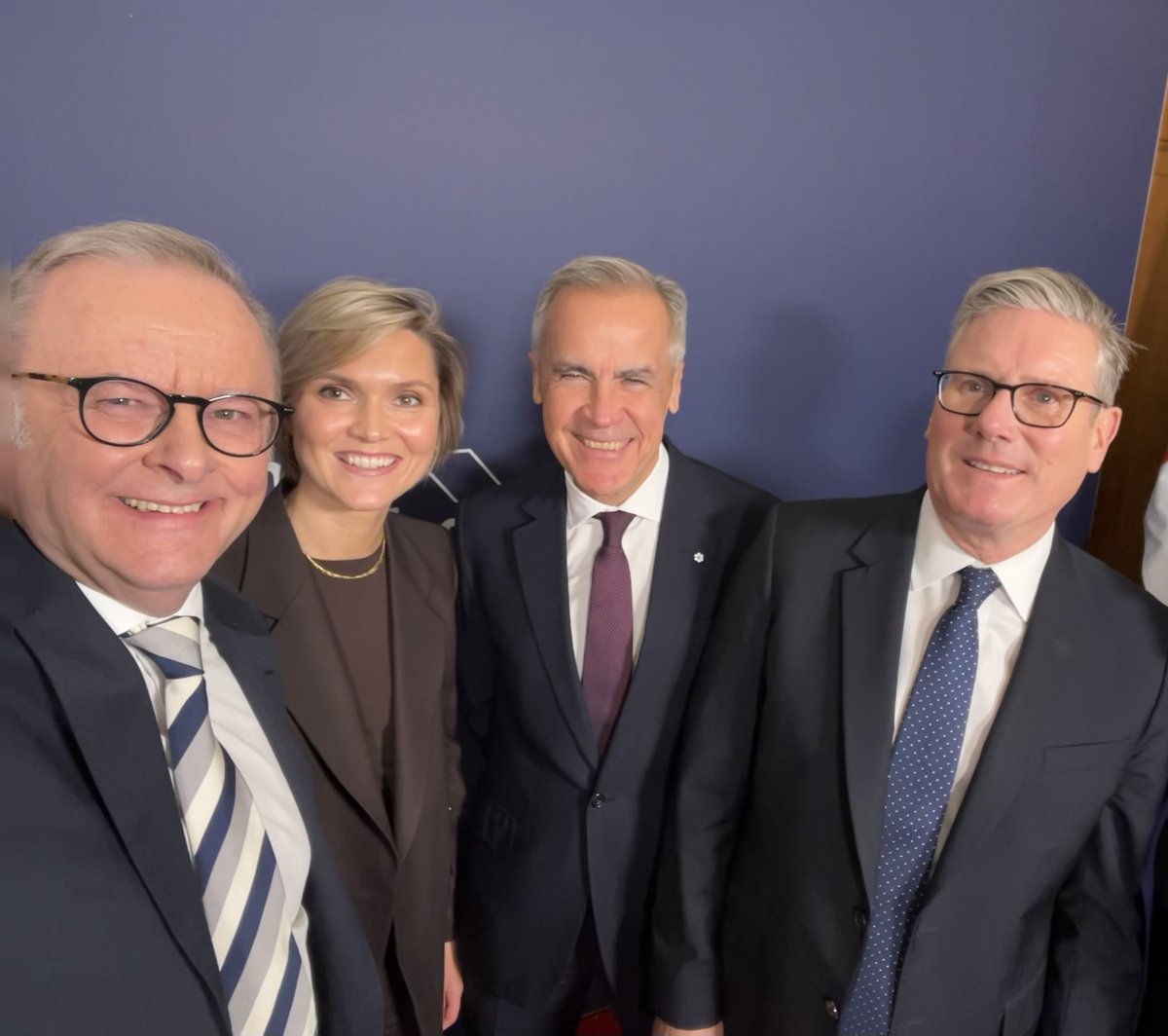
From a working class point of view, we have nothing to lose by splits in the old order, by a breakdown in the web of imperialist alliances, be it NATO, ANZUS, Five Eyes intelligence or AUKUS.
These alliances were constructed by the US and western powers who dominated after World War Two, based on US military power and clothed in the legalism of the UN Charter and international law.
Between 1945 and the early 1990s this international order did provide a degree of stability. But this was because the world was dominated by two superpowers, the US and USSR, which were forced to observe a general détente to avoid global nuclear annihilation.
This was an unusual situation for the world system, and we have now returned to the normal ‘factory-settings’ of capitalism, being based on imperial rivalry for resources, markets, zones for capital investment, sources of profit and spheres of influence.
The western dominated ‘international rules-based order’ triumphed in the early 1990s and was always a hypocritical sham.
Washington, London and Canberra applied the rules when it suited their national interests to discipline rivals or weaker states. The US used UN legal cover to launch the Gulf War against Iraq in 1990 and to invade and occupy Afghanistan in 2001.
The dominant nations also routinely ignored the UN when it suited their interests. The US and NATO led a bloody 78-day bombing campaign against the former Yugoslavia (Serbia and Montenegro) in 1999 without UN approval.
Most notoriously, George W. Bush, John Howard and Tony Blair ignored the UN to invade Iraq in 2003 and achieve ‘regime change’. From then on, every other nation, large and small, was on notice that the rules didn’t (really) apply.
In many ways Trump and Netanyahu have simply removed the last crumbling wall from the bombed-out building that was international law and the UN Charter.
We have seen with horrific clarity in Gaza that it is the poorest and weakest nations and peoples who will suffer the most from this shift in the world order. The great majority of people across the world will pay the price of increased militarisation and conflict, as public goods, democratic rights and collective safety are sacrificed to imperial rivalry.
The left and international law
The left speaks for the many against the few when it condemns the aggressions of Israel and the Trump regime. However, Carney’s speech is also a wake-up call for those in the Palestine solidarity movement, the left and the union movement who make plaintive calls for adherence to the fractured system of failed international law and the UN.
In response to the US attack on Venezuela, the Independent and Peaceful Australia Network (IPAN) released a statement arguing that the attack “continues a disturbing pattern of US foreign policy that undermines the very foundations of the United Nations, an organisation established to foster global security through dialogue and diplomacy” and demanding that Australia “assert its independence, break free from the US and reaffirm our commitment to international law and the UN Charter”.
The Search Foundation, inheritors of the Communist Party of Australia’s much diminished political estate, released a statement about Venezuela that called for solidarity actions, suspension of co-operation under the AUKUS pact and for Australia to “recalibrate our foreign policy towards genuine multilateralism, the defence of all nations’ sovereignty, and the rebuilding of a global system based on law”.
Seeking a return to a more stable world order underpinned by the UN and international law is a widespread approach across the left. Apart from the socialist groups, most Labor social democrats, the liberal left and the Greens tend to agree with this general approach.
However, to maintain this position in the Trump era is at best misguided nostalgia and at worst negligent – the political equivalent of leading people to a fire escape that has been demolished.
Further, looking to restore a world order, dominated as it was by self-serving western powers, cedes authority and initiative to the very forces which led us to this current predicament.
The harsh truth is that both the United Nations and all the ‘liberal democratic’ states of the west completely failed to halt the carnage in Gaza. The genocide was literally armed by the centrist Biden Democrat administration and enabled by the complicity of middle powers such as the UK, Australia and the leading European states.
BRICs and other middle powers
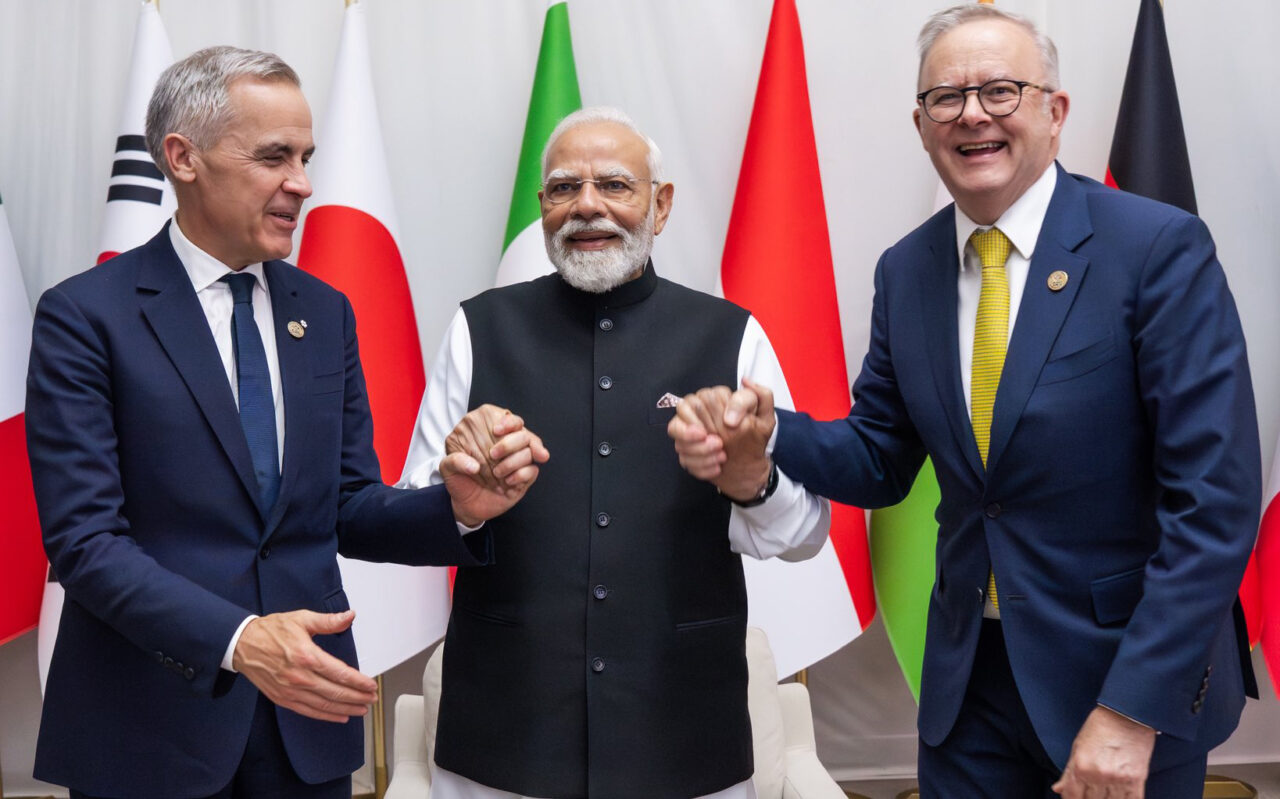
In partial recognition of these facts, sections of the left to varying degrees look to the formation of an alternative multipolar order built around a non-Western alliance of China, Russia, India and other middle powers such as Brazil, South Africa and Iran. This hodge-podge has earned the sobriquet of BRICs (Brazil, Russia, India, China), but nothing clear unites this block.
This invests political hopes in a different set of capitalist nation states and ruling classes, which have their own national interests and imperial ambitions to pursue. An alternate BRICs order provides no guarantee of greater peace or self-determination among nations; the BRICs states are as bound up in the same global system of capitalist relations and imperial rivalry as the western states.
In the bulk of his speech Mark Carney essentially makes the case for middle powers to construct a new multilateral order in which Canada and others build “coalitions that work, issue by issue, with partners who share enough common ground to act together”.
Carney points out that “great powers can afford, for now, to go it alone. They have the market size, the military capacity and the leverage to dictate terms” and therefore, “middle powers must act together because if we’re not at the table, we’re on the menu”.
Carney proudly summarises the actions his administration has taken to reinforce Canada’s domestic economy, military strength and global alliances. The specifics he cites make clear that this agenda primarily serves the interests of Canada’s capitalist class to make the nation state and region safe for capital investment and accumulation. It is part of the same imperial game. He is merely seeking allies to ensure the bigger powers can’t eat him up, as Trump has threatened to do.
Carney essentially espouses a form of middle power imperialism, in which the nation state promotes the interest of national capital using both expansionary economic and military means.
We can expect that Carney’s call to create a middle power order will appeal to mainstream social democrats and centrists in Australia who aspire to a more “independent” Australia, that can project power in the region and avoid being enmeshed in rising US-China rivalry.
Responding to Carney’s speech, Treasurer Jim Chalmers told ABC Radio: “I thought it was very impactful, very thoughtful, certainly widely shared and discussed in our government.”
However, despite his interest, Chalmers is clearly not ready to take down the old signs in his shop window:
“So for Australia, and no doubt for Canada, the point that Prime Minister Carney was making is that our interests are best served by cooperation and by managing our differences within international law and international institutions.”
Australian Treasurer Jim Chalmers
For an independent working class international policy
The missing element in all the schemas of those who look to either restore the international rules-based order and international law, or build a new middle power or BRICs multipolar order, is the potential to develop a genuinely independent working class international policy.
This absence is no surprise, given the relative decline of the workers’ movement, in social strength and ideology, in recent decades under the sustained neoliberal assault.
However, global economic integration has created an ever-larger global working class which holds great potential power as a social and political force. The past decades, since the great Arab Spring uprisings in Tunisia and Egypt has seen further mass struggles and uprisings across the Global South[2].
Many of these have been dubbed ‘Gen Z protests’, being led by students and young workers for whom modern capitalism is not delivering anything resembling secure livelihoods or futures. In nations such as South Korea (2016-17), Chile’s 2019-22 El Estallido Social (Social Outburst), Argentina (2024) and France’s 2025 ‘Bloquons tout!’ (Block Everything) movements, the insurgent movements have included significant mass union strikes.
The potential for developing a working class international policy is also shown by the response of European and Mediterranean workers to the Gaza genocide. Workers and unions are mobilising around efforts to halt arms transportation to Israel, end their own government’s complicity and in some cases to oppose EU rearmament and militarisation.
The working class solidarity movement with Palestine has included a general strike in Spain, two general strikes in Italy and co-ordinated enforced bans on transporting any arms to Israel by maritime, airport and transport unions in Italy, Spain, Greece, Turkey, Cyprus, Morocco, France, Belgium and Sweden. This political movement has impact – in October 2025 the Spanish parliament voted 178-169 to approve a formal arms embargo on Israel banning the sale, import, and transit of military equipment and dual-use technology.
The International
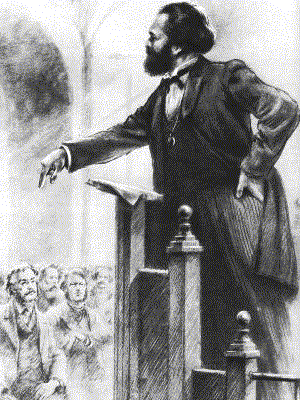
Historically, advanced sections of the working class and socialist movements both developed and applied an international policy to guide their actions against the imperial machinations of their contemporary ruling classes.
The First International (1864-1876) was a political alliance of British and European trade unionists and socialists, formed to provide mutual aid and solidarity in industrial struggles, achieve full democratic rights and working class political power. However, from the outset, international questions were central, including active support for the northern anti-slave-owning states in the American civil war, for Polish independence and against British colonialism in Ireland.
Karl Marx, in his inaugural address to the International Workingmen’s Association concluded with a call that resonates in this current era,
If the emancipation of the working classes requires their fraternal concurrence, how are they to fulfill that great mission with a foreign policy in pursuit of criminal designs, playing upon national prejudices, and squandering in piratical wars the people’s blood and treasure?
He continued that the 1863 crushing of the Polish national uprising by Tsarist Russia had,
…taught the working classes the duty to master themselves the mysteries of international politics; to watch the diplomatic acts of their respective governments; to counteract them, if necessary, by all means in their power … to vindicate the simple laws of morals and justice, which ought to govern the relations of private individuals, as the rules paramount of the intercourse of nations.
Karl Marx, Address to the International Workingmen’s Assocation
The fight for such a foreign policy forms part of the general struggle for the emancipation of the working classes. Proletarians of all countries unite!
By the early 20th century, the working class of Europe was organised through the mass Social Democratic parties of the Second International. Most of these parties were nominally Marxist in politics and committed to the overthrow of capital, while being increasingly parliamentary and reformist in practice.
Great power tensions were rising, being played out in a series of Balkan Wars, and the ominous signs of an outbreak of wider war were apparent to a vigilant working class movement.
In response, the Social Democratic parties adopted the following guiding principles of foreign policy at their 1907 Congress in Stuttgart,
If a war threatens to break out, it is the duty of the working classes and their parliamentary representatives in the countries involved … to exert every effort in order to prevent the outbreak of war by the means they consider most effective…
Second International Congress, Stuttgart, 1907
In case war should break out anyway it is their duty to intervene in favour of its speedy termination and with all their powers to utilise the economic and political crisis created by the war to arouse the people and thereby to hasten the downfall of capitalist class rule.
This policy was reaffirmed in 1912 by an Extraordinary International Socialist Conference held in Basel, Switzerland in the strongest possible terms,
The Congress records that the entire Socialist International is unanimous upon these principles of foreign policy. It calls upon the workers of all countries to oppose the power of the international solidarity of the proletariat to capitalist imperialism.
Extraordinary International Socialist Conference, Basel, 1912
It warns the ruling classes of all states not to increase by belligerent actions the misery of the masses brought on by the capitalist method of production. It emphatically demands peace.
Let the governments remember that with the present condition of Europe and the mood of the working class, they cannot unleash a war without danger to themselves…
It would be insanity for the governments not to realise that the very idea of the monstrosity of a world war would inevitably call forth the indignation and the revolt of the working class. The proletarians consider it a crime to fire at each other for the profits of the capitalists, the ambitions of dynasties, or the greater glory of secret diplomatic treaties.
The potential power of such a working class international policy was unfortunately demonstrated in the negative, when in 1914 the opportunistic leaders of most of the Social Democratic parties succumbed to patriotism and supported their respective national sides in the carnage.
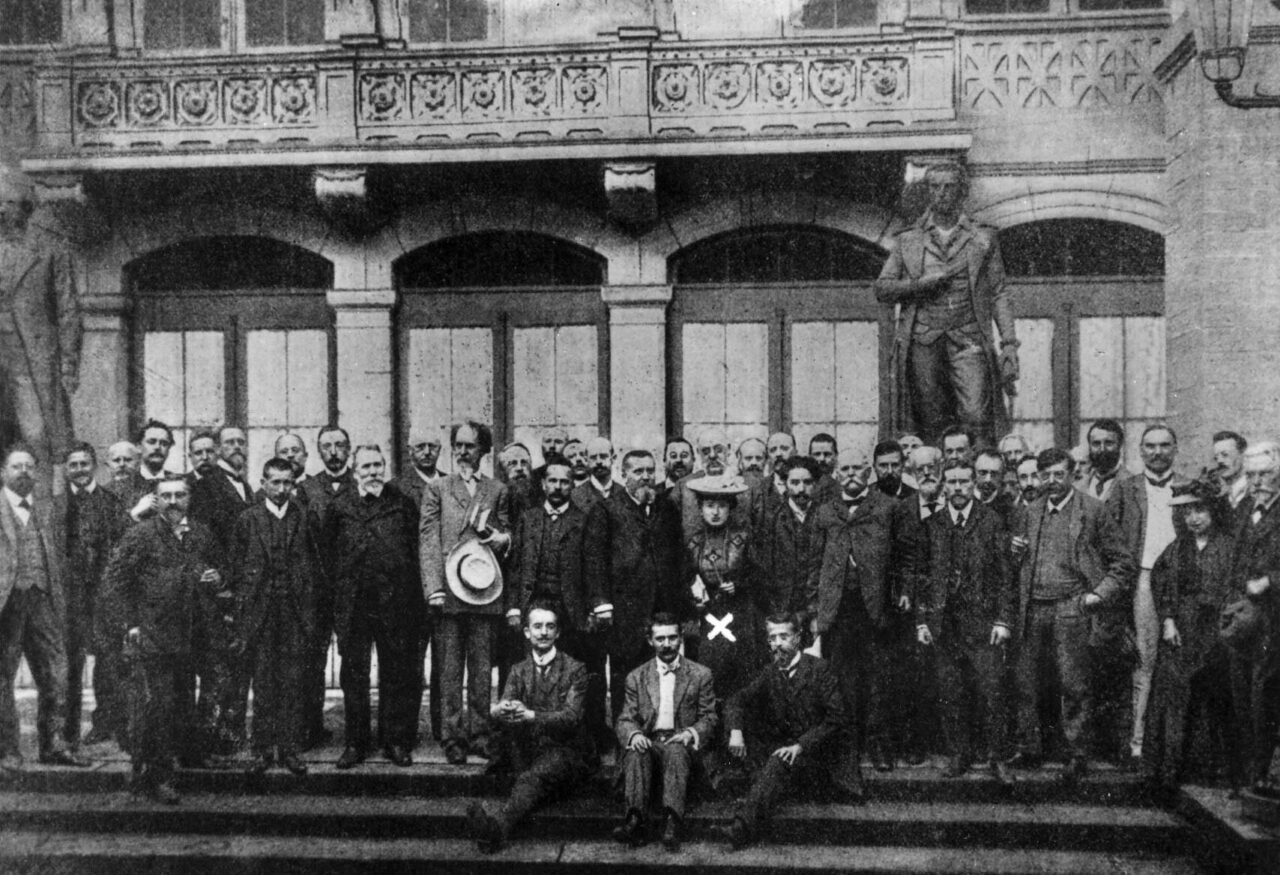
However, the policy of the Basel Manifesto was taken up again by the anti-war Bolshevik Russian Social Democrats, the dissident German SPD leaders Karl Liebknecht and Rosa Luxemburg and others. The elemental working class indignation and revolt against war, upon which the policy was predicated, was a driving force in the February and October revolutions in Russia that overthrew the Tsar and withdrew Russia from the conflagration. This was followed by the German revolution of 1918 that overthrew the Kaiser and forced Germany to seek peace.
These acute high points of working class struggle and political development can inform our development of an independent working class foreign policy today. They stand alongside the penetrating analysis of imperialism developed by Lenin and Bukharin and the principled internationalist policy of the Communist International led by the new Russian workers’ state.
Working class foreign policy
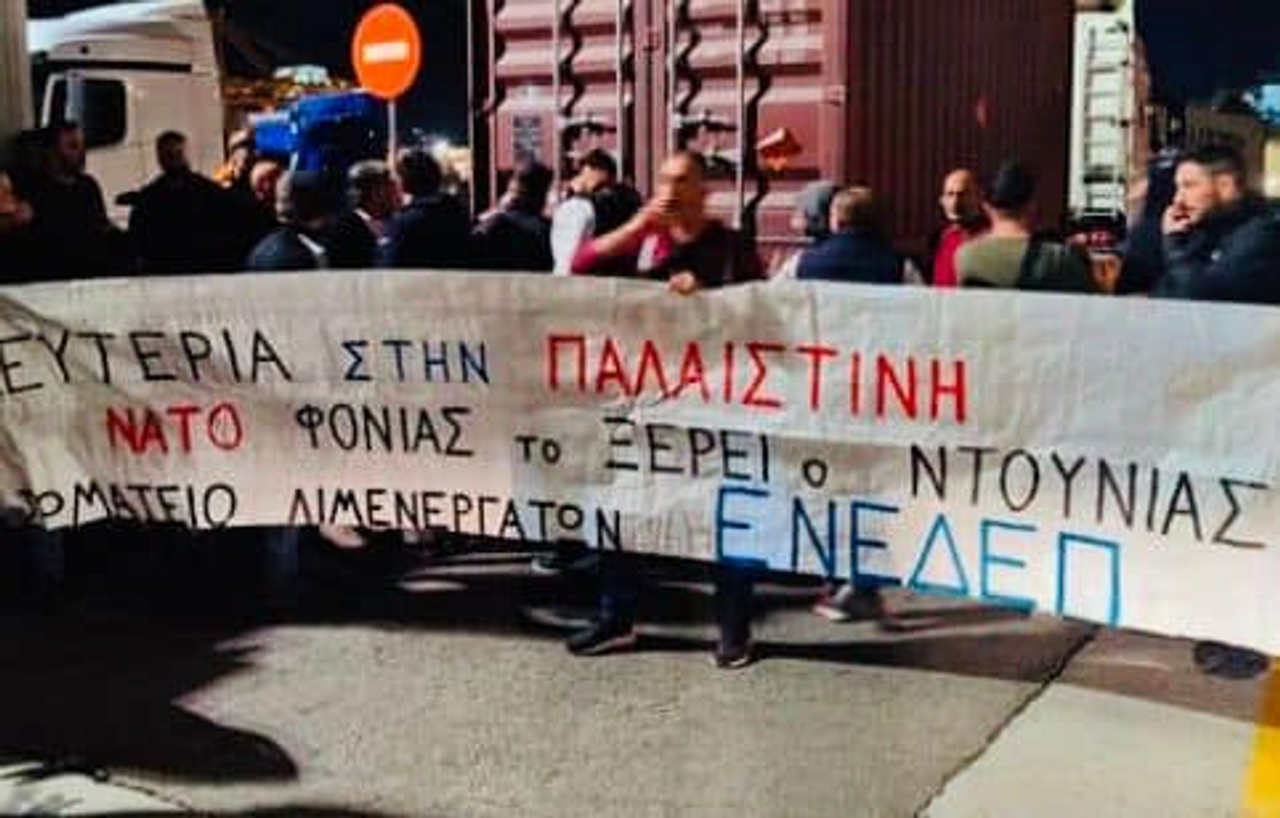
Again, the world is riven by unstable and escalating imperial rivalry between great powers and blocs of national capital. The seemingly endless war in Ukraine, the Gaza genocide, the bombings of Iran, the unhinged power plays by the Trump regime, rising US-China tensions – all point to the increasingly dangerous future we face if we leave international relations to our capitalist rulers to determine.
As working class activists and socialists we can only begin to outline the possible key elements of a working class international policy. In formulating such a program, we need to understand that our main opponent is our own national ruling class and its allies.
The following elements are worth considering as part of a future working class foreign policy in an Australian context:
- withdraw from the AUKUS pact and the US military alliance;
- close Pine Gap, North-West Cape and all foreign military bases;
- opposing participation in a US led war with China;
- publish all secret treaties and agreements;
- a parliamentary vote required to commit armed forces to war;
- sanctions and an embargo on all trade in military arms and technology with Israel;
- no participation in wars of aggression.
Our policy could champion a truly nuclear fee Pacific, without any transit or bases for nuclear capable submarines, warships or bombers.
A working class foreign policy for this region could counter the projection of Australia’s own imperialist interests, including the closure of overseas Australian military bases in Papua New Guinea (Lombrum Naval base) and Malaysia (Butterworth Air Base) and ceasing all Australian defence agreements with Indonesia and PNG that advance Australian militarism or the repression of oppressed people in West Papua or Bougainville.
Our policy could end the Australia-Nauru agreement to offshore refugee detention and spend all funds on supporting the people of Nauru. We could adopt a policy accepting asylum seekers and support free migration that replaces exploitative labour visa programs with full civil and labour rights.
Our policy could disconnect foreign aid to Pacific countries from all conditions regarding Australian defence or security interests, for foreign aid to be civil aid to build social infrastructure and protection from climate change.
Our policy could champion the right of oppressed nations and peoples to self-determination, including comprehensive land rights, restitution and a Treaty with Aboriginal and Torres Strait Islanders and support for the self determination of the nations and peoples of West Papua and the Kanak of New Caledonia.
Our policy could raise the future composition of the Australian defence forces and moving from the current standing forces to a democratic civil and military defence force composed of citizens.
An independent working class foreign policy would guide and inform a more confident response by working people and our organisations to the antagonisms and conflicts that have been unleashed in the Trump era. We urgently need an alternative to pointless appeals to rebuild the UN or a ‘rules-based system’ that only ever acted in the interests of US and major powers, or to some combination of capitalist powers to lead the way to safety.
If we are to secure a peaceful future in this dangerous era of imperialism, then it is time for the working class to put its own sign in the window.
[1] ABC TV’s Insiders program, 25.1.2026
[2] South Korea (2016-17), Chile (2019-22), Iran, Sri Lanka (2022) Argentina (2024) Bangladesh (2024), Nepal (2025), Indonesia (2025), Morrocco (2025)