
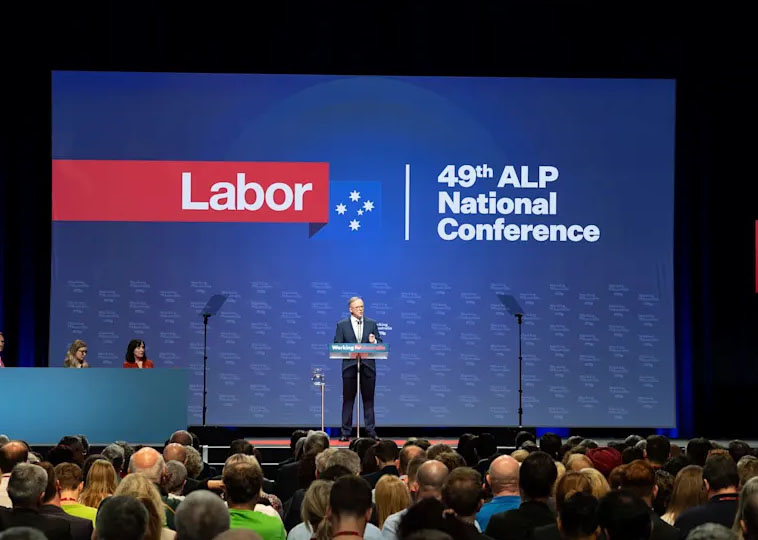
Iain Kerr reports on campaigns to elect delegates to ALP National Conference.
Socialist candidates to be delegates to ALP National Conference are mounting a challenge to the conservative and managerial approach of the Albanese government, and winning support from active party members.
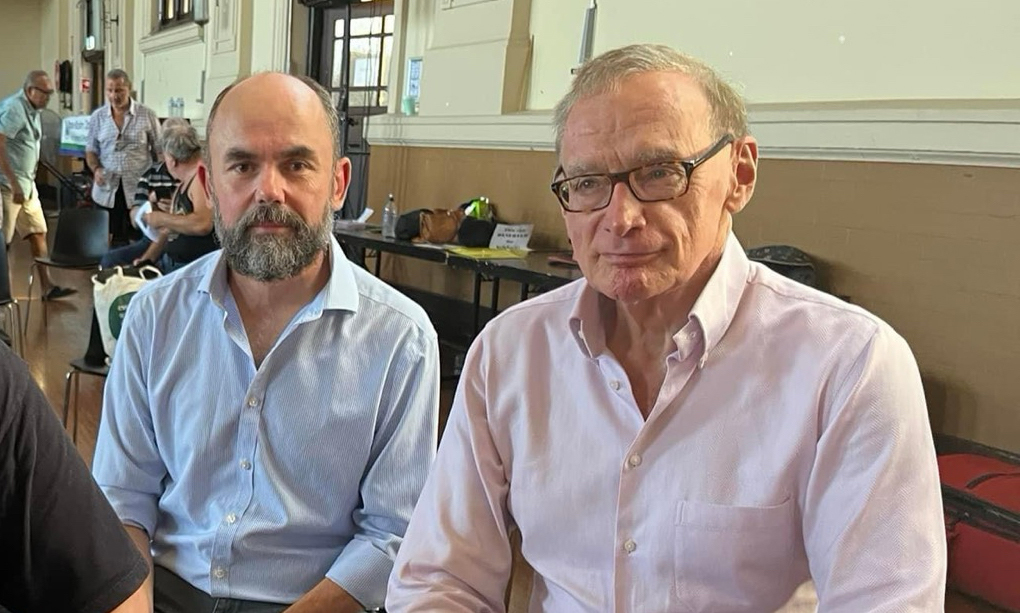
Marcus Strom, national convenor of Labor Against War (LAW), is standing to be delegate from the Sydney Federal Electorate Council (FEC) against Linda Scott, a candidate backed by the mainstream Albanese Left faction of local MP Tanya Plibersek.
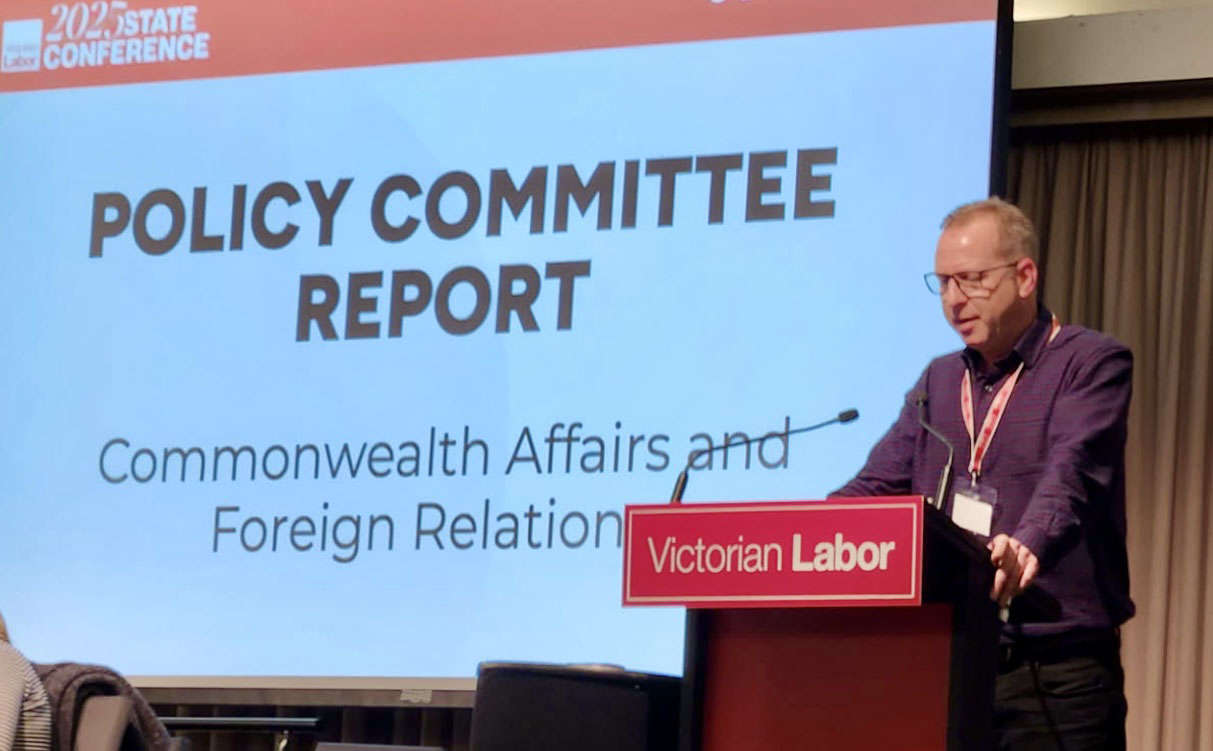
In Victoria, Hamish McPherson, state LAW convener and secretary of Labor Friends of Palestine (Victoria) and the Euroa-Benalla ALP branch is campaigning in the statewide ballot of party members to send delegates to conference.
Both candidates are socialists who have a track record of publicly campaigning and organising against the AUKUS military pact and for concrete action to support justice for Palestine.
The Sydney FEC vote looks set to be a sharp contest over AUKUS and whether the delegate will take the FEC’s position opposing AUKUS to conference. Publicity for Strom states that he is standing to “advance a democratic socialist vision for the ALP”.
He believes that the National Conference should be a forum for genuine debate…Marcus will not just be a rubber stamp for existing Federal Government policy. If elected as your National Conference delegate, he will campaign for:
- Ending the disastrous AUKUS agreement
- The creation of a National Housing Authority to build quality public housing at a transformative scale.
- Sanctions against the Israeli government to end the genocide and apartheid being committed against Palestinian people.
This platform has won Strom the active endorsement of Sydney Young Labor Assocation, Labor Against War (NSW), Labor Friends of Palestine NSW and party elders from across the factional divide. Former senators Doug Cameron and Margaret Reynolds from the left and former Foreign Minister and NSW Premier Bob Carr from the right have endorsed Strom.
Doug Cameron’s endorsement says that Strom has “demonstrated courage, commitment and a campaigning capacity that would resonate with rank-and-file Labor members”.
Bob Carr writes that “with the factions pledged to silence on AUKUS, [Strom] is committed to fighting it”.
“That he takes the cause of Palestine seriously (like the entirety of our branch membership) is another reason for backing him. Especially in a climate where the official left has given up raising matters of principle which had once been its role and its pride.”
South of the Murray, Hamish McPherson is running a grassroots campaign in both metro and regional Victoria, building on his role organising against AUKUS, for Palestine and as a socialist Labor member in regional Victoria.
McPherson is endorsed by the main Socialist Left (SL) faction, although they have placed him at #34 on its How to Vote, with their higher recommended preferences largely reserved for Members of Parliament.
His campaign statement outlines a democratic socialist platform for change. McPherson argues that Labor should increase taxation of capital to extend fully publicly owned social, education and health services; abolish tax concessions for housing investments; fund a massive expansion of social and public housing; raise all welfare payments to a liveable income; abolish all anti-union provisions restricting the right to withdraw labour; plan a phase out of fossil fuel exports with a jobs guarantee for all workers; guarantee democratic rights; withdraw from AUKUS and close all US military bases; sanction Israel’s unlawful occupation and achieve a Republic and comprehensive Treaty with Aboriginal and Torres Strait Islanders, including self-determination, restitution and land rights.
While at some level such demands may seem common sense, they stand in contrast to the vague generalities about ‘Labor values’ and suchlike that predominate in candidate emails filling our in-boxes.
Both Strom and McPherson are standing on platforms that challenge the pro-capitalist managerialism of the parliamentary leadership at a time when many party members feel frustrated and are seeking an alternative.
In Victoria, McPherson is gaining the active support of members across metro and regional branches who know of his role building public opposition to AUKUS, including in branches where he has previously visited as a guest speaker for LAW.
Labor Friends of Palestine (Victoria) is also formally advocating a #1 vote for McPherson, and then for Oliver Van Ingen, LFOP state convener. They have released a joint statement specifying the actions needed to achieve justice for Palestine, support democratic rights of political expression and rejecting involvement in the AUKUS pact. LFOP activists have been calling all members to canvass for votes, and the tally for both candidates is steadily building.
The outcome of the statewide Victorian campaign, due in mid-April, will be an important litmus test of members’ views about AUKUS and Palestine and their response to the Albanese government’s current stance of ignoring the ongoing genocide and occupation and acting to stifle democratic rights.
Ask questions of candidates
The election of National Conference delegates is occurring in different forms in all State and Territories across the continent. All ALP members should use the National Conference process to make clear their views and pose sharp questions for prospective candidates.
It is a travesty of the rank-and-file vote that the machine factions largely promote MPs, staffers and other careerists. Conference should be the voice of the membership and bind the parliamentary wing to its political will.
The Constitution of the Australian Labor Party state that the National Conference “shall be the supreme governing authority of the Party and its decisions shall be binding upon every member and every section of the Party”.
However, it is clear the parliamentary parties regard this as optional if policies are passed that don’t suit their priorities.
National Conference decides the ALP National Platform of policy to be implemented and elects the 20-member party national executive committee.
The high stakes of National Conference mean that it is infamous for being a tightly managed affair, where the parliamentary leadership and factional blocs seek to limit real debate and ensure the ‘right’ outcomes. This is reflected also in the composition of the approximately 400 delegates (half branch and half trade union) which tend to be dominated by MPs, factional operatives and union officials.
These factors severely limit the space for genuine left shifts on policy, while also making it crucial to elect delegates who are willing to challenge the status quo and confidently speak on matters deemed ‘difficult’ by the party powers that be.
Labor Tribune looks forward to reporting on the progress and outcomes of the campaigns in Sydney, Victoria and elsewhere, with a view to supporting candidates who challenge the status quo, and to encourage deeper political discussion and debate within our movement leading into and at National Conference.