
David Lockwood says both Russia and the NATO backed-regime in Kyiv are reactionary. However, our weakness to intervene shouldn’t silence us in calling out the murderous reality of modern capitalism. And we must double efforts for a working-class force that can challenge the system that creates it.
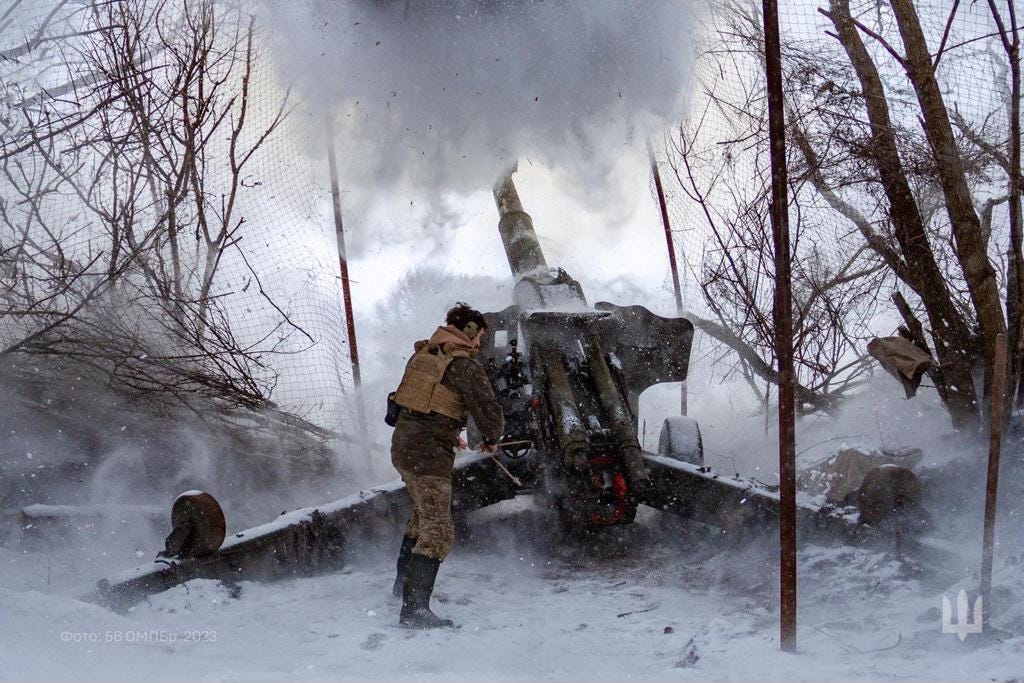
This festive season, the people of Ukraine have been gifted by lots of new (well, second-hand) weapons from the US and NATO, and by a shiny new Peace Plan from Donald Trump, the Prince of Peace himself.
Time was when a major war in the middle of Europe was front-page, banner-headline stuff on a daily basis. Today, not so. Occasionally, a frisson of excitement over new ‘peace talks’, but most of the time the war itself just grinds murderously on, as background noise to the rest of the news. Even the left has little to say – too outraged to support Russia, too afraid of the implications of supporting Ukraine/NATO. Correct on both points (but not on one to the exclusion of the other). The glum neutrality that ensues produces mostly silence.[1]
The war in Ukraine had antecedents long predating the Russian strike in February 2022, and can even be tracked back to the fall of the USSR in 1991, not just to the ‘Maidan coup’ in February 2014. That event was spearheaded by the forces of extreme chauvinism and the organised far right, deposing the Viktor Yanukovych government (which leaned towards Moscow) in Kyiv shunting Ukraine into the western camp with the stated ambition of joining the European Union and NATO.
But Marxists and serious students of history do not assess wars based on who fired the first shot. We analyse the geopolitical forces, the dynamics of class interests and the overall trajectory of the politics behind the conflict. While it is a hackneyed truism from Clausewitz that war is merely the continuation of politics by other means, these means it is therefore necessary for us to understand those politics.
While completely unsupportable, the Russian response hardly came as a surprise. Crimea was annexed and Russian-Ukrainian separatist forces were encouraged and aided – in particular, the armed rebellions in the Donbas. However, faced with a NATO membership plan, significantly increased Ukrainian Armed Forces attacks against the Donbas and the threat of heavy western sanctions, the Putin regime gave the go-ahead for a full-scale invasion. The aim was, at the very least, to force Kyiv into compliance and break it from the western camp. A trap for Moscow whichever way it acted..
Phase one of Putin’s so-called ‘special military operation’ failed abysmally. Zelensky’s government more than survived. With NATO military, propaganda, diplomatic and financial backing, it mobilised the Ukrainian population and mounted stiff resistance. Since then, we have seen advances and retreats on both sides. Despite all that, the war is essentially a stalemate. Tens of thousands have died, many more have been horribly maimed and millions have been displaced in what is a reactionary war on both sides.
There is nothing remotely progressive about the Putin regime. It is fighting to preserve Russian independence, based on old fashioned Great Russian chauvinism. That goes hand-in-hand with a clampdown on democratic rights, the aim of a greater Russia, promoting conservative Orthodox Christianity and annexing foreign territory and populations in its ‘near abroad’ or within its assumed ‘sphere of influence’ in the former USSR.
Economically Russia is dominated by a combination of Kremlin insiders and pliant so-called oligarchs (‘so-called’ because they do not rule, do not govern and retain their wealth and limited power at the pleasure of the FSB security state, currently ruled by Putin). Suffice to say, then, Russia is not anti-imperialist. Russia wants to join the top ranks of the imperialist club, not to overthrow imperialism.
Nor, on the other hand, is there anything remotely progressive about the Zelensky regime. It upholds a poisonously narrow version of Ukrainian nationalism – a nationalism that has no place for the Russian language and Russian-Ukrainians. Economically and politically, it is dominated by oligarchs and has pursued a thorough-going neoliberal agenda. The regime is riddled with corruption, with those at the top of society eagerly siphoning off the billions entering Ukraine while men, young and old, die at the frontline.
No genuine socialist, no genuine communist can support either side. Both are reactionary, both are anti-working class.
What are the interests of the belligerent powers?
The United States wants to extricate itself, hopefully leaving the European Union (EU) and Russia to exhaust each other, so that it can concentrate (economically and/or militarily) on China. This is particularly evident in the Trump administration’s latest National Security Strategy, which tells us:
“As a result of Russia’s war in Ukraine, European relations with Russia are now deeply attenuated, and many Europeans regard Russia as an existential threat.”
Not so, in the new Trump world. In fact:
“It is a core interest of the United States to negotiate an expeditious cessation of
Trump’s National Security Strategy
hostilities in Ukraine, in order to stabilise European economies, prevent
unintended escalation or expansion of the war, and reestablish strategic stability
with Russia, as well as to enable the post-hostilities reconstruction of Ukraine to
enable its survival as a viable state.”
The various iterations of the Trump peace plans offered up seem aimed at luring Russia away from its increasing engagement with China, Washington’s main target in reasserting its hegemony through Trump’s new security statement.
The European Union, fearful of its own security, wants something that looks as much like a Ukrainian victory as possible and thus pushes Russia back a bit. The war has debilitated the German economy in particular and ultra-nationalist forces across the EU are challenging the established liberal order, many of them wanting to end support for Ukraine.
Ukraine wants its territory back and security guarantees (preferably from the US) that Russia won’t do it again.
Russia wants to keep the Russian-speaking areas of Ukraine and a significant reduction in the power of the Ukrainian state. Critically, it wants to keep Ukraine out of NATO and NATO troops out of Ukraine. Since the Minsk accords, Moscow has not wavered in its demands to annex Crimea and the Donbas and ensure Kyiv remains neutral and largely disarmed.
Alas, even at Christmas, not all these wishes can be satisfied. As ever, the strongest will prevail, which in this case means the US and Russia.
Thus, Trump comes forward (evidently with at least some Russian support) with a brand-new plan (which may sound somewhat familiar and which was meant to wrap the whole thing up by some time earlier this month). A ragged ceasefire (which hasn’t a hope of being enforced), plus a demand for territory (which cannot be met), plus a long list of ‘points’ (23? 28?) which meander off into an unrealisable future.
In this plan Russia gets its territory. But the US does not leave empty-handed. Having already done a deal for discounted access to Ukraine’s mineral resources, this plan promises compensation for its security guarantees and a healthy 50 percent of the profits to be made from rebuilding and investment in Ukraine. And any EU money pumped into Ukraine’s military will be used to buy US weapons.
In addition, everybody gets full amnesty for everything they’ve done – so no messy war crimes trials – and the whole thing will take place under a ‘Peace Council’ headed up by you guessed it, Donald Trump. (We should note that Tony Blair is between jobs at this point.)
It is hard to know how serious this is – to what extent it is just a part of the ever-moving Trump show in which the performance and the marketing are the most important features. The whole thing can be painted up as a ‘solution’ (which supplies brownie-points for Trump’s Nobel aspirations) for just as long as it takes the media crews to move on. Were this plan ever to be implemented, it would simply prepare the ground for future wars. Trump creates a media event and calls it peace.
Leaving aside the fantasy, when the war in Ukraine ends, if it ever does, it will end badly for all concerned. If it doesn’t end, it will be worse.
At this point, Ukraine cannot possibly win unless it brings in the direct help of the US, NATO and the EU, which runs the risk of all-out war in Europe. On the other side, Russia cannot be defeated without such a war and cannot withdraw without losing Great Power credibility. There seems to be no solution without one side losing a lot of face.
No immediate working-class solution
Given the lack of an organised socialist workers’ movement organised across Europe. Given that Putin and Zelensky remain in power, there are no immediate solutions that are progressive, short of a Marxist magic wand.
This Christmas, we can hope for fraternisation between Russian and Ukranian forces along static trenchlines and fronts. But that seems unlikely.
Beyond non-immediate possibilities (mutiny in the armies of both sides, communist revolution), there are no direct progressive solutions to the Ukraine war. But this is no excuse for the left to go quiet on the issue. We should not cover our helplessness with silence.
It is worth recalling that the end of the Cold War was meant to deliver a peace dividend. That the former Soviet satellites would be transformed into robust, wealthy social democratic states along the lines of Sweden and Finland.
Instead we have seen decades of blood curdling nationalism, the collapse of living standards and now the unleashing of a grinding war as workers from Ukraine and Russia are fed into the meat grinder.
It is essential we make this point again and again. We must have the difficult arguments and discussions that Australia should not be funding such a war.
Without a re-established global movement for socialism that can put forward material political force that can make a difference, as Marxists can not deliver immediate solutions for all the world’s problems under capitalism. But we can make the point that capitalism has proven it is incapable and do the hard work of building such a movement.
We have plenty to say on global capitalism, intertwined with murderous state machines, that brought this situation to pass and which maintains it in existence. For us, what matters in the first instance is that ordinary folk in Ukraine, the disputed territories and in Russia should cease to suffer the ravages of war and that they should have the opportunity to re-establish their lives and, eventually, to organise for socialism. In the meantime, we should maintain a loud attack on all of the ruling classes involved.
[1] As far as I can work out, Red Flag, Solidarity and The Guardian have had nothing to say on Ukraine since April this year. Green Left Weekly ran an interview with a Ukrainian socialist in June.