
Based on the Greens essentially middle-class vision, the gravity of class politics will most likely limit the new leader’s ambition, writes Marcus Strom.
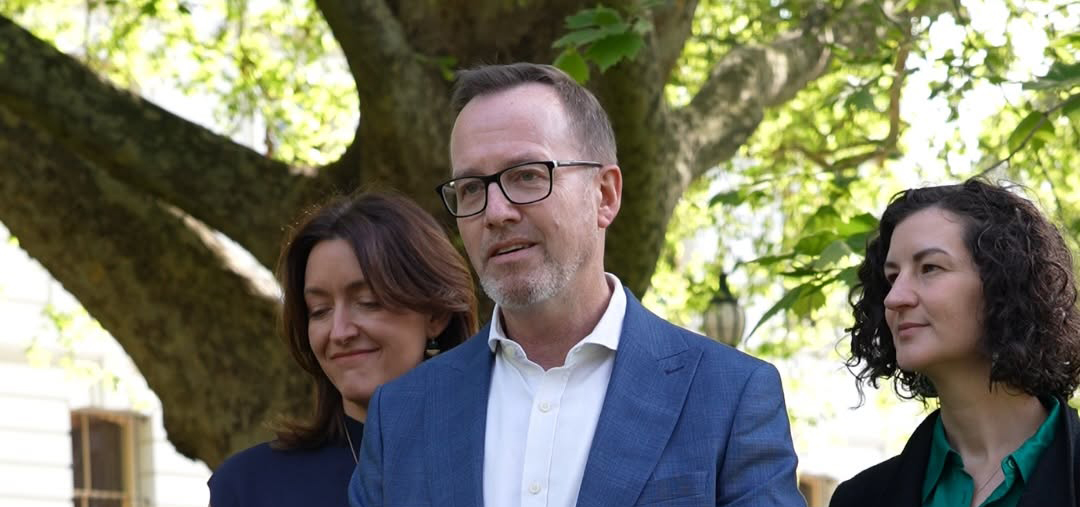
David Shoebridge’s elevation to the leadership of the Greens is clearly a shift to the left for the party. But how successfully he can fill the leftwing void created by a Labor government that panders to the US on foreign policy and believes in managing, rather than challenging, capitalism remains an open question.
The fates of political parties are ultimately determined by competition between contending social classes in society. The Greens are no different, no matter who is at the helm.
Without a different class politics and moving its electoral base from that which the Greens have historically relied, the minor party will struggle to do so. The decision by Shoebridge to protect private health insurance rebates this past week is a sign of this.
Shoebridge seeks to shift the Greens from being the party that keeps the others in check, the party that inherited the Australian Democrats’ pledge to “keep the bastards honest”. From “constructive oppositionism”, Shoebridge has adopted the language of replacing Labor as … what, exactly, hasn’t been made clear. Just replacing them.
In style, Shoebridge is a more combative leader than Larissa Waters, a better communicator and parliamentary operative than Adam Bandt, and strikes as a grown-up politician as opposed to Sarah Hanson-Young, who still seems stuck in student politics mode. For many he is, frankly, less annoying than Max Chandler-Mather, who is trying to influence party policy from outside parliament – which is no bad thing, of course.
But will Shoebridge be able to adopt the radical mantle of New York mayor Zohran Mamdani, or be the “breath of fresh air” that Zack Polanski seemed to offer the Greens in England and Wales – at least until his crash and burn at this month’s Holborn & St Pancras by-election?
Or will the electorate eventually see him as a Sydney eastern suburbs barrister climbing the career ladder of parliamentary politics?
Will he cut through to working-class voters, or will he be seen as just as much a part of the liberal-establishment political machine as the next member of parliament who is a member of the Qantas Chairman’s lounge.
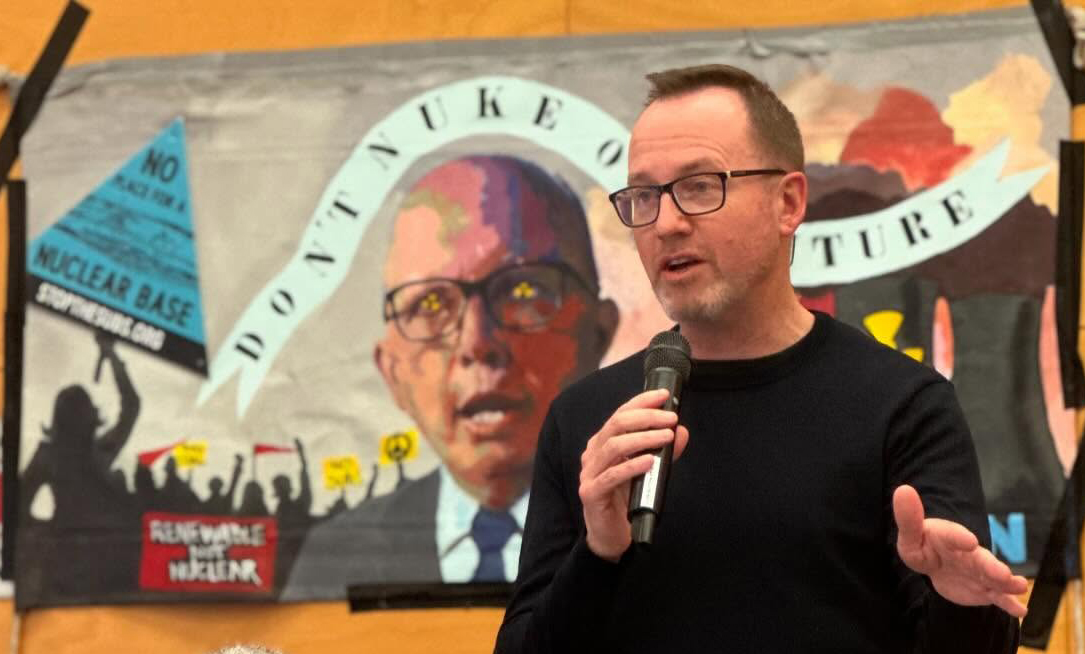
My money is eventually on the latter, but in the meantime, he could shake up politics. He is to be congratulated for almost single-handedly keeping AUKUS in the headlines as a federal parliamentarian. His unrelenting support for the Palestinian people as they face a genocide in the face of weaponised antisemitism claims by the Israel lobby has been laudable, and he has been brave to break a taboo on the liberal left in Australia by calling for an end to military support for the war in Ukraine.
Even so, rather than describing the war as a proxy between Russia and NATO, with the poor Ukrainian people the bloodied sandwich in between, he has made vague commitments to peace and non-violence while still supporting sanctions.
How steadfast his position on Ukraine is will be tested in coming weeks.
Middle-class politics
The Greens do not take the average wage of a skilled worker, as a principled working-class politician should. Shoebridge does pay a 15% tithe of his gross salary to the Greens, but here is the rub: despite their leftish-liberal political stance, the Greens are politically a middle-class party or, in the jargon of the Marxist left, a “petty-bourgeois party”.
This isn’t because its membership is predominantly middle class, though many of them no doubt are. It is because its political program is “petty bourgeois”. By this, Marxists mean a political program critical of big capital but not fundamentally based on the (potential) power of the working class.
You can see this in the very first comments made by Shoebridge as leader:
“The Greens aren’t here to watch Labor tinker around the edges, we’re here to replace them. We’re here to take on this broken system and fix it. To make it work for everyday people and not the billionaires and big corporations, who have captured Labor, the Liberals and One Nation.” (emphasis added)
Declaring that this system can be fixed shows no intent to displace capitalism. In no sense are the Greens a socialist party and, therefore, they are a dead end for the working class. But Shoebridge’s left populist turn could shake some change.
In the short term, it could dent the electoral prospects of the nascent Socialist Party.
Jordan van den Lamb of the Victorian Socialists has called the Greens a professional-class party of landlords and “NGO executives”. How successful this tack will be in establishing them as a distinct political force in the Victorian state election in November will soon be tested.
A few months ago, the Socialists gleefully seized on a right-winger’s comment during a 2GB “takedown” of the NSW Socialists foray into electoral politics, which described them as “Greens on steroids”. The Socialists gladly accepted the moniker. It actually fits, as the Socialist Party’s political program, while radical in parts, is ultimately “state loyal” and does not challenge the existing constitutional-monarchist system.
But with Shoebridge himself presenting as “Greens on steroids”, how much cut-through will the NSW Socialists make? That, too, will be tested at next March’s NSW election.
ALP Left in exile?
Since the collapse of Cold War politics and the obliteration of any remaining real political difference between the ALP Left and Right factions, the Greens have, in some senses, operated as part of the ALP Left in exile. This has never sat comfortably with the Greens, nor with those in the ALP who like to shout “go join the Greens” if you suggest “radical” reforms such as adding dental to Medicare. But it can partly explain the visceral hatred that the Greens and Labor Left have for each other, particularly in gentrified inner-city seats.
Parliamentary careerism
Shoebridge’s rise through the Greens parliamentary ranks began with NSW state politics in 2010 and continued with his transition to federal parliament in 2022. His elevation to the leadership comes after 16 years of parliamentary politics.
While the Greens like to pose as “different from the mainstream parties”, like other parliamentary institutions loyal to the constitution, they have their own careerist pathways. Before entering parliament, Shoebridge was a Woollahra councillor and NSW convenor of the Greens. He also recently told Andrew Clennell on Sky News that he spent the first half of his professional life in private practice. He said: “I know what it’s like to run a business” To his credit he said “I am what I am” and that the worst thing you can do in politics is “pretend you’re somebody you’re not”.
For the ALP, the mould is parliamentary staffer, perhaps after or via a stint as a Labor Party official, before securing the numbers in as safe a seat as you can find. Albanese cast this mould, moving from student politics and leadership of Young Labor Left to a staffing job for Tom Uren, a stint as assistant general secretary of the NSW ALP, an advisory role to Bob Carr and a staffer position with Jeanette McHugh, before succeeding her as the ALP member in Grayndler. Since then, dozens of parliamentary careers have followed similar pathways.
Shoebridge’s pathway doesn’t look that different.
Whether he can shift the Greens beyond their 12% electoral support, we shall see. Some polls have them as high as 15%. But without a seismic political shift in the Greens’ class politics, they are unlikely to go beyond that high-water mark.