
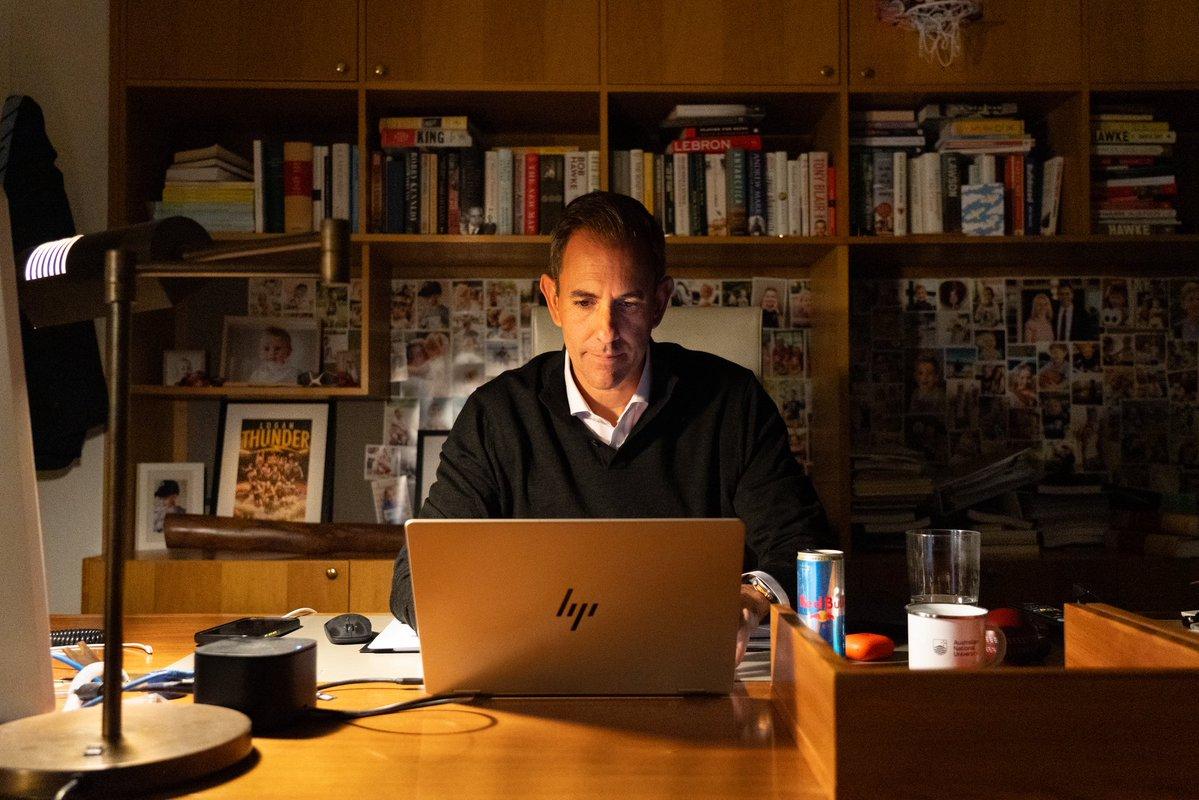
Framed as a budget to fix ‘intergenerational inequity’, Martin Greenfield argues the Albanese government’s latest budget aims to disguise class inequality and class power through language that seems to tax workers and capitalists equally.
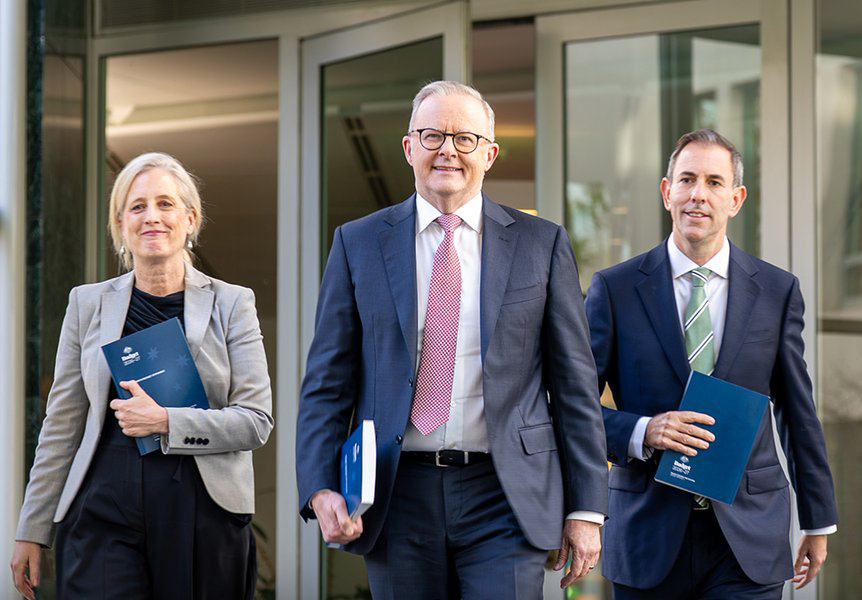
There is nothing in this budget that challenges the entrenched power of mining corporations, agribusiness landowners, banks, or retail monopolies. Even a modest proposal for a 25% tax on gas exports was too much for this government. The structural power of capital remains intact.
Yes, some layers of the wealthy — the haute bourgeoisie of Mosman and Toorak — will complain bitterly about paying slightly more (or even some) tax on their trusts and dividends. They will gnash their teeth and clutch their pearls at the prospect of contributing 30% tax like much of the working population. But they will still sleep soundly, secure in the knowledge that their class power is not under threat.
Nonetheless, under pressure from a barrage of rightwing tropes and misinformation about ‘death taxes’ and ‘deincentivising’ innovation, Albanese has signalled that elements of the discretionary trust tax could be reviewed, or ‘relief’ given to tech start-ups. But he spoke clearly in favour of continuing with (most of) the tax changes at the Victoria ALP state conference.
Either way, this is a budget to manage capitalism, in the interests of stability, not social transformation. Nonetheless it has tinges of the old social-democratic promise: redistribution within capitalism, softened edges, modest relief.
The impetus to ‘do something’ – or be seen to do something – for the working class while occupying the government benches is a reality of Laborism. (This is a reality difficult to comprehend for many of the far left who – while not too long ago were ‘auto-Laborites’ of the ‘vote Labor but …’ variety – are now of the auto-anti-Laborite of the ‘ALP equals LNP’ variety.)
Treasurer Jim Chalmers makes the Labor desire to ‘level the playing field’ clear in the language he used in his budget speech. He wants to tax people who earn income from “other means” (“no shame in that”, he quipped), the same as those who earn a living from working. It is these 50 shades of grey social democracy that helps such people justify their ‘difficult choices’, such as giving public support for US and Israeli wars of aggression.
What is Chris Minns thinking?
Amid something of a fightback led by the Murdoch press, confusion in senior Labor ranks has been amplified by NSW Premier Chris Minns, who has echoed rightwing propaganda against even these mildest of tax changes. Minns claimed that a 45% top marginal tax rate means people work for themselves on Monday, Tuesday, and part of Wednesday, before ‘working for the government’ for the rest of the week. This is rhetoric that could have come straight from Ayn Rand or Ronald Reagan.
The argument is not only anti-social — it is plainly false. The top marginal rate only applies to income earned above $190,000, affecting roughly 5% of wage earners, and an even smaller proportion of the total population. Why a Labor premier feels compelled to prosecute the case for the richest minority in society is anyone’s guess. It clear says something about Minns himself — someone who has spent most of his adult life earning this sort of income, increasingly detached from the everyday reality of working-class Australians.
What sort of ambition?
Chalmers said the budget was ‘ambitious’ five times. But is it really? Is the point just to stay in power to fiddle while the world burns? For the myopic world of neoliberal late social democracy, yes, it is. But our aspirations are much greater.
For the ALP and most of society, the whole premise of solving ‘intergenerational inequity’ in housing is based on individuals owning property, not on having a secure home. The two are not the same. Chalmers’ approach has more to do with the politics of Robert Menzies ‘Forgotten People’ than socialism.
Further, the tax changes are expected to modestly increase rents according to Treasury figures. This does little to overcome the growing class and generational inequality for people who can’t access the bank of mum and dad.
If liberal economic pundits like Alan Kohler can call for mass investment in public housing but it doesn’t raise a blip with the government, we have a problem.
Labor Tribune argues for a housing solution that liberates people from the wage-slavery of paying off a mortgage or a landlord for most of your working life.
Small tax changes that will make it easier for perhaps 75,000 people to buy a small home unit built by Multiplex don’t liberate young workers from a lifetime of wage-drudgery to pay off a mortgage, or pay exorbitant rents.
We want a working-class and socialist government that massively invests in housing for all. Why should people contribute more than 10 or 15% of their income on what is one of life’s prime needs? Why treat it as a commodity?
We fight for universal public healthcare, universal public education and, yes, we should fight for universal public housing.
Budget balanced on war
The government’s entire balancing act is also being conducted on the corpses of Iranian, Palestinian and Lebanese people killed in a Labor-backed imperialist war drive led by the United States and Israel.
The budget papers largely rest on a best-case assumption that the US war on Iran will soon end and instability in the Middle East will ease, lifting the pressure on inflation and interest rates. However, the budget papers also outline a worse-case scenario of the war continuing, with inflation going beyond 7% and unemployment spiking to pre-pandemic levels.
The shadow of war hangs over this budget. Chalmers mentioned it at least eight times in his speech. But the government presents the war as though it were an external “shock” imposed on Australia from abroad. Chalmers refuses to acknowledge Australia’s role in escalating the crisis through its unconditional alignment with Washington and Tel Aviv.
Australian capitalism is an active participant in the US-led imperialist order. Canberra has backed Israel politically and diplomatically while deepening military integration with the United States across every major strategic front.
Chalmers said: “We didn’t decide when this war began and have no control over when it will properly end. But how we respond is up to us.”
Yes, how we respond to imperialist war is up to us. This government responded by supporting the war and then complaining about it.
This government has chosen military alignment with the United States while attempting to shield itself from the domestic economic consequences of that decision.
The hypocrisy becomes even clearer when military spending is considered. Billions can always be found for militarism, submarines and the AUKUS pact designed to placate Washington and bind Australia more tightly to US strategic objectives in the Asia-Pacific. Yet every discussion about adequately funding disability support, aged care, public housing, Closing the Gap initiatives, or lifting JobSeeker to a liveable level is treated as an impossible fiscal burden.
There is always money for war. There is never enough for the working class.
The expansion of military expenditure under AUKUS is not about “national security” in any meaningful sense for ordinary Australians. It is about ensuring Australian capitalism remains a loyal junior partner to US imperialism as tensions with China intensify. Workers are expected to accept austerity at home while the state pours public wealth into weapons systems, military infrastructure and strategic commitments that increase the danger of wider regional conflict.
As the budget papers themselves demonstrate, capitalism cannot provide the social-democratic benefits once promised by Labor reformists. The postwar conditions that allowed social democracy to function — rapid growth, expanding profits, and the stabilising pressure of Cold War competition — no longer exist.
Even Treasury’s own forecasts are bleak. GDP growth is expected to stagnate around 1.5% and maintaining even that level depends on austerity measures such as the gutting of the NDIS, itself a neoliberal ‘solution’ to support disabled Australians. Capitalism in decline cannot sustain expansive reforms indefinitely; it seeks instead to redistribute scarcity while protecting profits.
Marx’s analysis of the tendency of the rate of profit to fall hangs heavily over the entire budget framework. The state is attempting to manage a long-term crisis of accumulation while avoiding open confrontation with capital.
Politically, the budget is also calibrated for electoral purposes. Albanese hopes to present Labor as a party balancing modest reforms with loyalty to the privileges of sections of the middle class and older property owners, while neutralising the appeal of the Greens and limiting the electoral impact of the far right.
That strategy may succeed in the short term. But if global instability deepens, war intensifies, and the economic conditions outlined in the budget papers deteriorate further, Labor’s balancing act will become far more difficult. Under those conditions, the 2028 election will not be a cakewalk.
We must connect the immediate economic problems faced by young workers with the political choices of a government hellbent on staying sweet with Donald Trump. We must explain the political structure that keeps the majority of society in a permanent state of economic crisis.
If the major problems facing the world are imperialist war, climate change and growing inequality, then measured against those problems, this budget is a fail for the working class.