
Socialist Alternative leaders in the new electoral front want to ban caucuses from identifying with the party in public. NSW Socialists member Clarrie Lewis – writing in a personal capacity – argues this is a tipping point in defining the organisation’s democratic culture.
A significant issue of internal democracy has emerged inside NSW Socialists following an intervention by the party secretary directed at the Bread & Roses caucus.
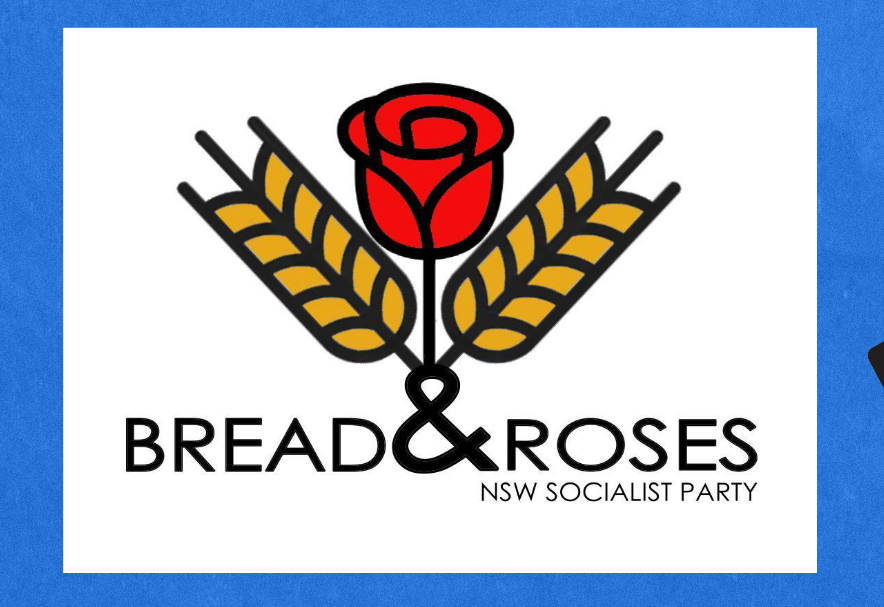
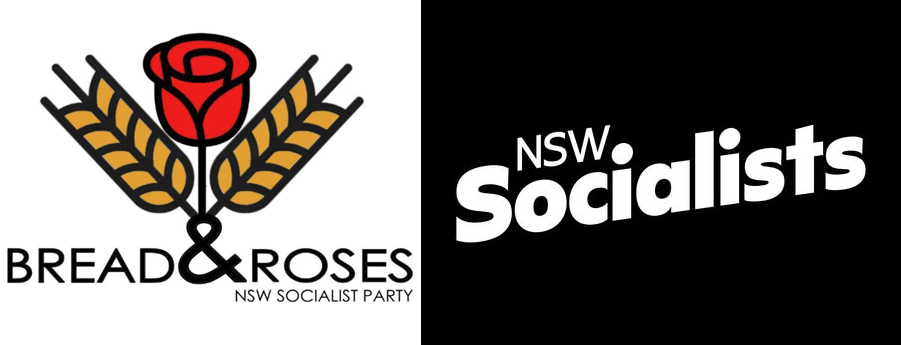
After the caucus publicly supported an ‘End the Blockade of Cuba’ demonstration in March, the secretary wrote insisting that Bread & Roses remove the reference to NSW Socialist Party from its logo.
Bread & Roses caucus members were told:
“The Bread and Roses Caucus has included NSW Socialists Party on its logo. I’m writing to inform you that this will need to be removed.”
The justification offered was even more surprising:
“There are a whole series of political and legal implications if this is not adhered to. We are unable to authorise material produced by an internal grouping.”
This raises an immediate and serious question. Are members of NSW Socialists now to understand that recognised caucuses cannot publicly identify themselves as part of the party when participating in political campaigns?
If that is the position, on such matters it places NSW Socialists members in a situation with even fewer democratic rights than members of the Australian Labor Party.
Inside the ALP there exist many organised tendencies and networks — Rainbow Labor, Labor Environment Action Network, Labor Against War, Labor Friends of Palestine, Labor for Refugees, and others. No one imagines these groupings require leadership “authorisation” before issuing statements or supporting demonstrations. Nor does anyone confuse them with the party as a whole.
Just as no one confuses Labor Tribune or Labor Against War with the political positions of the ALP as a whole, no one would ‘reasonably’ confuse the Bread & Roses caucus banner or logo as being representative of the NSW Socialists. You only have to look at it to make that conclusion.
The framework for internal political life
The NSW Socialists constitution explicitly provides for “internal groupings”, including caucuses and factions, provided they notify the secretary and outline their parameters. The intention is clear: pluralism inside a common organisation. The constitution says that “it is to be expected that such groupings will exist in a socialist party, and the party has no explicit or implicit criticism of the existence of internal groupings”. Further it says such groupings have the right to “promote their views outside of the party”.
The existence of internal political life strengthens a party. It does not weaken it.
The question raised by the present dispute is therefore not whether caucuses exist – they plainly do – but what practical meaning their existence has.
If caucuses are permitted only so long as they do not publicly identify themselves as part of the party, then their role becomes symbolic rather than political.
A socialist party worthy of the name should be able to accommodate organised political tendencies while maintaining unity around working-class independence and anti-imperialism.
Democratic rights vs organisational control
The claim that the party is “unable to authorise material produced by an internal grouping” misunderstands the role of caucuses entirely.
No authorisation was requested. Does Labor Friends of Palestine seek authorisation from Penny Wong before going on a Palestine demonstration? Does Labor Against War seek approval from the ALP leadership before issuing a press statement condemning AUKUS?
Internal groupings exist so members can organise politically around questions of strategy, solidarity and direction. If every public intervention requires leadership approval, then the distinction between a caucus and an administrative committee disappears.
It is a complete sect understanding of party building if initiative can only rest with the general-secretary. Branches, caucuses, individual members should be encouraged to take initiative that is broadly within the aims of the NSW Socialists. History has shown us where top-down policing of every action by a general-secretary leads us.
It also creates a bureaucratic limit to growth. Without independent initiative, a socialist party cannot become a mass working class party.
Attempts to justify this restriction by invoking unspecified “political and legal implications” is a complete fabrication. A banner that says “Bread & Roses – NSW Socialist Party” is not an attempt to make statements under the NSW Electoral Act in the name of the registered party (New South Wales Soc). No reasonable person would think this.
Democratic accountability inside a socialist organisation depends on members being able to articulate positions openly – including positions that extend or test the party’s existing practice.
The Hands Off Cuba question

The immediate issue that prompted this intervention was the Bread & Roses caucus’ support for a demonstration calling for ‘Hands Off Cuba’ on 21 March this year.
This itself raises a broader political question.
At a time when Donald Trump has publicly declared that “Cuba is next” while roaming the globe bombing, kidnapping and killing his opponents, it is difficult to see why socialists would hesitate to support such a mobilisation.
You don’t even need to think Cuba is socialist in order to oppose imperialist threats against it.
Anti-imperialist solidarity has always been a basic component of socialist politics.
The politics of legitimacy, leadership and party culture
The present dispute is therefore not about logos.
It is about what kind of political organisation NSW Socialists intends to become.
If the interpretation of the constitution allows the secretary to restrict how caucuses publicly identify themselves in political campaigns that do not contradict party principles, then the balance between unity and democracy begins to shift decisively toward bureaucratic control.
Any student of revolutionary history will know that the fact that we can read the debates between the Bolsheviks and Mensheviks – and even debates within the Bolshevik faction itself – were conducted openly before the working class, not closed off discussions with handfuls of people.
The arguments of Rosa Luxemburg and Karl Liebknecht, or Karl Kautsky’s debates against Eduard Bernstein remain available to us precisely because socialist parties historically treated open disagreement as a strength rather than a liability. It is the very bedrock that allows high levels of unity and voluntary disciplined unity in action, rather than action by the diktat of a general-secretary.
The labour movement in Australia needs a socialist party capable of combining unity of purpose with confidence in its own members’ political initiative.
If NSW Socialists – and the broader Socialist Party project – hopes to present itself as a serious electoral and working-class alternative, it will require a political culture that encourages organised participation, not one that restricts it unnecessarily.
The Bread & Roses caucus represents one attempt to contribute to that broader project.
The outcome of this discussion will help determine what kind of socialist party develops.
Labor Tribune wrote to NSW Socialists secretary Eleanor Morley inviting a contribution. She did not reply to our correspondence. We include a copy of that letter below.
Dear Eleanor
On Monday Labor Tribune will publish an article by a member of NSW Socialists that says you have instructed the ‘Bread & Roses’ caucus of NSW Socialists to remove reference to the fact that Bread & Roses is part of NSW Socialists on its logo.
Firstly, I want to ensure that this is in fact the case before I publish the article.
Second, I understand you make the claim that having the name of your party in public logos or names of caucuses or other internal groupings creates “a whole series of political and legal implications” and that you are not able to “authorise material produced by an internal grouping”.
I would be happy to publish comment from you on this matter. Specifically, your motivation for making this instruction and on what part of the NSW Electoral Act do you make this assertion?
How does this square with the fact that the Australian Labor Party has many internal groups that have a public manifestation that use the name of the Labor Party in its logos/names? (EG: NSW Labor Left, Labor Against War, Labor for Refugees, Labor Friends of Palestine, Rainbow Labor, etc etc.) None of these groups have their material authorised by the NSW ALP or the Australian Labor Party.
You make a claim that using the name ‘NSW Socialists’ or ‘NSW Socialist Party’ as a subheading on the Bread & Roses logo (which I have also seen) could create reasonable confusion with the wider party. On what basis do you make this claim given their is clear example from the ALP where using ‘Labor’ or even ‘NSW Labor’ in names/logos happens in logos, in media releases, on demonstrations and banners.
Finally, I make the point that the registered name of your party is in fact ‘NSWSoc’, which does not appear on the Bread & Roses logo.
My deadline for your reply is noon on Sunday.
Comradely yours,
Marcus StromEditor
Labor Tribune