

Like a puffed up war minister looking for a war, Pat Conroy delivered a pompous but empty speech on ‘progressive patriotism’ at the National Press Club. David Lockwood looks for some meaning in it.
‘From national security issues to conversations about so-called Australian values, Labor has edged ahead of the chest-thumping right.’
Lidija Ivanovski, Australian Financial Review, 25 March 2026
WAR IS PEACE
Slogan on the Minitrue building, Nineteen-Eighty-Four, George Orwell

In July, Pat Conroy was next on the National Press Club’s speakers’ list following Pauline Hanson’s smash-hit performance the month before. Conroy is the Minister for Defence Industry and the Minister for Pacific Island Affairs. In a speech widely distributed beforehand, Conroy was keen to tell us about his new ideas on ‘progressive patriotism’.
Actually, they weren’t new and they weren’t his.
Back in May 2025, Anthony Albanese named and embraced ‘progressive patriotism’, declaring that it was no less than “a symbol for the globe in how humanity can move forward”. (ABC Radio, ‘Progressive Patriotism – is it an idea whose time has come?’ 29 May 2026)
South Australian premier, Peter Malinauskas, on the night of his landslide victory in the South Australian elections, kicked it around a bit, quoting Henry Lawson in support of a kinder, gentler nationalism. Doubtless, this gave the over 250,000 South Australians who had just voted for One Nation pause for thought. He was followed by Victorian Labor MP Julian Hill who called for progressives to embrace both the Australian Flag and Day.
Championing AUKUS as a true expression of being dinky-di, the mostly unknown senator Raff Ciccone from Victoria, has also take this Big Idea out for a spin.
Anxious to climb aboard the True Blue train as it was leaving the station, comrade Conroy galloped down to the Press Club to bring the special magic of his own portfolio to bear on progressive ideas.
Defence. And most particularly, the progressive nature of spending buckets of our money on military equipment.
Guns or butter
Now, many who regard themselves as ‘progressive’ might find the concepts of war spending and progressive social reform strange bedfellows. Capitalist governments always believe this to be the case, pointing out the absolute necessity of the former and the recklessness of the latter. The two are, more often than not, placed in opposition to each other in terms of social priority. Joseph Goebbels, the Nazi Propaganda Minister, only spoke the truth when he said in January 1936, “We can do without butter, but, despite all our love of peace, not without arms. One cannot shoot with butter, but with guns.”
Conroy however has discovered that war spending and social reform are the same thing!
“Strong defence of our country,” he said, “is a critical part of understanding what Australian progressive patriotism looks like today.” And therefore, “seeing defence at the heart of our approach to progressive patriotism is essential”. What might be regarded as the legitimate ambitions of a Labor government (he listed them, somewhat minimally, as Medicare, NDIS, schools and economic transformation) are simply by-products of the main game, which is preparation for war, sorry, defence spending.
When he listed the glorious record of previous reforming Labor governments, one could not help noticing that many of them rode the crest of actual or threatened wars. For Conroy, this reaches its high point in his own government’s efforts: “The largest increase in peacetime defence investment ever.” And we’re not even at war with anyone! (yet).
Contrary to the historical record, Conroy painted a picture of arms spending happily co-existing with spending on social programs. We are all well aware that this is false. For capitalist governments, the relationship between the two is a zero-sum game. What you spend on missiles you cannot spend on social welfare. As Donald Trump put it:
“It’s not possible for us to take care of daycare. Medicaid, Medicare, all these individual things . . . we have to take care of one thing, military protection, we have to guard the country.”
US President Donald Trump, Easter Address, April 2026
We are forever being told that that the money is not there for state investment in industry or infrastructure, to improve the health and age care systems, to do something meaningful about the housing crisis or Closing The Gap. But vast sums are readily available for future warfare. Those who question this are not only not patriotic – but, according to the Labor leadership, not progressive either.
Conroy assured his listeners that ‘We don’t want a fight’ – deterrence is the thing. The aim is “to deter aggression and maintain peace, stability and security”.
But if we don’t manufacture or buy a whole lot of weapons, we will be vulnerable.
And if we are vulnerable, our sovereignty will be undermined.
And if we don’t have sovereignty, “we cannot pursue all the goals of a progressive political party”.
Simple really. First, we have to make sure we’re ready for war (with up-to-date equipment – mostly bought from the US – that always needs to be more up-to-date). Then, if this process ever ends, and if there’s anything left over, we can improve society. The circle is squared. Patriotism becomes progressive. People should not grumble about the huge amounts of money being poured into ‘defence’ because those amounts are necessary to make our lives better (while simultaneously draining the funds that would make better lives possible).
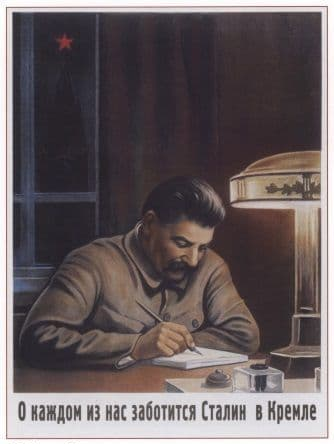
The attempt to tie leftwing or socialist politics to nationalism is nothing new and is a dead end.
Conroy went on to assure the audience that “we’re listening to Australians. And we’re focused on delivery.” He proceeded to a long list of expensive deliveries: ships, landing craft, Bushmasters, Ghost Bats, Ghost Sharks, guided weapons, explosive ordnance, missile factories and Bluebottles (no, really[1]). Just what you wanted, right? I doubt that many readers have petitioned their local MP for more Ghost Bats lately. But if you’re unsure that these are the sort of ‘services’ that a Labor government should be delivering, just remember that our sovereignty depends on them. And without sovereignty . . .
Speaking of which, Conroy threw in a gratuitous grovel to the US. “We still stand tall with our great friend and ally – the United States,” he purred. Clearly worried that even the mention of the word ‘patriotism’ might make our great friends doubt our everlasting steadfastness (you can never tell with Secretary of War Pete Hegseth). But even this has a patriotic side. “At the same time we can have self-reliance in the alliance – and strategic autonomy.”
The purest nonsense, I’m afraid. Australia is not (and never has been) self-reliant in matters of defending its borders against largely imaginary enemies. From a reliance on the British empire until 1941 and a pivot to the other Great White Empire. Post-war Australia governments have made US aid and a US presence the cornerstone of defence policy, continually pulling a willing America into aggression/defence arrangements in our area. And without exception, Australia has jumped into every major war of choice prosecuted by Uncle Sam, from Korea, Vietnam, Afghanistan, Iraq and now Iran.
The current AUKUS disaster is such policy writ larger than ever. Under it, Australia will be in an industrial and strategic lockstep with America’s aggressive intentions towards China. Within that policy, the notion that Australia has ‘strategic autonomy’ on defence and foreign policy questions is risible. As Mark Kenny from the ANU Australian Studies Institute put it:
“Critics of the Anglophone defence pact say its reliance on American nuclear submarines and its inbuilt technological dependence portend the most significant dilution of national sovereignty since World War II.”
Mark Kenny, Director of the ANU Australian Studies Institute
That’s not very patriotic, is it?
One of the key dynamic developments of capitalism was the creation of a global market and a global working class. Capitalism is a system of violent competition between states, with the capitalist class seeking to win “its workers” in that competition through nationalism.
Given the global character of the working class, only our class can positively overcome this contradiction through international working-class solidarity and coordinated action for a socialist and post-capitalist society.
Only a global socialist system can use the relative and variant strengths of production and natural resources for the benefit of all and remove the root causes of war.
[1] The Bluebottle is a long-range, autonomous uncrewed surface vessel (USV) used by the Royal Australian Navy for persistent maritime surveillance and intelligence operations.