
Inspired by the world communist movement and disgusted by the West’s failure to fight fascism in Spain a generation joined the International Brigades. We mark the 90th anniversary of the start of the Spanish Civil War with this portrait of just one such man, Jack Franklyn.
The Australians who fought against the fascist rebel General Francisco Franco in the Spanish Civil War were people of conscience. They were brave, courageous, and were among the first Australians to understand fascism’s threat.
One of these people was Jack Franklyn. He was a wharfie, a seaman and one of Australia’s first anti-fascists.
He lived an extraordinary life through some of the most important events of the twentieth century. Born in England in 1897, Franklyn survived three years on the Western Front. After the war, he went to sea before making his way to Australia, where he joined the Communist Party. He was active in the Seamen’s Union of Australia and later went prospecting in the Northern Territory.
In 1936, a group of right-wing military officers launched a violent rebellion against the Spanish Republic. Hitler and Mussolini sent troops to assist the fascist rebels, but Britain and France refused to help the democratically elected government of Spain. Into this void stepped the International Brigades, a volunteer force of 35,000 people from around the world who wanted to stem the advance of fascism.
The Australian government opposed participation, but 70 Australians ignored their government and joined the International Brigades. Most were working-class men who had experienced tough times during the Great Depression. Franklyn knew little of Spain’s history, culture or economy, and could not speak Spanish, but saw the war as part of the global struggle against fascism.
Working his way to Europe as a seaman, Franklyn arrived in Spain to fight fascism with the International Brigade. He joined the British Battalion, and according to his sergeant, was “quite a character” who was “nuts on bridge”. Franklyn cajoled a group of soldiers to sit “half the night and half the day in a dugout under an olive tree playing bridge” and regaled them with stories of his Outback adventures.
Franklyn wrote poems, sang and played his harmonica. He wrote home saying he was fully engaged in “building strong fortifications which the fascists will never penetrate”. But despite his optimism, the war was going badly.
In an attempt to turn the tide, a surprise attack across the River Ebro was launched. The British Battalion pushed to the outskirts of Gandesa, an important transport hub. But casualties were heavy, and Franklyn was lucky not to be killed.
The beret I am wearing has two holes in it where a bullet whistled through behind the neck. I must try and keep it for a souvenir. I can have a good laugh every time I look at it, and say to myself, boy, that was a close shave.
He was eventually wounded with a piece of shrapnel hitting him in the cheekbone, just below his right eye.
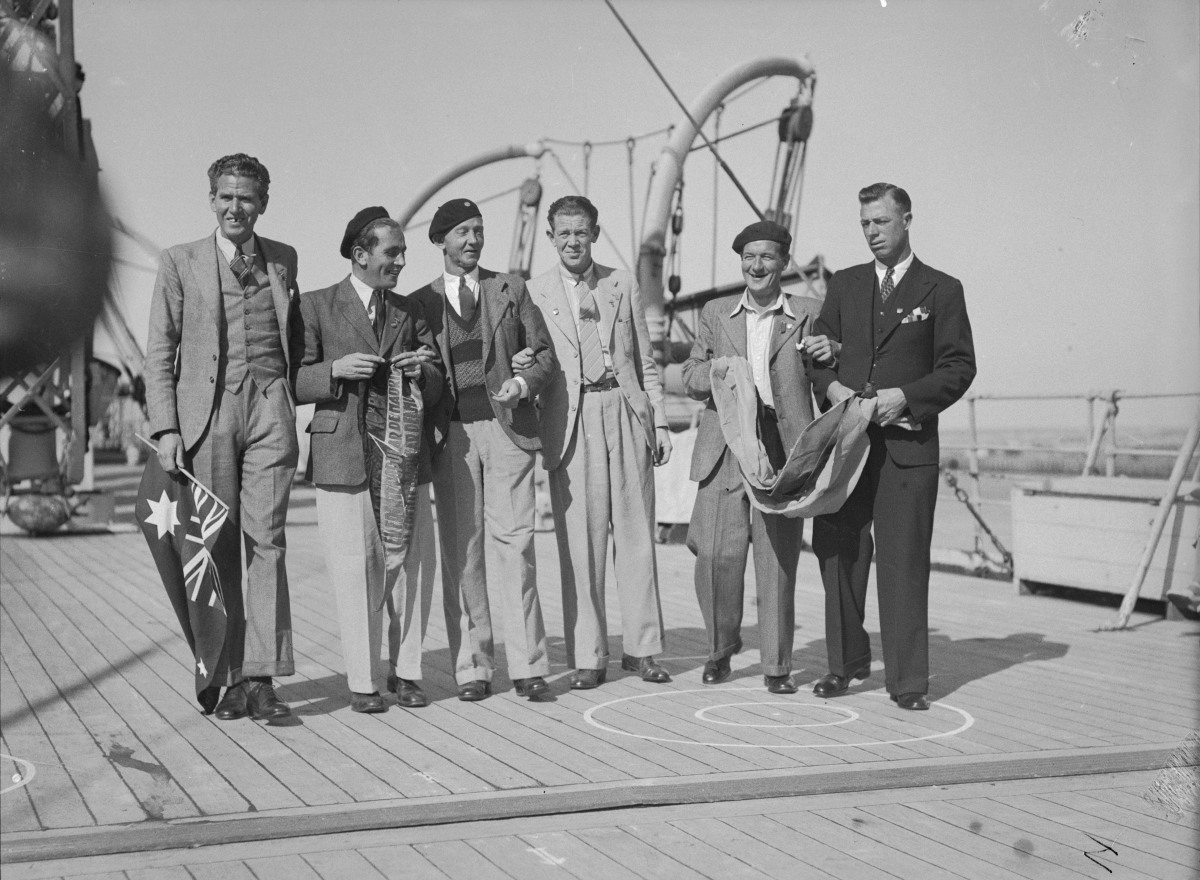
The International Brigades were withdrawn in September 1938. The defeat and departure left Franklyn heartbroken. With five other International Brigaders, he made his way home. A large crowd of supporters greeted the men at Perth’s train station, and a truck mounted with banners carried them to a lunchtime meeting. Franklyn gave a speech about the destructive power of Nazi bombers and said all democratic people should “unite before it is too late”.
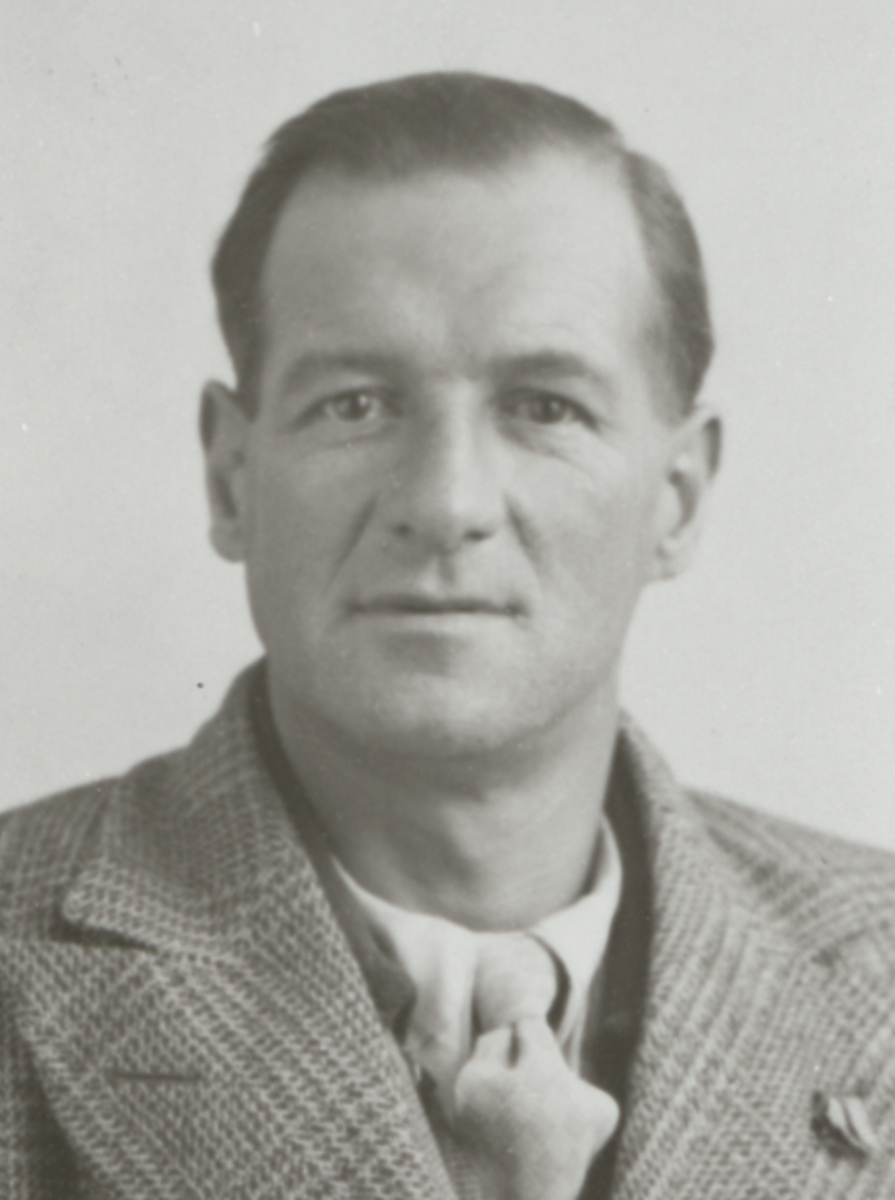
Franklyn didn’t have to wait long to be proven right. Six months later, the Second World War began, and Australians were soon fighting the forces of fascism in North Africa. Franklyn enlisted a few weeks after Pearl Harbour. To ensure his enlistment, he lied about his age and made himself five years younger. His papers record that his right forearm was adorned with a love-heart tattoo. He trained as a commando, but in his mid-forties the effort was beyond him, and he was discharged after three months.
He then went to work on Sydney’s wharves. In July 1945, he had a drink in the Fitzroy Hotel at Woolloomooloo. After closing, there was a melee, and Franklyn was injured. He died several days later. His funeral was a major event, with four hundred unionists marching in columns ahead of his coffin.
This article was first written for publication in Maritime Workers First, the magazine of the Maritime Union of Australia (MUA) Western Australia branch. It is reproduced here with permission.
Michael Samaras is the author of Anti-Fascists: Jim McNeill and his Mates in the Spanish Civil War which is available online from Connor Court Publishing and the MUA Shop.