
What lies behind the spate of recent horrific stories of sexual assault and allegations of sexualised power? Brunhilda Olding examines the issue.
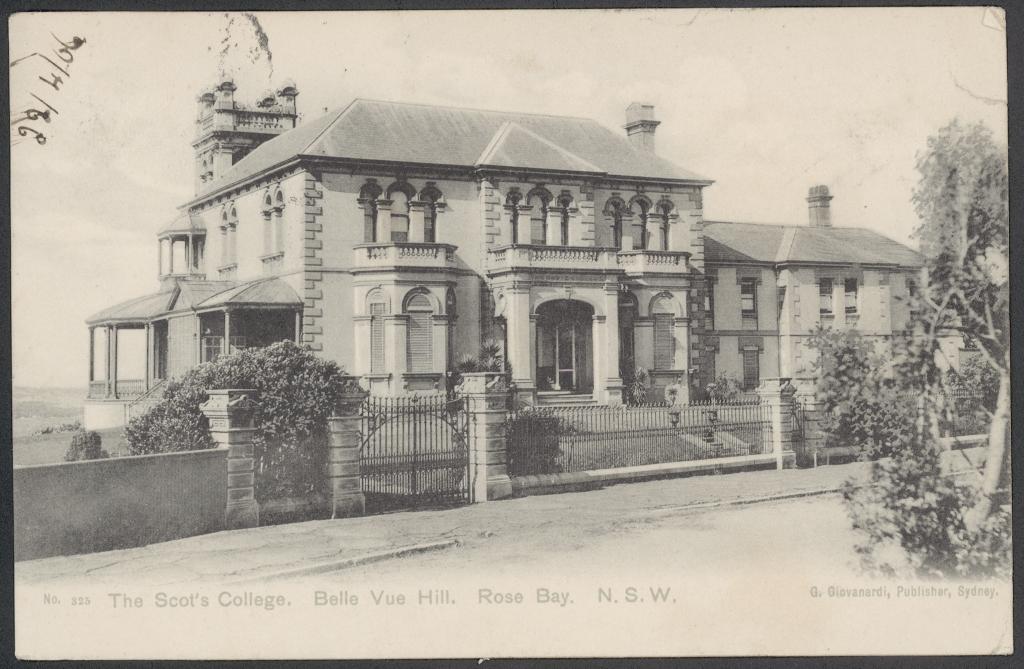
From St Kevin’s and Scots College to the Sydney Swans and Alan Jones, there has been a steady stream of revelations and allegations about sexual violence, misogyny and male entitlement among some of the most powerful institutions and individuals in Australian society. At the same time, domestic and sexual violence remain pervasive throughout society and a new generation of young men is being exposed to the politics of the manosphere, from Andrew Tate and his imitators to a broader online culture of resentment towards women.
The ruling layers of Australian society inherited from the arcane world of the ruling elite of the British Empire an entire cultural edifice grounded on the normalisation of sexual predation. The elite schools and universities which serve as their breeding grounds, foster an active culture of viewing women as lesser, and sex as something owed to men.
This is not some sort of new development which came about through the rise of US President Donald Trump or the popularity of Andrew Tate being promoted through the mystic concept of the algorithm as the more liberal sections of bourgeois media likes to claim. What we are seeing is a political reaction to the upswing of mainstream feminism that shaped culture throughout the period of ‘high neoliberalism’. Today as the declining rate of profit drags down the neoliberal world order the gains won by women are under attack, with this current wave of misogyny emerging as one form this reaction takes.
These developments are often presented as a problem of individual behaviour, poor sex education or a supposedly backward generation of men. There is some truth in the argument that young people need better education about sex, consent and relationships. But this does not explain why sexual entitlement is so deeply embedded in institutions and broader soceity, nor why men with enormous social power have so often been able to abuse that power with impunity, often in full sight.
This systemic culture of sexual violence however seems to be something entirely beyond the grasp of the bourgeois media. Instead, the moral guardians of order and society in the Guardian seem to believe that the issue is merely the growth of violent sex and internet pornography rather than anything deeper. This vision which the Australian government seems to have adopted, fundamentally will not work. If you wish to effectively ‘fight’ violence in sex the way to do so is proper sexual education, and a serious cultural push for genuine sexual liberation and freedom.
The question that needs to be asked is why so many of these systematic cases emerge from institutions at the top of Australian society.
The culture of the ruling class
The elite private schools are an obvious place to start. These schools do not merely educate children. They reproduce networks of privilege, confidence and social power that can last for a lifetime. They prepare many of their students to enter the professions, business, politics, the media and the upper levels of the public service. Their students learn, often without anyone explicitly teaching them, that they belong in positions of authority.
The ‘scandals’ at schools such as St Kevin’s and Scots Collage are therefore not adequately explained as cases of a few badly behaved boys. Nor should the answer be simply to provide those boys with better information about consent. We need to ask what kind of social environment produces young men who can come to regard women as available to them, and what kind of institutions allow that attitude to develop and sometimes go unchallenged.
We should campaign for the nationalisation of all private schools and the generalised integration of children into a common, democratic and secularised schooling system. Until that point, private schools should be deprived of all public monies.
The allegations currently before the courts concerning Alan Jones make the point about unchallenged behaviour particularly stark. In Jones’s case, the complainants are men, including a young man who was 17 at the time of the alleged conduct. Jones has pleaded not guilty to all charges and is defending the case in court.
The allegations therefore cannot simply be explained as men believing they are entitled to women. They demonstrate something broader: the operation of patriarchal power and sexual entitlement through enormous disparities of age, status, professional influence and social power.
This does not make the question of gender irrelevant. Quite the opposite. Male sexual violence against women is one of the most important and widespread expressions of the relationship between male entitlement and power. The assumption that women’s bodies, attention or sexual compliance are available to men has been a longstanding feature of women’s oppression and is rooted in the millennia-old emergence of private property and class society.
But sexual entitlement is not confined to heterosexual relations. A powerful man may regard another man as sexually available to him, particularly where there is a vast disparity in age, status or professional power.
The powerful man who believes that other people exist for his gratification is expressing a social relation in which his own position gives him a presumed right to other people. Gender is central to the historical organisation of sexual power, but wealth, age, employment, celebrity and institutional authority also give someone the ability to impose their will on others.
This is why the concentration of so many scandals in elite institutions deserves attention. The question raised by the private-school scandals, sporting organisations and allegations surrounding Jones is not simply why some individuals have bad attitudes towards sex. It is why institutions inhabited by people with unusually high levels of social power can repeatedly generate environments in which entitlement flourishes and complaints are difficult to make.
Sexual violence and entitlement do not only occur at the upper levels of society, however. How many service workers have endured sexual harassment because complaining about a customer or manager might threaten their job? How many migrant workers have been raped or placed in situations where saying no carries consequences they cannot afford? How many young people have been expected to tolerate the behaviour of someone with greater social status because the institution around them is more concerned with protecting its reputation than protecting them?
It was never simply ‘the old days‘
There is another myth that needs to be rejected. The problem is often described as though Australian society used to accept sexism and sexual violence, before suddenly discovering feminism and consent in recent decades.
People did not simply accept sexism “in the old days”. Women and working-class people and our organisations have been fighting sexual harassment, domestic violence, unequal marriage laws, discrimination and the denial of reproductive rights for generations. The gains of the women’s movement were not gifts bestowed by a more enlightened ruling class. They were won through collective struggle.
The history of the struggle for women’s liberation is, among other things, a history of people refusing to accept precisely the behaviour that ‘respectable’ society told them they had to tolerate.
What has changed is that those struggles achieved real gains, while the material basis of women’s oppression has remained.
The current resurgence of misogyny is therefore not simply the survival of an old-fashioned attitude. It is also a reaction against the advances made by women. The growth of the manosphere, Andrew Tate and similar figures is part of a broader political reaction in which young men are encouraged to understand their economic and social frustrations not as products of an increasingly unequal society, but as the result of women having gained too much.
This is particularly attractive in a society in which traditional forms of male privilege have been weakened while secure employment, affordable housing and other forms of social security have been undermined. A young man who cannot afford a home, has insecure employment and sees little prospect of economic independence can be offered a simple explanation: women, feminists and “woke” culture have taken away what is supposedly his rightful place.
For these young men alienated by modern capitalism, the answer is not to reinforce forms of male privilege. It must be to fight for a society in which neither men nor women have to base their security and status on the domination of others.
Leaving violence is a class question
The material conditions facing women attempting to escape violence demonstrate why this matters. A recent Anglicare report found that the average cost of leaving a violent relationship has increased by 71% over the past decade, with the cost of leaving estimated at around $7,017. For a woman without savings, secure employment, family support or access to public housing, leaving an abusive partner can be an enormous economic undertaking.
For those who do leave, unless they are one of the few lucky enough to be able to secure a position in vanishingly rare social housing, the only support available is either couch surfing or relying on web of primarily church-based charities.
This is not an argument that domestic violence is simply caused by poverty, nor that violence is somehow a specifically working-class problem. It is an argument that economic independence determines the choices available to someone experiencing violence.
For those that live outside the urban core of Australian capitalism the effects are even worse. Decay is the baseline expectation for rural Australia.
A woman who has access to secure housing, a decent income, free childcare, healthcare and other public services has considerably more capacity to leave an abusive relationship than one who faces homelessness and financial ruin. The destruction of public housing and the erosion of welfare provision therefore have consequences for women’s freedom that cannot be separated from the question of gender oppression.
The same applies in the workplace. Legal rights against sexual harassment are important, but rights that exist largely on paper are of limited value when an individual worker must take on a powerful employer alone. Collective organisation, union representation and the ability to defend workers against victimisation are essential parts of the struggle against sexual harassment and abuse.
What does liberation require?
There is an obvious place for comprehensive sex education. Young people should understand consent, contraception, abortion, sexuality and healthy relationships. But education cannot transform the social relations in which people live.
Nor can we rely on periodic moral panics about pornography, violent sex or the latest online misogynist. The government can seek to regulate individual platforms and prosecute individual offenders, but neither will abolish the social relations that allow sexual entitlement to reproduce itself.
A serious program against sexual violence must therefore include concrete measures to change those relations: secure and affordable housing; properly funded public services and women’s shelters; free childcare; reproductive rights; strong workplace protections and union organisation; action against sexual harassment in schools and workplaces; defunding and abolition of private schools; democratic oversight of social institutions; and a determined struggle against the networks of privilege that protect powerful men.
The workers’ movement has a particular responsibility here. Women’s liberation cannot be treated as an optional cultural issue to be taken up when there is a particularly horrifying case in the news. Unions have the collective power to challenge the economic dependence that makes workers vulnerable to harassment and abuse. The labour movement can organise women and men together against the institutions and social relations that reproduce inequality.
Unions themselves can also be sites of male domination and harassment.
At the same time, we should not pretend that winning reforms within capitalism will solve the problem.
Women’s liberation, sexual liberation, the right to abortion, and genuine bodily autonomy can only be won through the victory of the working class and the beginnings of generalised human freedom through a world socialist society.
It is the task of the workers movement if we truly wish to represent liberation for all of humanity to carry these demands forward on their banners into every possible field of struggle. We are not prudes, we are the harbingers of a free society and that requires an unrelenting commitment to the flourishing of all of humanity, and an unrelenting struggle against the laws and culture of bourgeois society in the fight for women’s and human freedom.
Gendered ideas and forms of entitlement have deep historical roots and will not disappear simply because the ownership of the means of production has changed. That struggle will no doubt continue within socialist society.
But overcoming private property and class society would transform the material conditions in which these relations are reproduced. A society based on social ownership, economic security and democratic control would remove much of the economic dependence and institutional power that currently allow exploitation and abuse to flourish. It would give the working class the material basis from which to combat the remaining forms of gendered oppression far more comprehensively than is possible under capitalism.
That is what makes women’s liberation a socialist question. We should fight for every reform that expands women’s freedom now, while recognising that the ultimate goal is not merely a more polite version of the existing society.
The alternative is a society in which relationships are based not on economic dependence, status and entitlement, but on genuine equality and freedom. That requires both the immediate struggle against sexism and sexual violence and the wider struggle to overturn the social relations that give those forms of power their material foundation.
Brunhilda Olding is a member of Communist Unity.