
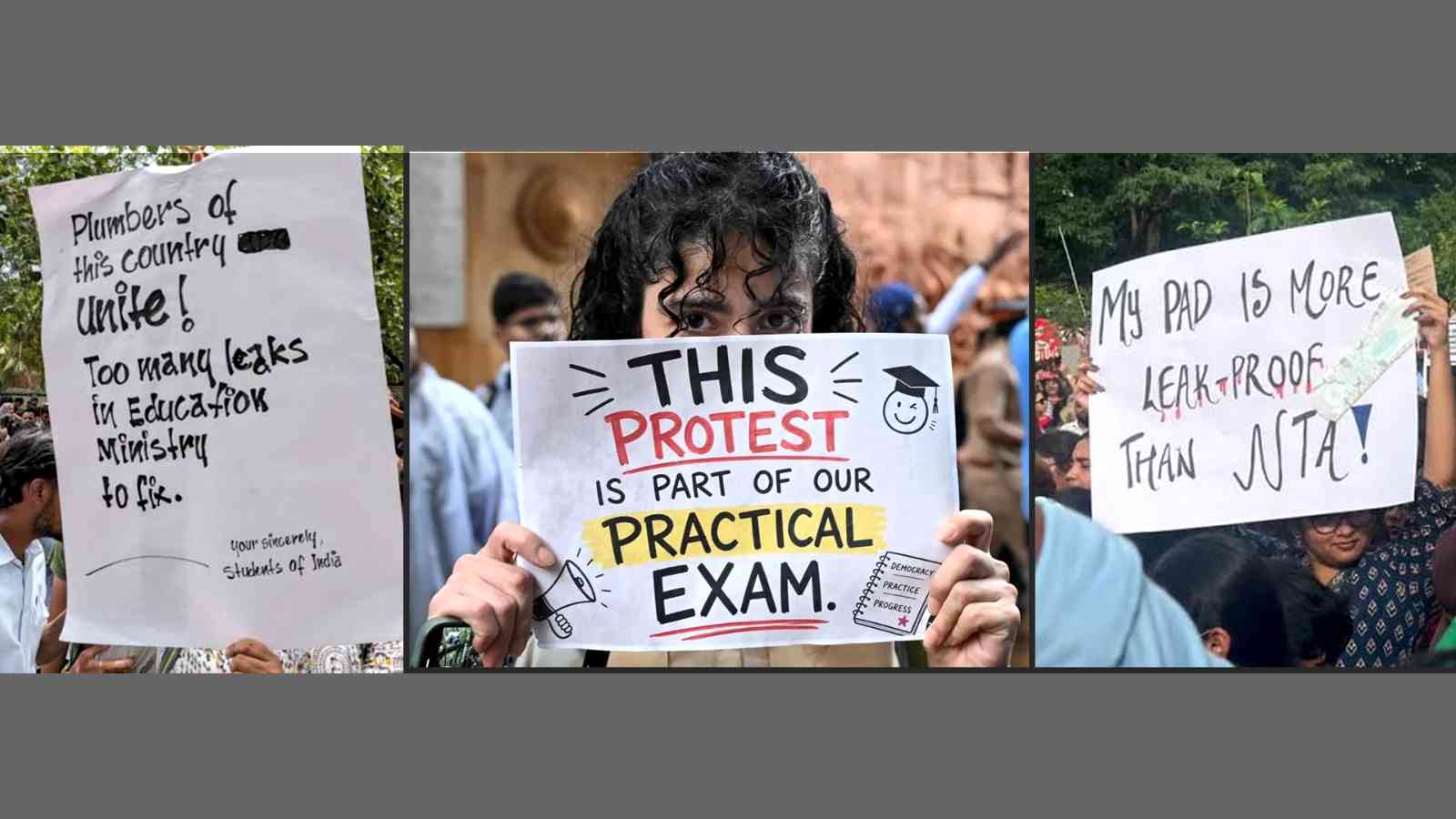
David Lockwood looks at the surprising resilience of India’s Cockroach party.
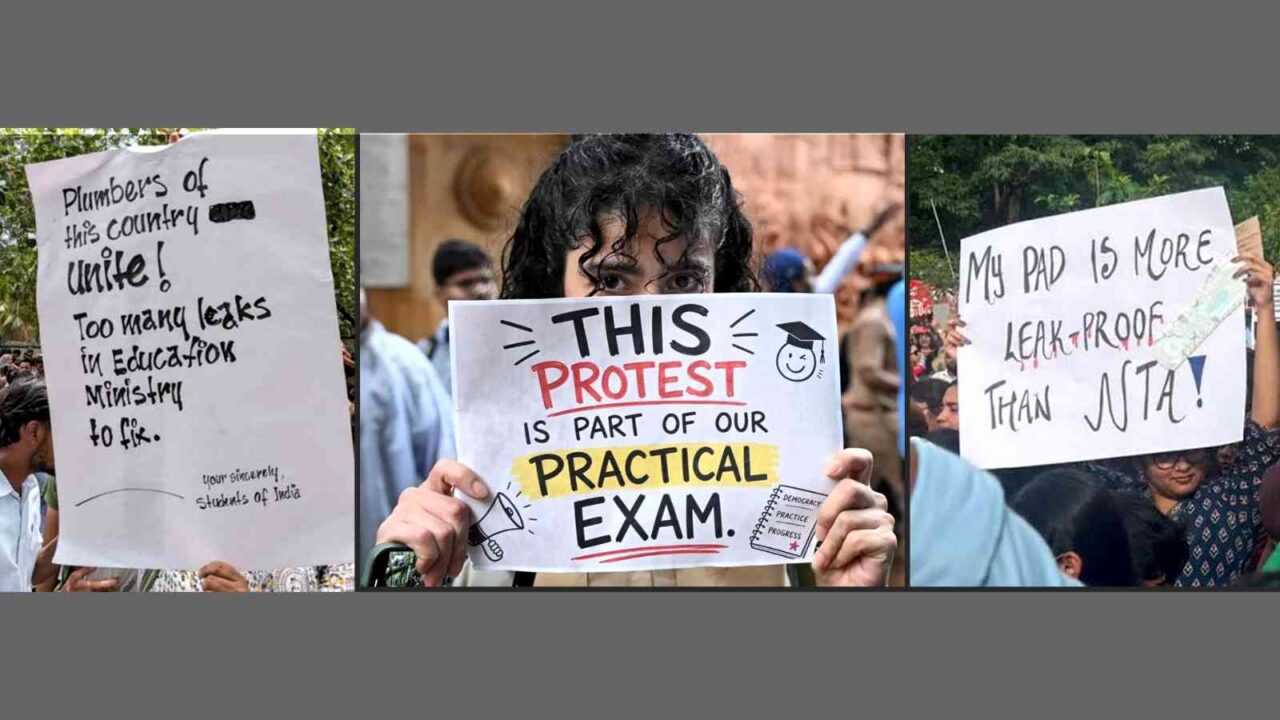
India’s Cockroach Janta Party (CJP) demanded reform in the higher education system. It defied the Hindu-nationalist BJP government, set up a protest camp in the middle of Delhi and repulsed a vicious attack by the police and special forces. The CJP, now joined by thousands of supporters, stood their ground.
They achieved what had become their main demand: the resignation of Education Minister Dharmendra Pradhan on 25 July. Scenes of justified jubilation ensued, for this is a government that doesn’t apologise and doesn’t let its ministers resign. But in this case, it was forced to.
The protest camp at Jantar Mantar in Delhi packed up. But, uncharacteristically for a ‘Gen Z’ agitation, the movement did not.
Despite fears (including on the part of this author) that since Pradhan’s resignation had eclipsed all other issues, its achievement would be regarded as total victory, this was not the case. In fact, the CJP campaign has broadened out both geographically and issue-wise. While the main focus was on Delhi, there were CJP-linked education protests in 34 Indian cities, including the metropolises of Chandigarh, Lucknow, Mumbai, Kolkata and Hyderabad. All of them involved varying degrees of confrontation with the police. In many cities, the movement for education reform remains on the streets.
Pradhan’s resignation was not the movement’s only demand. The CJP’s original five demands took aim at senior judges, opposed Modi’s attack on the electoral system, demanded that 50% of the parliament and cabinet be women and sought the exclusion of the Adani and Reliance corporations from media ownership.
These demands were swiftly overshadowed by what became the focus of the campaign: the abolition of the India-wide examinations that it is necessary to pass in order to get into the professions (doctors, engineers) and government positions. These exams are a nightmare for their candidates, requiring months and sometimes years of preparation, along with expensive special coaching.
For decades, these exams have been mired in an extensive network of corruption and bribery. Over the past few years, the exams have been further sabotaged by the papers being leaked – followed by demands that the exam is cancelled or called off altogether.
And while these tests are not taking place, or the results not being released, the mountain of the graduate unemployed gets higher and higher.
In recent months, with further revelations of cheating and abuse, there was a general sense that the government, the education department and its BJP minister, had entirely lost control of the graduate education system and so the demand for Pradhan’s resignation came to dominate the Cockroach Party’s agenda.
But the Cockroaches’ initial demands, arguably more political, were (and are) constantly seething in the background. The CJP leaders also maintain that three demands remain outstanding from the Jantar Mantar phase: compensation for the families of exam-induced suicide victims; the withdrawal of all charges against demonstrators; and an apology from the Delhi police and the riot squad for their behaviour on 20 July. They gave the government a deadline of 5 September [MS1] to drop the charges.
On 1 September, the Supreme Court quashed all cases against the thousands of student demonstrators arrested on 20 July. Another defeat for the Modi regime and its pet judiciary.
But the government has said nothing about the crisis in the education system and the growing ranks of the young unemployed.
The movement, meanwhile, has spread beyond higher education and beyond street protests. Far from dissipating, as is typical of Gen Z movements, the CJP decided at a leadership meeting (see below) in early August to turn its attention to the appalling state of India’s government schools. The schools are notorious for broken classrooms, missing teachers, dirty toilets, unsafe buildings, lack of seats, unreliable drinking water and impassable access roads. A number of schools have simply been abandoned as unusable.
So: an online meme campaign? A hunger strike? A demonstration?
The Cockroaches decided instead to organise their supporters into inspection teams, armed with cameras, to go into ordinary schools, film the conditions and put the results online with suitable commentary – plus deadlines for improvements. This also involved local communities which were demanding decent schools. At the same time, the CJP demanded from state education ministers facts and figures on school infrastructure, funding and teacher vacancies over the last five years.
Predictably, in BJP-ruled states like Rajasthan and West Bengal, there has been violent resistance to the inspection teams. But the campaign has already produced some results. In Uttar Pradesh, the fiercely Hindu-supremacist chief minister, Yogi Adityanath, has issued a 14-point checklist for 40,000 schools to address grievances. In Rajasthan, despite bashing up the CJP inspection team, the BJP state government has now allocated 125 billion rupees (A$1.8 billion) over three years to upgrade the school system. Adding direct action to the audit campaign, tribal (indigenous) students in Pune, Nagpur and Nashik went on hunger strike until their demands for better conditions were met. They were.
Overall, the Modi government, though lauded (as recently as last July as ‘The Boss’) by Australian Prime Minister Anthony Albanese and dozens of other Western leaders, is looking decidedly reactionary, brittle – and increasingly weak.
The CJP has made some strides towards organisation. Around Jantar Mantar, it was a classic Gen Z protest outfit, making a transition from online fun to an actual movement of people (though still with the fun, despite the violent attacks). Various analysts praised the movement as ‘leaderless’. Thankfully, they were wrong. It was directed by a leadership group around Abhijeet Dipke, Saurav Das, Abhijeet Ranka and Ratna Singh. That group took the decisions to stay at Jantar Mantar, to begin the hunger strike, to press on with the 20 July demonstration and so on. It has wisely ignored advice to remain at that level.[1] The leadership has enlarged itself into a National Working Committee which met in early August and initiated the schools campaign.
A step forward (and a rejection of the ‘no leadership’ nonsense), but a democratic structure would of course be preferable – and more effective. We should also note that for the politics of the CJP to advance (beyond a series of campaigns) it would need a clear set of ideas on which to base the all-encompassing demands for ‘reform’ and ‘change’. The word ‘ideology’ has been raised – but quickly rejected (thus far) as smacking too much of the present system.[MS2]
There is more to this movement than the Cockroaches. After years of defeat at the hands of Modi and the BJP, the main opposition party, the Indian National Congress appears to be undergoing a bit of a resurgence. The Congress had, in fact, launched a movement around student unemployment (‘Chhatron Ki Goonj’ – Student Outcry) at the same time as the Cockroaches kicked off, holding massive protests in Kota and Dehradun in June and July. Congress also brought the opening sessions of parliament to a standstill, demanding that the student demands be discussed. Finally, the two main Congress leaders, Rahul and Priyanka Gandhi, were arrested in a protest outside Modi’s house on 21 July. The Congress has continued its mass outreach campaign in tandem with the CJP, careful not to be seen as trying to take it over. They aim to have rallies in almost 800 cities across India.
At the same time, Congress has maintained its generally more aggressive stance to the Modi regime, regularly shutting down parliament rather than letting the government carry on as usual. Congress leader, Rahul Gandhi, argues that the BJP has systematically taken over India’s state institutions and therefore ‘resistance’ must take place outside them. (National Herald 12 June 2026.) The Indian left has also played a major part, from inside the movement. This applies especially to the youth groups of the communist parties – most particularly, the All India Student Association[2], which provided three of the hunger strikers at Jantar Mantar.
Neha Bora, the AISA president, told the Deccan Herald that her group was one of the first to respond to the CJP call and to jump into the action from early June. Since they were “not new to student activism”, the CJP turned to them for advice. And they have remained in close consultation ever since. The organisational memory of the AISA and other left groups has clearly been invaluable.
But analysis – what the movement represents, where it’s going – has been curiously sparse. The left youth groups and the CJP are dynamic on strategy and tactics – spectacularly so – but rather coy on the politics of the situation. The left organisations are (at the time of writing) yet to publish anything serious on what the movement represents and whether it can really weaken the Modi regime.
Liberation (the CPML journal) declared in September:
‘Jantar Mantar showed us glimpses of an unprecedented political awakening and assertion of India’s Gen Z … Serial [exam] paper leaks and all pervasive corruption triggered the Jantar Mantar explosion, but the youth upsurge is not going to remain limited to these issues.’
Let’s hope not. But political analysis, left unity and organisation remain the key.
[1] Anand Teltumde in Frontline urges ‘… no central command or headquarters … loose coordination …no formal ideology … no visible identity’. (‘What Can the Cockroaches do next?’ Frontline 8 August 2026)
[2] www.aisa.in. AISA is affiliated to the Communist Party of India (Marxist Leninist) – Liberation (www.cpiml.org)