
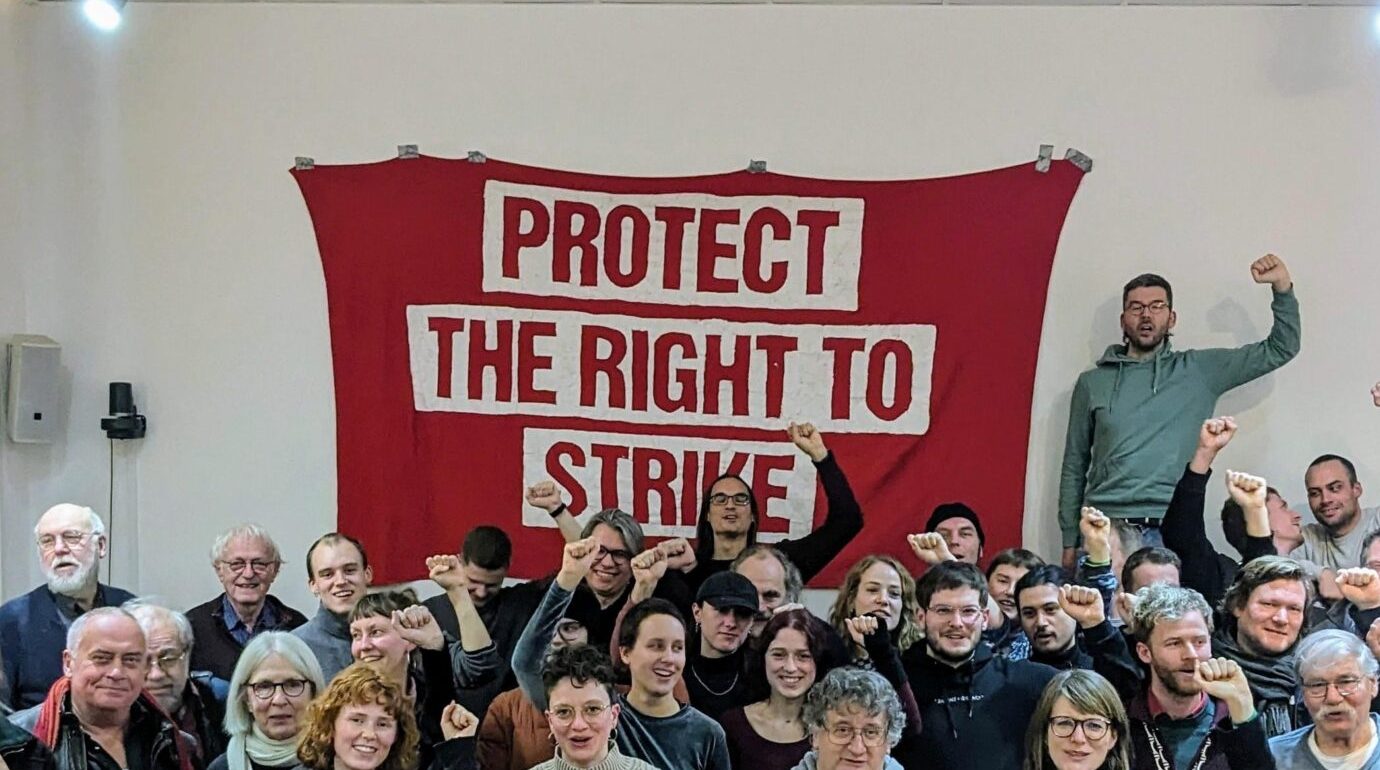
The International Court of Justice (ICJ) has ruled that the right to strike is protected by convention of the International Labour Organization (ILO). But these protections mean little to workers in Australia while the Fair Work Act remains in place. Bob Sparks investigates.
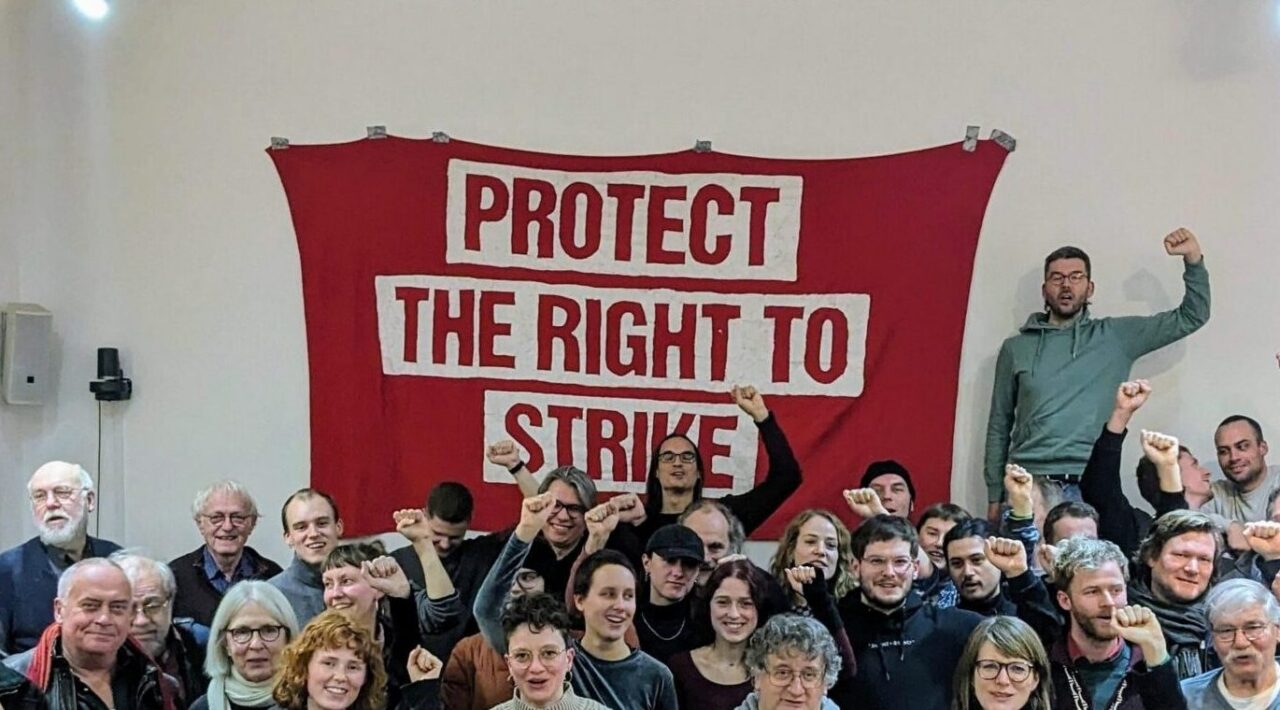
The International Court of Justice (ICJ) has recently ruled that the right to strike for workers around the world is protected by International Labour Organization (ILO) convention. In late May, the ICJ ruled by a vote of 10 to 4 that the “the right to strike of workers and their organizations is protected” under the Freedom of Association and Protection of the Right to Organise Convention, 1948 (also known as ILO convention No. 87). This ruling by the UN world court settles a long-running dispute between international employer organisations and union federations that began in 2012 and was referred by the ILO Governing Body to the ICJ back in November 2023.
ILO convention No. 87 does not explicitly refer to the right to strike. As University of Sydney Professor Shae McCrystal explained in a recent article, the ILO argues that the convention nevertheless does protect the right to strike, because workers have the right to form their own associations and organise their own programs and activities – and strike action is one such protected activity. The ICJ ruling now makes it clear that the right to strike is a necessary implication of ILO convention No. 87.
The ICJ ruling is of course good news. But there is one big problem. This “landmark advisory opinion” is not legally binding on United Nations member states. ILO convention 87 was ratified by the Whitlam Labor government in 1973, making Australia one of over 150 countries to have ratified it. Yet over the decades, little has been done to concretise the rights spelt out in ILO conventions into Australian law. As Adelaide University Professor Andrew Stewart pointed out nearly a decade ago, the “ILO for the past 20 to 30 years has told [Australian] governments of both political persuasions that we are in breach of international labour standards”. Professor Stewart described Australian industrial relations laws as being “so restrictive on the right to strike that they are way out of step with the laws of just about every other developed country”.
Workers in Australia do have a legal right to strike. However, “[s]ince 1993 when a legislated right to strike was introduced, the laws that say when you can strike legally have got tighter and tighter, and the hurdles unions have to jump have got higher and higher”. The right to strike does exist, but it is so legally hamstrung and restricted that it is almost meaningless.
It was the Keating Labor government that first legislated the right to strike. The Industrial Relations Reform Act 1993 finally provided for a legal right to strike. But it came with strings attached, namely, the concept of “protected industrial action”. Workers now had the right to take legal strike action without the risk of fines, penalties and civil suits, which was all in line with the labour rights listed in ILO convention 87. However, these new rights were only limited to enterprise bargaining. The IR Reform Act 1993 was a two-edged sword. The bill granted limited protections for industrial action at the same time as it broke the back of the centralised wage-fixing process that was in place for decades. The shift to enterprise agreements and workplace-level negotiations proved disastrous for real wage growth and union power.
The Howard government savaged this already limited legal right to strike once it took office. The Liberal-National Coalition government’s Workplace Relations Act 1996 placed severe restrictions on what constituted “protected industrial action”. The bill gave bosses more rights to seek legal orders and injunctions to halt strikes and allowed for the imposition of crippling fines and damages on striking unions.
The Howard government stripped the right to strike from building and construction workers altogether. Soon after it won control of the Senate in 2005, the Coalition government rammed the Building and Construction Industry Improvement Act 2005 through parliament. This bill established the draconian Australian Building and Construction Commission (ABCC) which stripped building and construction workers of their most basic civil rights.
Having already savaged the right to strike, the Howard government’s WorkChoices Act of 2005 hacked it to pieces. The Workplace Relations Amendment (Work Choices) Act 2005 outlawed all industrial action during the life of an enterprise agreement, made secret ballots compulsory before any and all protected industrial action, granted the Industrial Relations Commission and the Workplace Relations Minister unprecedented powers to terminate protected industrial action and banned pattern bargaining strikes and legitimate union political protests. One author described WorkChoices as “the most oppressive anti-strike regime in the OECD”.
The union movement responded to WorkChoices with the Your Rights at Work campaign. The Australian Council of Trade Unions (ACTU) campaign against Howard’s anti-worker legislation saw some of the biggest union demonstrations in Australian history. But these limited mass mobilisations were spaced months apart, which dulled their cutting edge. A campaign that could have revived workplace activism was eventually channelled into a standard, if more spirited, marginal seats campaign for Labor.
The Your Rights at Work campaign propelled the Labor Party and its new leader Kevin Rudd into government in 2007. Rudd and deputy leader Julia Gillard soon replaced WorkChoices with the Fair Work Act 2009. On the surface, it appeared that the new Labor government had fulfilled its pre-election promise to abolish WorkChoices. In reality, Labor’s new Fair Work Act left the bulk of WorkChoices’ anti-worker measures intact, including its limits on what constituted “protected industrial action” and its restrictions on the right to strike.
After replacing Rudd in a leadership challenge, Labor PM Julia Gillard went on to abolish the Howard-era Australian Building and Construction Commission in 2012. It was replaced with the Fair Work Building and Construction (FWBC). Described by Gillard as a “new tough cop on the beat”, the FWBC was little more than a rebadged ABCC which continued to prosecute construction workers and union officials for holding worksite meetings, enforcing safety on the job and attending protest rallies.
The Albanese Labor government won office in 2022 after nine years of Abbott-Turnbull-Morrison Coalition government. But it has done little to wind back restrictions on the right to strike. The Labor government has introduced several pieces of legislation to amend the Fair Work Act, including the Secure Jobs, Better Pay and Protecting Worker Entitlements bills. It abolished the ABCC for a second time (after the Turnbull government reinstated it in 2016) only to turn around and place the Construction, Forestry and Maritime Employees Union (CFMEU) into administration a year later. Apart from the egregious attack on the CFMEU, these legislative amendments are to be welcomed. However, none of them come close to relaxing the “protected industrial action” straitjacket and winding back decades-old restrictions on the right to strike.
All the major hurdles to the right to strike implemented by Coalition governments are still in place under Labor. Workers can still only take protected industrial action after an enterprise agreement has expired and once the bargaining process is well underway. Permission still needs to be sought for a protected action ballot from the Fair Work Commission, and only after first proving that agreement is genuinely trying to be reached. Secret ballots are still compulsory, they still take weeks to organise and still need an absolute majority before protected industrial action can be taken. A minimum of three days’ notice still needs to be given to employers before any form of industrial action is taken, a minimum that can easily be extended if the Fair Work Commission feels the need to do so. And any form of solidarity action, sympathy strike and political strike action remains illegal.
Clearing these hurdles in no way guarantees the right to take protected industrial action. Rail workers in NSW found this out the hard way in 2018. The NSW Rail, Tram and Bus Union (RTBU) was set to hold a 24-hour strike in late January that year, but was stopped at the eleventh hour by the Fair Work Commission. Sydney Trains, NSW Trains and the NSW Coalition government all filed applications to stop the 24-hour strike from going ahead. The Fair Work Commission sided with this employer/Coalition combine, arguing that the planned stoppage was “threatening to endanger the welfare of part of the population” and “threatening to cause significant damage to the Australian economy or an important part of it”. RTBU members were prevented from taking any protected industrial action for weeks and were forced to end an overtime ban. ACTU Secretary Sally McManus responded to this FWC ruling by saying that “[t]he basic right to strike in Australia is very nearly dead”.
The ACTU welcomed the recent ICJ ruling on ILO convention No. 87 affirming the right to strike. But the same ACTU statements that welcomed this decision tiptoe around the Fair Work Act’s severe restrictions on this right. An ACTU media release published on the day of the ruling does not mention the Fair Work Act at all. A short piece published on the Australian Unions website a week later quietly mentions how “[u]nions have long criticised the Fair Work Act’s industrial action laws, which limit strikes to collective bargaining or imminent safety risks”. Neither mentions the fact that the Fair Work Act breaches ILO convention No. 87, the very convention being celebrated by the ACTU.
If the Australian labour movement is ever going to win the right to strike, it has to start by doing two things. The first is being honest with itself. The Fair Work Act is in clear breach of ILO international labour standards on the right to strike. It upholds one of the most oppressive anti-strike regimes in the OECD. And this anti-strike regime is kept in place by the Parliamentary Labor Party which has no interest in changing the status quo. Tiptoeing around these facts in the way that recent ACTU statements do is a disservice to the labour movement.
The second is education. These facts are little known and poorly understood in the labour movement. Winning the right to strike starts with educating workers, unionists and non-unionists alike, in the limited rights they do have and the expanded rights that they need.
Ultimately, a guaranteed right to strike can only come about by fighting to repeal the Fair Work Act. It’s a fight that the labour movement needs to take up urgently. And it’s a fight that begins with honesty and education.