
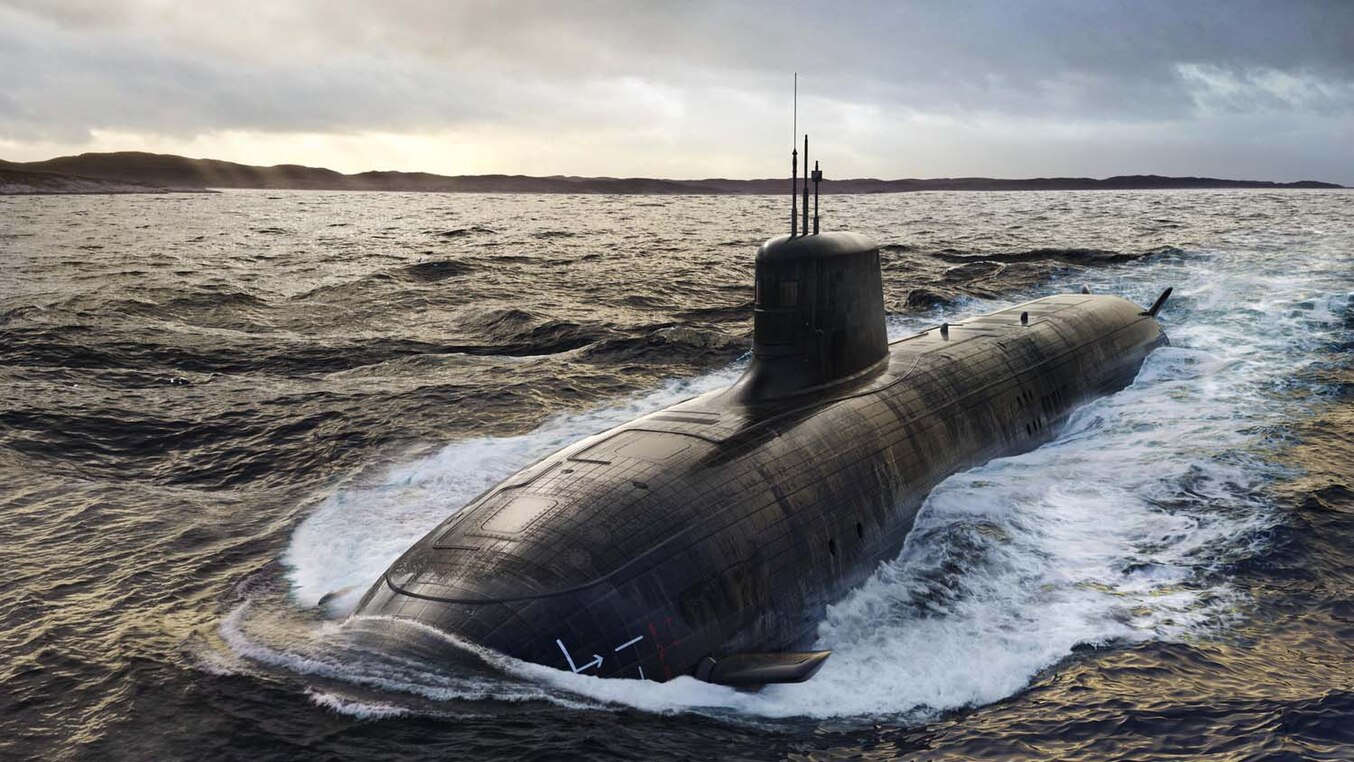
Cessnock ALP member Gareth Wilcox reports on the unanimous decision of his branch to oppose the nuclear submarine pact.
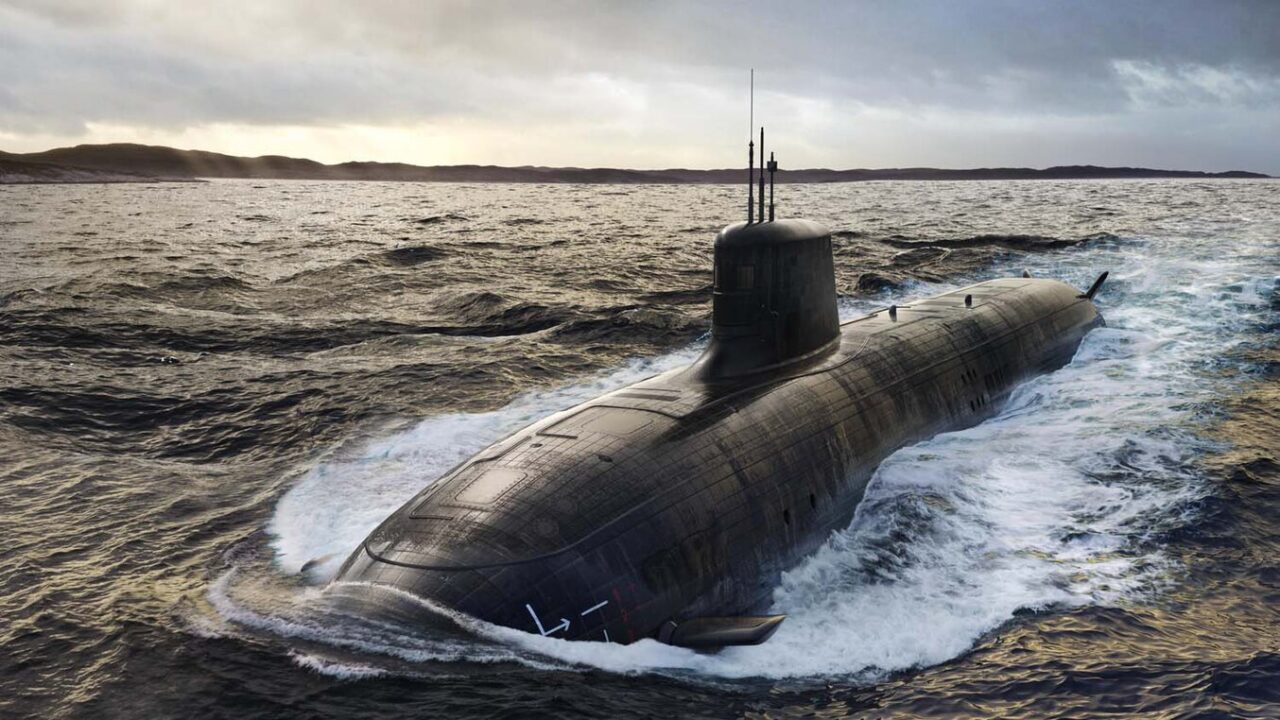
At our recent Cessnock Branch meeting, rank-and-file members took a decisive and principled stand on Australia’s defence and foreign policy. A motion calling for serious reconsideration and opposition to the AUKUS security pact was put to the floor and passed unanimously.
Rank-and-file branch meetings are the bedrock of the Labor Party. They are where policy meets the values of working people, where broad strategic decisions made in Canberra and Washington are weighed against the everyday realities of our communities, our economy, and our national independence.
When introducing the motion to the branch, I spoke to the fundamental strategic and sovereign risks embedded within the pact, framing our current predicament through an ancient fable:
Many of us are familiar with the ancient story of Damocles. He was a courtier who looked upon the King of Syracuse and saw only luxury, authority, and supreme influence. To teach him what that position actually entails, the king invited Damocles to sit upon the golden throne and enjoy a lavish banquet, surrounded by every imaginable splendour. But directly above his head, the king suspended a heavy, razor-sharp sword, held in place by nothing more than a single strand of horsehair. Damocles could no longer enjoy the feast, nor could he look upon his surroundings with any sense of security. His entire reality became defined by the constant, looming threat hanging just inches above him.
When we look at the AUKUS pact, Australia is being placed directly into the seat of Damocles. We are told by proponents of this agreement that acquiring nuclear-powered submarines and embedding our defence infrastructure entirely within the strategic framework of foreign powers elevates our status and guarantees our protection. We are told it offers us unmatched power and security in an increasingly complex world.
In truth, AUKUS hangs a sword directly above our nation’s future.
By entangling our defence policy and sovereignty so thoroughly with the strategic imperatives of the United States and the United Kingdom, we do not gain security; we import perpetual jeopardy. The single horsehair holding that blade is the assumption that great-power competition will remain rational and that Australia will retain genuine autonomy over its own foreign policy when a crisis erupts.
If that thread snaps, the consequences will not fall upon distant decision-makers. They will fall directly on the Australian people. We risk being automatically drawn into conflicts not of our choosing, in theatres far from our shores, driven by interests that are not fundamentally our own. Furthermore, the immense economic cost of this pact -hundreds of billions of dollars – diverts vital resources away from healthcare, public education, regional infrastructure, and local manufacturing.
Labor has a long, proud tradition of rigorous debate on foreign policy. True security is not achieved by sitting beneath a borrowed sword and hoping the thread holds. It is built through active diplomacy, regional cooperation, and an independent defence policy that serves the people of Australia. We must reject the false comfort of the throne, recognise the danger suspended above us, and oppose the AUKUS agreement.
The motion that was submitted was succinct and short, worded to counter any obfuscation that permeates pro-AUKUS arguments.
“The Cessnock Branch of the Labor Party passes the following motion: We [call on the federal government to] dissolve AUKUS and return to acquisitions on a transactional basis. No foreign powers are to be embedded or maintained on Australian soil.”
What followed was not a contest of opposing factions, but a serious, reflection across the entire room. Not a single speaker rose to defend the pact; instead, members took turns voicing distinct concerns about where this trajectory leads.
Our federal member Dan Repacholi and state member Clayton Barr were not able to attend this branch meeting.
The primary concern was the sheer opportunity cost. Members asked how a democratic socialist party can justify committing upwards of $368 billion to naval assets decades away, while working-class communities face acute shortages in social housing, public healthcare, and regional infrastructure.
Discussion quickly turned to doctrine. Members challenged the prevailing “force posture” narrative, questioning why Australian defence planning has shifted from territorial defence and regional diplomacy toward projecting force far from our shores in an antagonistic posture.
The transactional nature of previous procurement was raised: when Australia contracted to purchase conventional submarines from France, there was no demand that foreign rotational forces occupy our ports as a condition of sale. Expecting Australia to provide territory, bases, and sovereign operational concessions simply to acquire defence equipment is an unacceptable compromise.
Branch members also reflected on Cessnock’s longstanding history with nuclear-free declarations and Australia’s commitments under the Nuclear Non-Proliferation Treaty (NPT). Serious concerns were raised regarding the potential creation of high-priority military targets along the eastern seaboard. The prospective expansion of naval basing for foreign fleets in proximity to regional industrial hubs like Newcastle and Port Kembla was met with deep scepticism. The broad consensus of the room was that Australia’s foreign policy is already excessively aligned with Washington, and that hosting thousands of foreign military personnel on rotating deployments undermines our local communities and domestic independence.
Not a single voice could identify a tangible benefit for ordinary working Australians under this agreement. The gold that glittered before Damocles, enticing him to take the risk, may tempt strategic architects and defence contractors, but it offers nothing of substance to the Australian public.
Under AUKUS, the Australian people are left seated beneath the suspended blade – never tasting the banquet but bearing all the risk if the thread should break.