
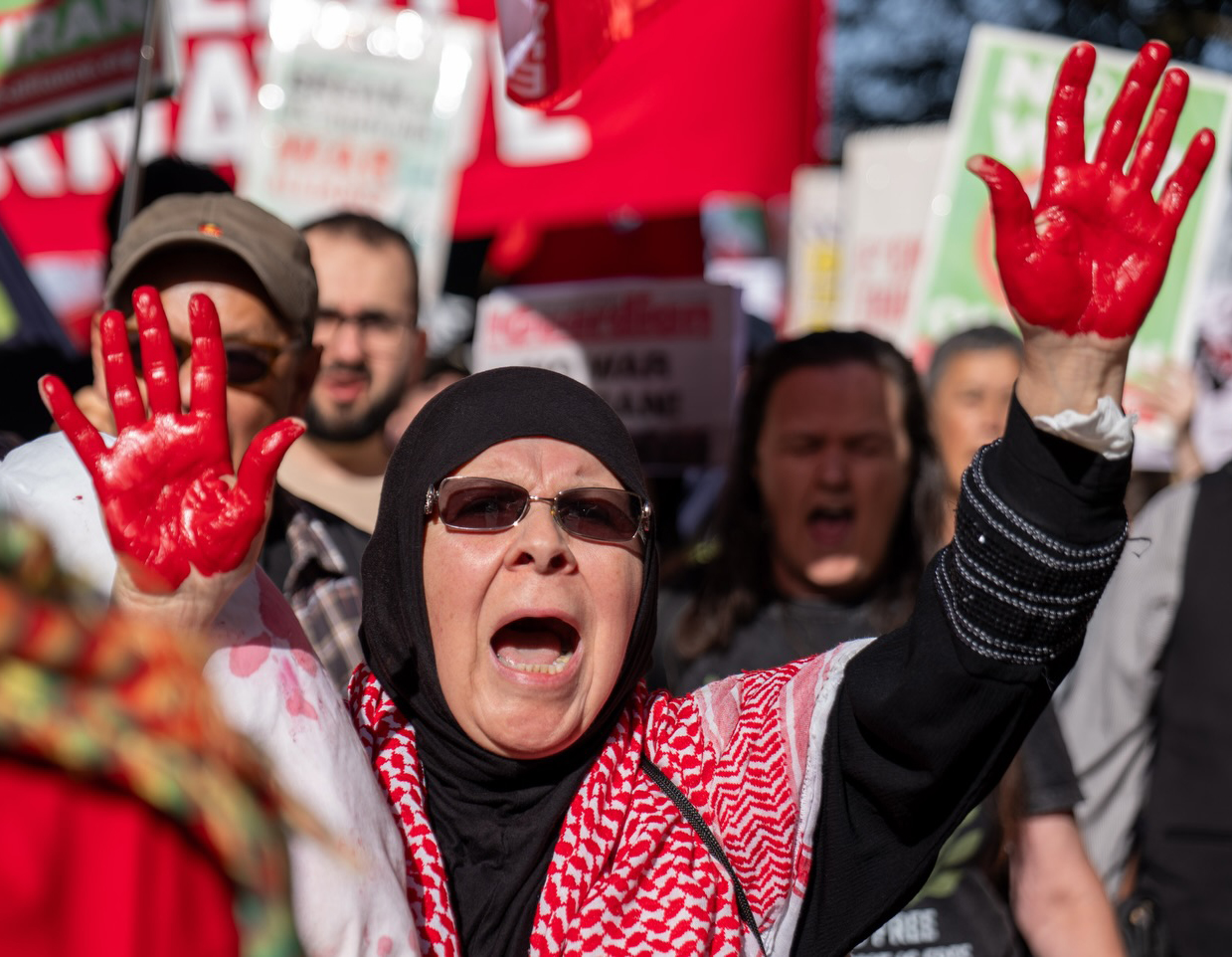
Australian-Iranian socialist Ali Keshtkar continues his polemic with Reza Akbari on organisation, force and the limits of third-camp politics.
Reza Akbari’s critique of my article (‘Two tactics in the anti-war movement’) presents itself as a disagreement over tactics. But in my view, it reflects something older and deeper, a fault line that has run through the left for more than a century. It is the difference between a politics understood through the lens of ideological purity, and a politics understood as the organisation of real social power.
What is at stake here is not merely a tactical disagreement, but a broader crisis within the contemporary left: a persistent disjunction between analysis and organisation, between critique and the capacity to act as a material force.
Comrade Akbari draws on the analysis of Vladimir Lenin to situate the current conflict in the Persian Gulf within a broader framework of competing power blocs. Debates over whether a war is imperialist or liberatory have long occupied Marxist thought. But such classifications, however important analytically, do not in themselves resolve the decisive political question confronting us.
Historically, wars, whether imperialist or fought in the name of liberation, are initiated and shaped by ruling structures of power. Yet the costs of these wars are borne overwhelmingly by workers, ordinary people, and the most vulnerable. This structural asymmetry is not incidental; it is constitutive of how modern war operates.
At the outset of his article, Comrade Akbari emphasises that he stands “uncompromisingly in the camp of opposition to imperialism and Israel”, and that he has consistently opposed imperialist intervention in the region. He then states explicitly:
“We, too, oppose the war, strongly condemn the brutal killings caused by recent bombardments, and believe that we must actively struggle against this war and for a lasting peace.”
If this is the case, then the decisive question is not one of declared position, but of political consequence: what does it mean, concretely, to “actively struggle against this war”?
The classification of war may clarify its character, but it does not, by itself, generate the political capacity required to stop it. For this reason, my argument does not turn on how we define the war in the abstract. The question I am concerned with is more concrete: when one declares active opposition to war, what does this imply in terms of social organisation, strategy and the building of real force capable of interrupting it?
Answering that question requires us to move beyond interpretation and into the terrain of organisation, strategy and force. And it is precisely on this terrain that I want to locate what I would call the crisis of the so-called “third camp” position.
The crisis of the third camp
What Comrade Akbari defends is a position the Marxist tradition knows as the “third camp”, the rejection of all state blocs in favour of working-class independence. In the abstract, this is sound. But in the concrete conditions of contemporary war, it runs into a serious contradiction.
In the First World War, the principal theatres of conflict were military fronts hundreds of kilometres from cities and civilian populations. Today, war is waged directly through the fabric of social life. Cities are bombed. Schools, universities, hospitals, sports centres, factories, workers’ workplaces, all become targets. Critical infrastructure is systematically destroyed. Civilians are not collateral damage; they are the primary target.
In these conditions, the “third camp” position collapses into passivity. It becomes an ideologically pristine neutrality, but neutrality nonetheless, towards the forces that could actually stop the war. In practice, it is neutrality towards the continuation of killing. The problem is not simply that the “third camp” risks passivity. It is that, under conditions of high-intensity contemporary warfare, it lacks any mechanism for translating its position into material force.
The logic of movement building
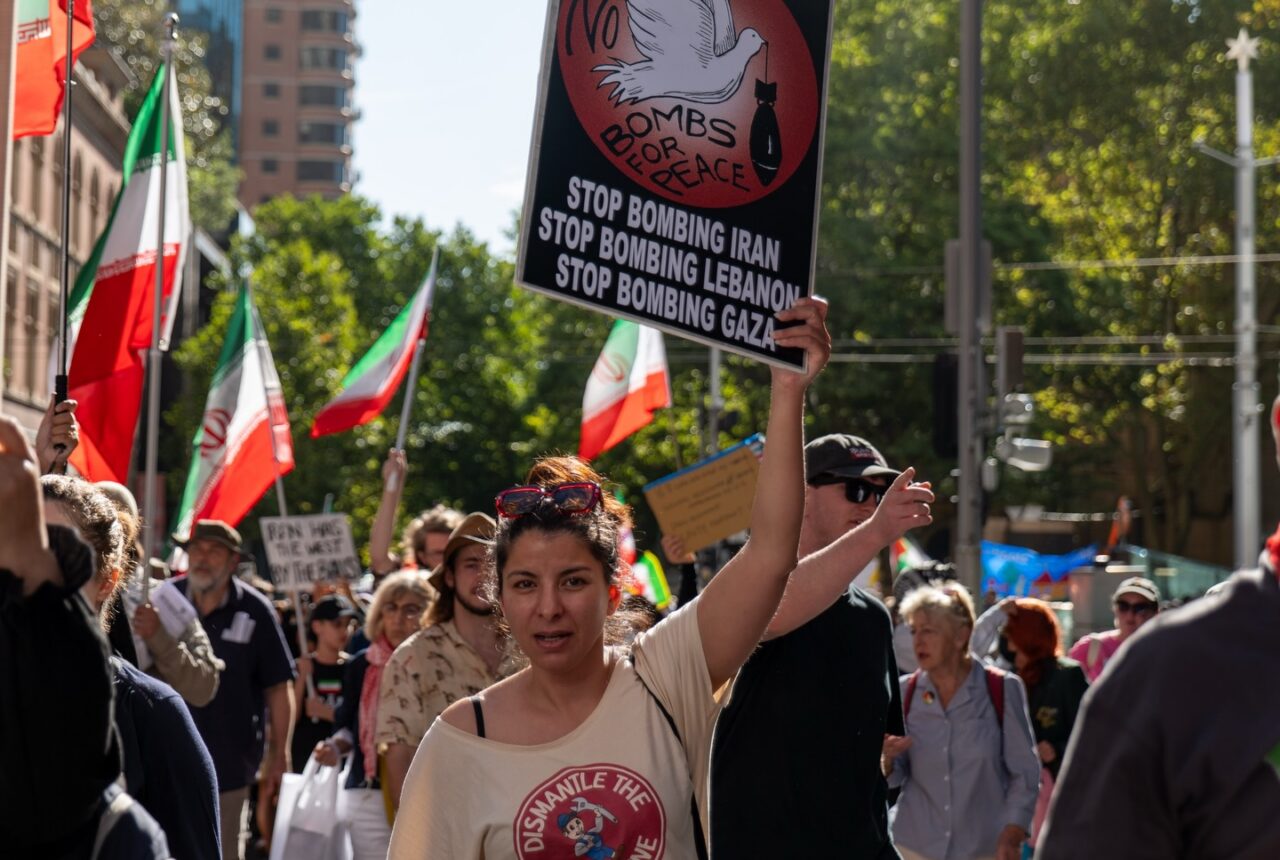
No symbol, whether monarchist or that of the Islamic Republic, carries sufficient political weight to justify fragmenting an anti-war movement at the moment it most needs to expand. This was the argument of my original article. Comrade Akbari has inverted it, reducing my position to a defence of one flag over another. But my argument was precisely the opposite: that the so-called “flag question” is a politically manufactured diversion, one that displaces the real terrain of politics, shifting the focus from the organisation of social force to the policing of identity. From the question of how to stop the war to the question of who is ideologically admissible within the movement. A movement that turns inward in this way does not radicalise and expand. It contracts.
If the objective is to stop the war, then the only force capable of generating the necessary pressure is mass social mobilisation.
Wars are produced at the level of states, but among the most decisive historical forces constraining them has been the emergence of organised popular mass movements.
This is something even the Marxist tradition recognises. Power does not arise from theoretical correctness. It arises from the concentration of social force, what Italian Marxist Antonio Gramsci theorised as hegemony: the capacity to bring diverse forces together into a social bloc, not to expel them from it.
To become the police of a demonstration, to determine who may attend and under which banner, does not strengthen a movement. It fragments and weakens it.
Comrade Akbari invokes the Bolsheviks’ small beginnings, seemingly to justify a politics of ideological exclusivity. But the reference to the Bolshevik experience, if not properly understood, can mislead. Yes, the Bolsheviks – despite their name – began as a minority. But what brought them to power was not their minority status, it was their capacity to become an organised majority. Being a minority is a starting point, not a strategy. A movement that cannot grow into a force of millions cannot exert real pressure on states and their war machines. And cannot conquer political power.
Consider the concrete Australian experience: without the 200,000-strong rallies in Sydney, the hundreds of thousands in Melbourne, Brisbane, Adelaide, and Perth; without millions of people across the world mobilising against Israel’s genocidal assault on Gaza, we would be looking at vastly greater carnage. It was fear of that enormous, sustained social force, which emerged across three years of the Free Palestine movement as a living expression of humanity in the streets, that placed real limits on what could be done. Without the threat of such a social mobilisation, imperialists could well have turned Tehran into the most catastrophic Hiroshima in history.
Ultimately, the disagreement between us comes down to this: should we first fix our ideological boundaries, or should we first stop the war?
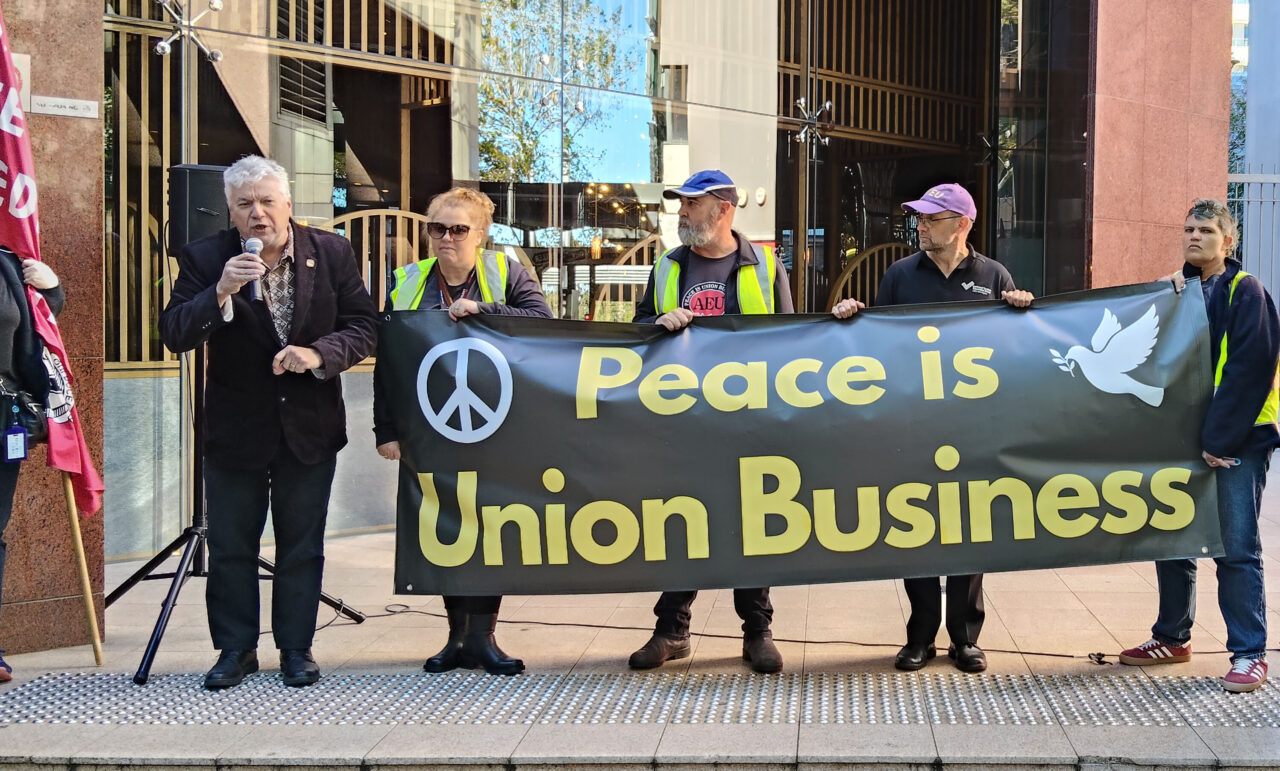
In conditions where civilians are the direct targets of warfare, where critical infrastructure is being destroyed, where the risk of further escalation is real, the priority cannot be anything other than building the broadest possible front against the war. Any approach that narrows that front, however theoretically radical it may appear, works in practice to weaken the only historically demonstrated mechanism capable of interrupting war-making states – the emergence of organised social force at a scale that alters the political cost of war itself.
Any politics that prioritises ideological boundary-setting over the construction of mass opposition may appear radical in form, but in conditions of war, it functions conservatively in effect, because it leaves intact the very conditions that allow war to continue.