
With thousands dead in Nepal and the planet shooting past the limits of the Paris Agreement, leaders like Anthony Albanese are fiddling while our homes burn, write Martin Greenfield and Eddie Ford.

The United Nations Environment Programme has now acknowledged what climate scientists and activists have been warning for years: the world has crossed the 1.5 degrees global warming threshold established by the Paris Agreement. The most optimistic scenario in UNEP’s latest assessment would see temperatures peak at around 1.8 degrees above pre-industrial levels, while most other scenarios point to still higher temperatures. The Paris Agreement’s legally binding commitment to hold the increase in global average temperature to well below 2 degrees while pursuing efforts to limit it to 1.5 degrees is therefore slipping further out of reach.
We wish we were surprised by this.
This represents a profound failure to address the most urgent threat facing human civilisation, aside from a generalised nuclear exchange. Governments have spent decades acknowledging the danger, establishing international agreements and announcing increasingly elaborate targets, while greenhouse gas emissions have continued to rise and the physical consequences of global heating have become increasingly difficult to ignore.
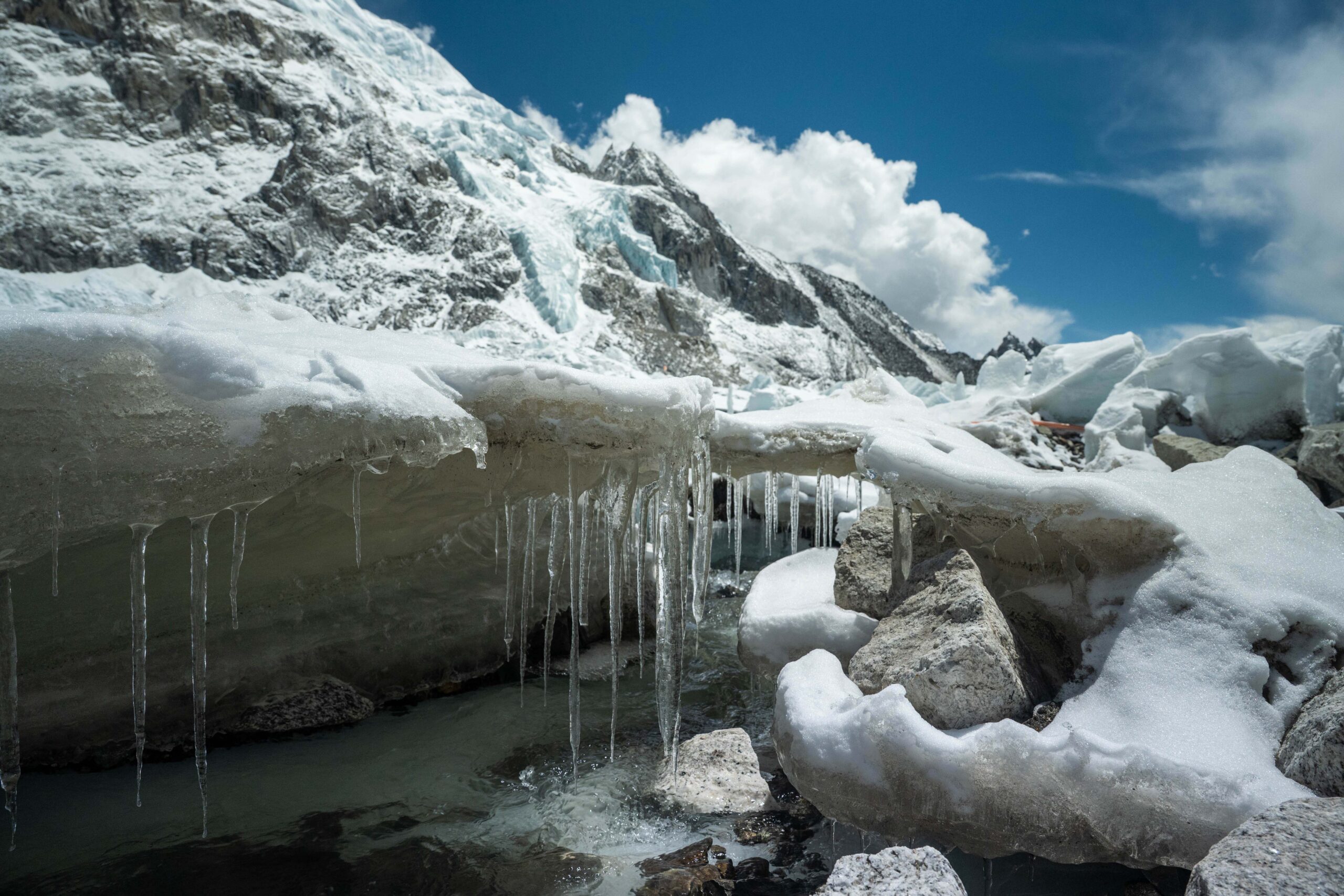
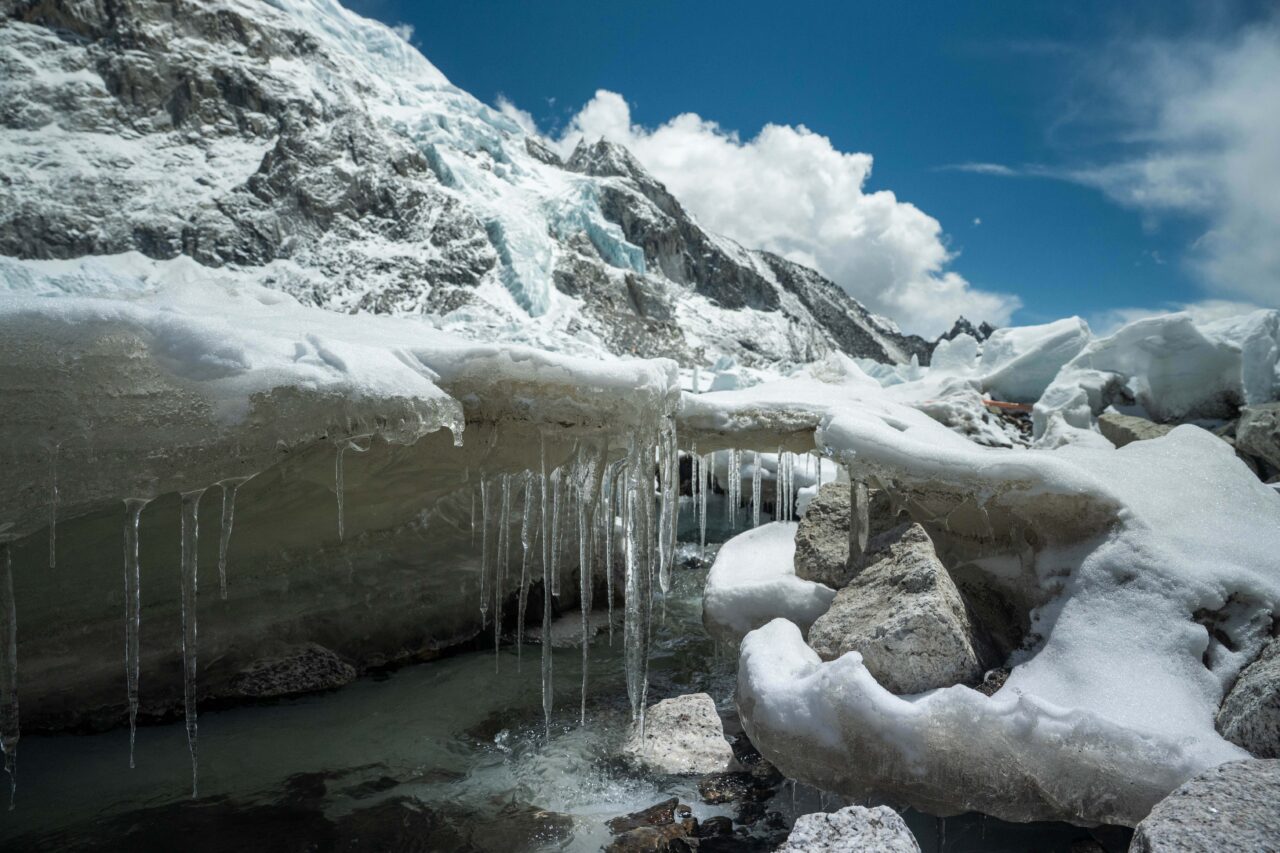
We are seeing the impacts in Nepal, where devastating floods and a glacial collapse in the Himalayas have killed more than 1,300 people and left thousands more missing. The catastrophe was triggered when a mountain glacier collapsed, sending a torrent of water and mud through parts of Nepal and Tibet. Nepalese Prime Minister Balendra Shah described the disaster as “not an ordinary flood”. Scientists have warned that the Himalayas are warming rapidly and that melting glaciers are increasing the risks faced by communities throughout the region.
It was telling that when Australian Prime Minister Anthony Albanese was asked whether the Nepal disaster was due to climate change, he responded: “Look, I think on Nepal there will be time to examine the science and what has occurred here. My thoughts are solely focused at this point in time on the families and on the extraordinarily difficult time that we’re going through.”
The Nepalese government showed no such prevarication, despite being at the front line of managing disaster. “The flood in the Bhote Koshi River in Rasuwa was not an ordinary flood,” Shah said on 31 August. “This incident indicates that the risks we face in the Himalayan region are increasing alongside climate change,” he said.
Climate justice
Nepal is now calling for compensation from the Global North. “We are paying the ultimate price for a global crisis we did not create,” Nepal’s Foreign Minister Shisir Khanal said. “Support for Nepal should not be seen from an angle of aid or charity, but should be seen from the perspective of climate justice.” Nepal has requested $20 million from the UN’s Loss and Damage Fund, while the country’s leaders have pointed out that Nepal contributes less than 0.1 percent of global greenhouse gas emissions.
The demand is entirely reasonable. Nepal is one of the countries that has contributed least to the accumulation of greenhouse gases in the atmosphere, yet it is being forced to bear a disproportionate share of the consequences. According to reports from the International Centre for Integrated Mountain Development, glaciers of the Hindu Kush Himalaya lost ice 65% faster during 2011–20 than in the preceding decade, while Nepal has lost close to one-third of its glacier ice volume in roughly three decades.
The question of climate justice cannot be separated from the question of who owns and controls the economic resources of the world. The countries and corporations that have accumulated enormous wealth through the extraction and burning of fossil fuels cannot simply leave poorer countries to pay the costs of the environmental destruction from which they have profited.
Meanwhile, Australian policy remains characterised by a slowly-slowly approach that does not treat the climate disaster as the emergency it is.
During the recent Pacific Islands Forum, the Sydney Morning Herald reported that Vanuatu’s Climate Minister Ralph Regenvanu called on Australia to stop expanding fossil fuel extraction and exports.
“Australia is not doing enough. Australia is a major producer of fossil fuels. We all know fossil fuels are the primary driver of the climate crisis, as I said. So, the very least a country like Australia should be doing is stopping future expansion, and it’s not doing that.”
Australia’s position is particularly indefensible because of its role as one of the world’s major exporters of coal and gas. While the data is from 2022, website Climate Action Tracker says that the top six countries (Russia, Australia, US, Indonesia, Saudi Arabia and Canada) represent 50% of total exported fossil-fuel emissions. Australia was ranked fourth.
The Albanese government continues to talk up the energy transition while simultaneously presiding over the continued expansion and export of fossil fuels. While there have been genuine advances domestically, this can be seen as a bit of an accountancy trick, given exports continue.
The contradictions are becoming increasingly obvious, particularly as the government attempts to reconcile its climate rhetoric with its commitment to the fossil-fuel-dependent economic model and its broader strategic alignment with the United States.
The climate crisis is not an abstract future problem. The latest data from the Copernicus Climate Change Service show that July 2026 was the joint second-warmest July ever recorded globally, only 0.01 degrees cooler than July 2024, and the joint second-warmest month ever recorded. The global average temperature for July was 1.47 degrees above the estimated 1850-1900 pre-industrial average. The average global temperature over the preceding 12 months was 1.45 degrees above pre-industrial levels.
That is for surface air temperature. When you look at sea-surface temperature, 2026 is breaking records for the northern summer.

These figures are being experienced in the form of increasingly severe heatwaves, droughts, fires, floods and other extreme weather events. In western Europe, the June-July period of 2026 was the hottest recorded since the beginning of the Copernicus dataset in 1979, with western Europe averaging 2.79 degrees above its 1991-2020 average. France experienced a 16-day heatwave in July, while the exceptionally dry conditions increased the risk of wildfires across the region.
Britain provides another illustration. The Met Office has announced that summer 2026 was provisionally the hottest summer in the UK since records began in 1884. The mean temperature for the three months ending on 31 August was 16.5 degrees, 0.4 degrees above the previous record set only the year before. Temperatures reached 38.1 degrees at Kew Gardens on 13 August, while 54 weather stations broke their all-time daily maximum temperature records during the summer.
This was part of a broader sequence of extreme heat events across western and central Europe, with wildfires ravaging the continent, particularly in France and Spain.
Of course, these heatwaves represent a statistical acceleration of what climate scientists had already modelled but hoped would take longer to arrive. The climate crisis is speeding up and could hurtle temperatures to 3 degrees, 4 degrees and beyond above preindustrial levels. Indeed, a report published by the UK Institute and Faculty of Actuaries – not an organisation known for its radicalism – has calculated that temperatures of this order could bring about civilisational collapse some time between 2070 and 2090.
The stakes are therefore high. Apocalyptic language like this, it has been observed, can serve to demobilise and demoralise. That is why a political movement that is about system change is so vital to overcome this.
Delusion
While One Nation and Pauline Hanson and various coal-coated cosplayers in the National Party declare climate change a hoax, the liberal establishment promotes the idea that policy tweaks within capitalism can turn the juggernaut around. Policies like ‘net zero’ are screaming into the void of a rapidly deteriorating situation.
While Australia’s electricity grid is showing a shift to renewables, the overall national energy budget is overwhelmingly dependent on fossil fuels – 91% of all energy use is from non-renewables, according to the Department of Climate Change, Energy, the Environment and Water. The US and Israel war on Iran – supported by Anthony Albanese – has exposed our ongoing addiction to fossil fuel.
This year so far seems to be playing out roughly the same as the year before it. But climate models strongly suggest 2027 could well bring even higher temperatures because of the El Niño effect, and it is very likely to replace 2024 as the hottest year on record. It will surely be another year to exceed 1.5 degrees above the pre-industrial period – something first recorded by climate scientists in 2024 with an average figure of 1.6 degrees, followed the next year by 1.47 degrees above pre-industrial levels – the third warmest on record.
At this pace, getting to 2 degrees and above appears a distinct possibility by the early 2030s – especially with Donald Trump and his criminally reckless ‘Drill, baby, drill’ philosophy, designed to encourage the ambitions of big oil to massively degrade life on this planet.
Goldilocks
The overriding priority for communists and socialists is saving in some shape or form the ‘Goldilocks zone’ upon which our species depends. Of course, CO2, methane, and other greenhouse gases will not kill the planet – it will remain. But we might not.
The actuarial possibility of civilisational collapse late this century is a terrifying reminder that a socialist revolution could occur under such conditions, which actually represents the breakdown of ability to exist in any sort of way. When you look at the likes of Trump, there is not a shred of the ‘climate socialism’ – undemocratic enforced change from above to save capitalism – not even draconian measures that at least avert the climate crisis, even if only temporarily. No, instead those in charge seem hell-bent on self-destruction – and taking us with them.
We need a vision that recalibrates our programmatic vision and inspires us. We do not want to abandon the Marxist idea of abundance, only the version of it that is a mimicry of the bourgeoisie, which sees life as a “fully automated communism” just consuming endless stuff.
Communists want the “good life” for all human beings. Why aren’t we spending more time playing with our children, debating, caring for our elders, telling stories, cooking for others, learning for the sake of learning? This should be an integral part of our vision for the future, which does not involve us and things, but us and other people.
That is what makes us human beings – a vision that comes from the original communism of our ancient and pre-historic human ancestors. We look back to the past as well as forward to the future based on the productive capacity of global society – going forwards, or upwards, in a spiral. This requires a return to communism that would make us fully human, not masters who dominate the environment, but act as custodians.
This article includes material from Eddie Ford, originally published as ‘New records for old’ in the Weekly Worker.