
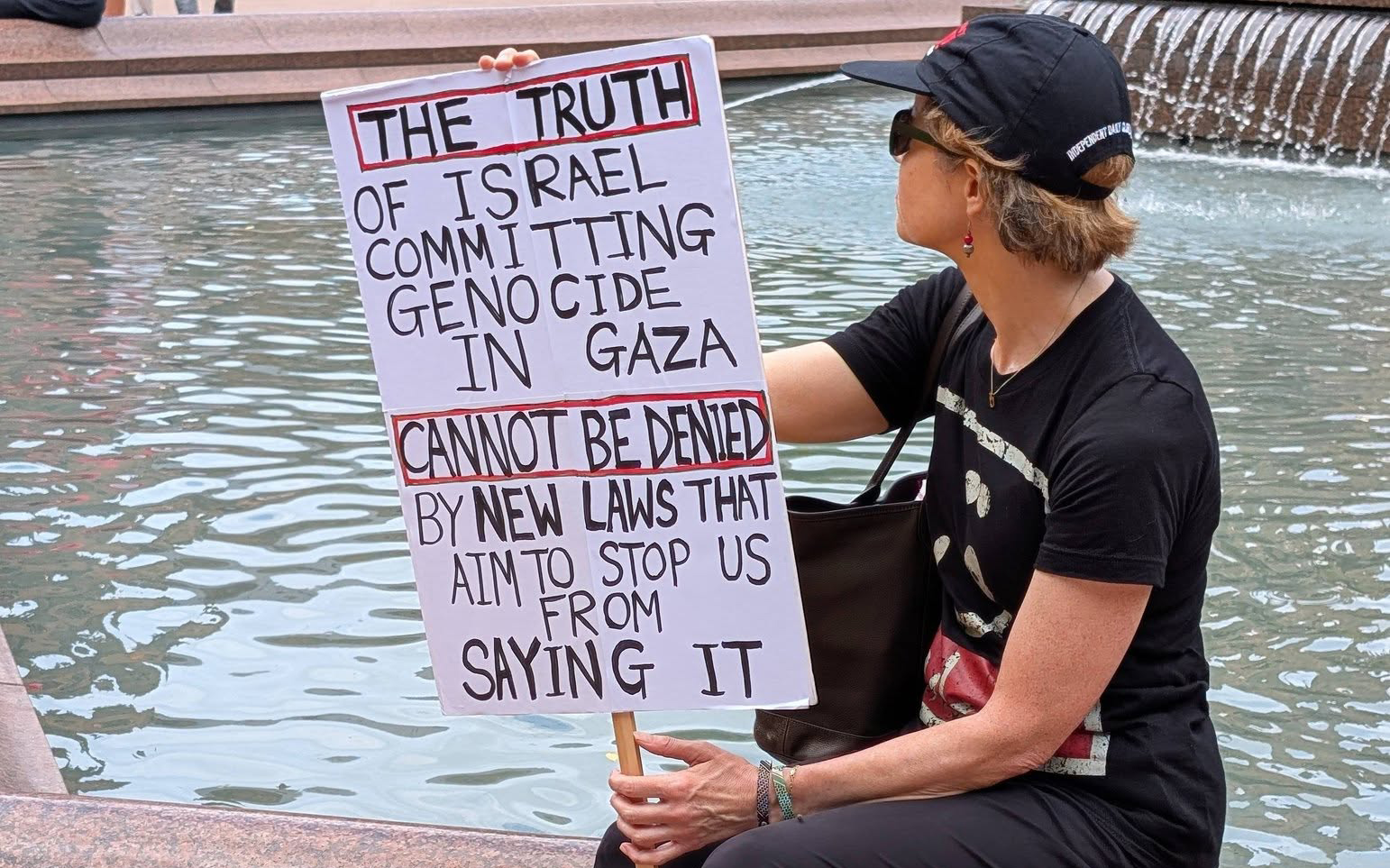
In the wake of the Bondi massacre, Zionists continue to politicise the attack in efforts to silence the Palestine solidarity movement, writes Marcus Strom. We must make sure they fail.
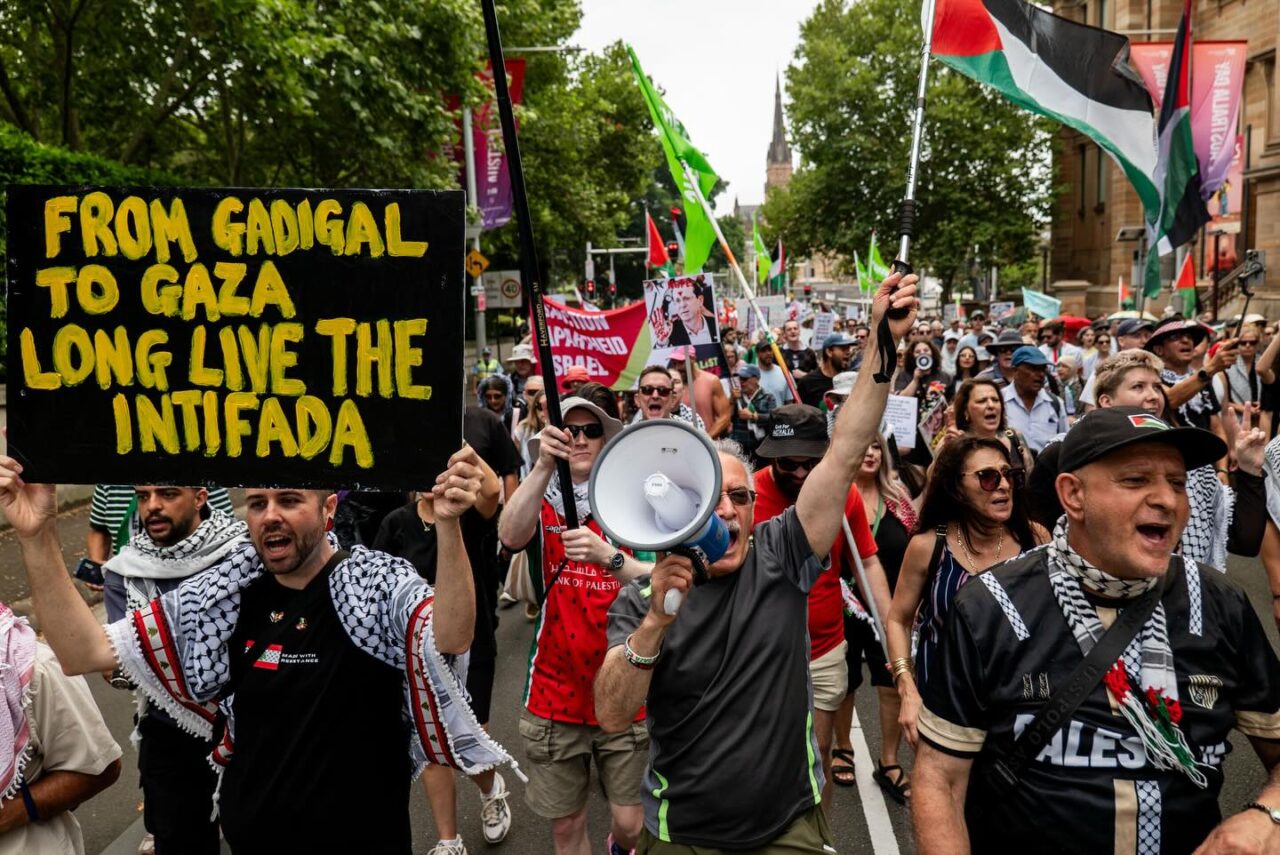
The adoption of new hate crime laws by the Albanese government, the banning of demonstrations in NSW by the Minns government and the NSW parliament considering the prohibition of certain phrases represent a dangerous attack on democracy and the right to protest.
Even before the last funerals of the victims of the horrific antisemitic massacre in Bondi had taken place, Zionists had mobilised to cynically try to link the attack to the mass democratic movement in Australia in solidarity with the Palestinian cause.
The Albanese government-appointed Special Envoy to Combat Antisemitism, Jillian Segal, went so far as to say that the attack at Bondi “did not come without warning”. Explicitly linking the massacre to the Palestinian protests, she said: “In Australia, it began on 9 October 2023 at the Sydney Opera House. We then watched a march across the Sydney Harbour Bridge waving terrorist flags and glorifying extremist leaders. Now death has reached Bondi Beach.”
Such a position should rule her out of having any publicly appointed role in Australia. Her views were echoed by the NSW Jewish Board of Deputies and the Executive Council of Australian Jewry.
Stung by the mass support for Palestine and horror at the ongoing Israeli genocide against Palestinian people, Zionists in Australia have sought to turn the genuine outrage at the Bondi attacks to their political advantage.
Unfortunately, the Australian and NSW governments have fallen into line. This is to be capped off with the visit this week of Israeli President, Isaac Herzog. Herzog has been cited in documents by the International Criminal Court as stating that all Palestinians in Gaza were “unequivocally” responsible for the Hamas attack on southern Israel on 7 October 2023.
Herzog has also signed bombs destined to be dropped on Gaza during Israel’s genocidal war against the Palestinians.
His invitation to Australia is something the government should be deeply ashamed of.
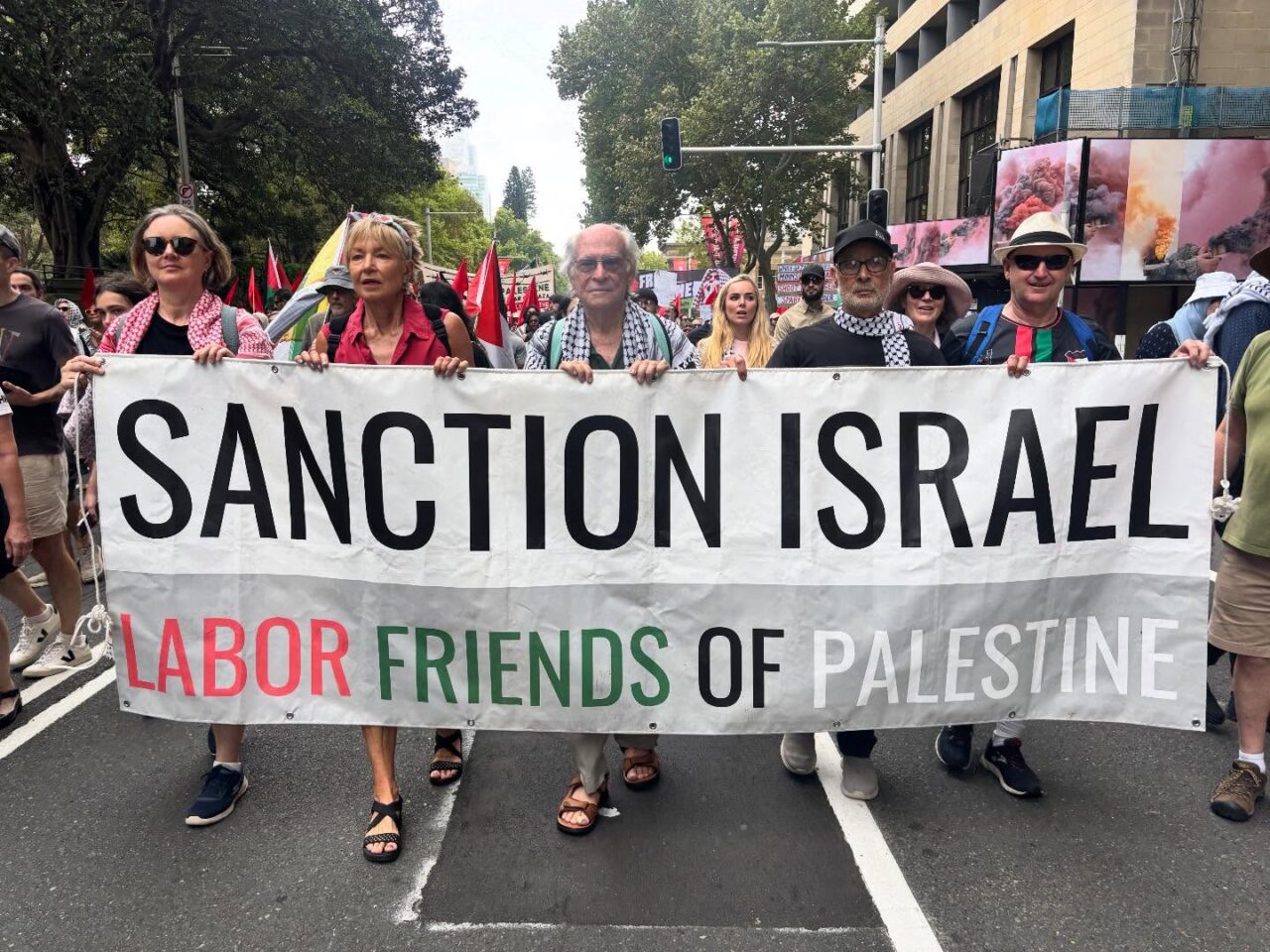
In ALP ranks, Labor Friends of Palestine has acted strongly and with principle to protest the invitation, voicing members’ concerns, but this has fallen on deaf ears.
The Albanese government is attempting to face both ways. It offers soothing words to the Australian National Imams Council and other community leaders about cohesion and respect, while simultaneously welcoming the President of Israel. This is not balance. It is moral duplicity.
In Adelaide, Premier Peter Malinauskas intervened to have a Palestinian writer excluded from the Adelaide Writers’ Week for reasons of ‘cultural sensitivity’. The ensuing political brouhaha blew the festival up, saw half the board and the director resign, only to have Dr Randa Abdel-Fattah invited to attend next year’s event by the new board.
Legal ambiguity aimed at silencing dissent
The legislative response of the federal government was to seek to placate Zionists with new laws that accelerate long-running efforts to weaponise accusations of antisemitism against the Palestine movement.
Nonetheless, Albanese seemed genuinely shocked at the lack of bipartisanship on these legal changes from the conservative opposition and its supporters on the rightwing of the Zionist movement in Australia.
Let us be clear. The Bondi attack was a shocking act of violence aimed at Jewish people. But it should not be exploited to ram through laws that seek to curtail political speech, expand ministerial powers and chill dissent. To do so is not about protecting Jewish communities, it is about protecting a foreign state and its ideology from legitimate political criticism.
Leading constitutional experts have warned where this path leads. Writing in The Conversation, Professor Anne Twomey cautioned that the breadth and vagueness of hate-speech provisions risk curbing legitimate political communication.
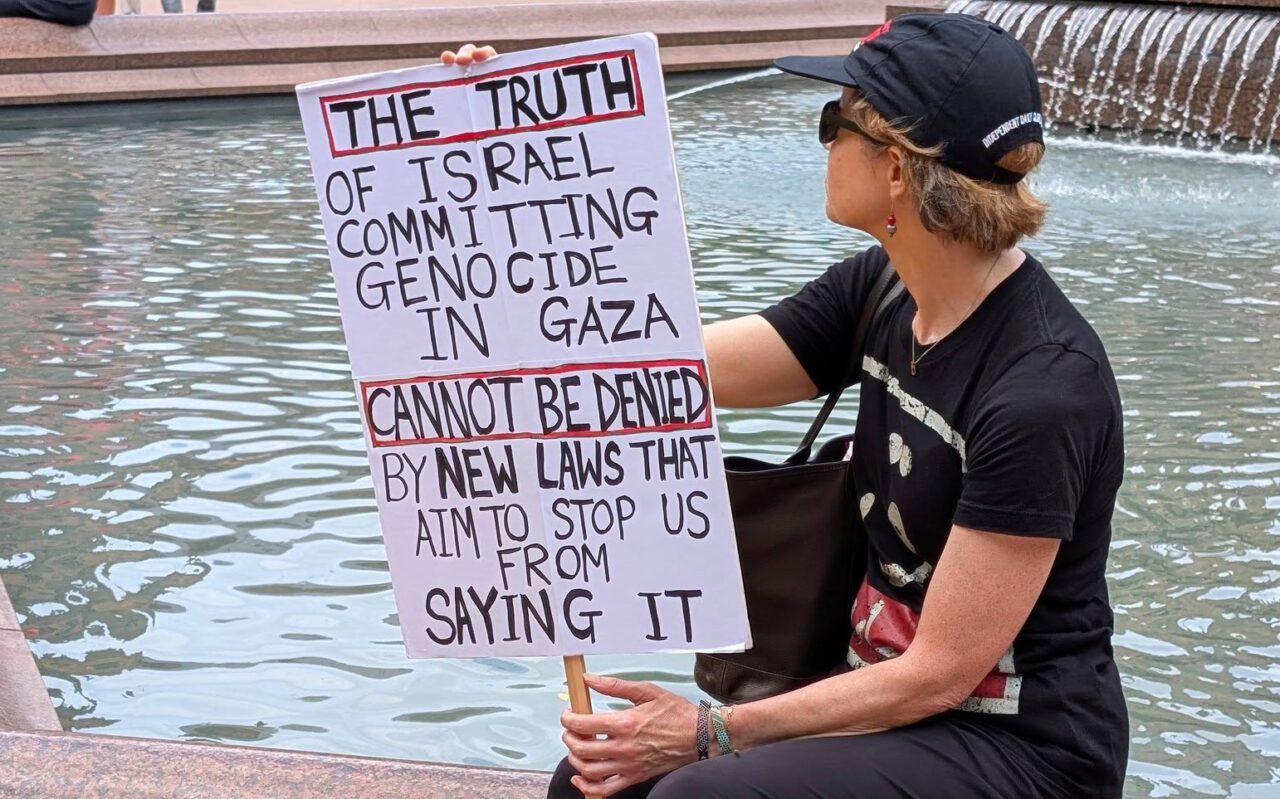
Twomey highlighted that an amendment by former Green and now independent senator Lidia Thorpe that “criticism of the practices, policies, and acts of the state of Israel, the Israeli Defence Forces or Zionism is not inherently criticism of Jewish people and is protected political speech, and not hate speech” was defeated 43 to 12. A disturbing result.
The first draft of the legislation sought to criminalise any individual engaging in hate speech that would ‘reasonably cause intimidation, fear of harassment or violence’ in a person or group with a protected characteristic. Crucially, it wasn’t to be necessary that anyone experienced such fear, just that it could have that effect.
This provision was dropped after the Liberal Party and the Greens refused to support it in the Senate.
Nevertheless, Professor Twomey points out that “inciting racial hatred remains relevant to the other key provisions, which permit the banning of ‘prohibited hate groups’.”
While the banning of groups requires a number of steps before the minister can do so, she warns such protections could be “overcome by appointing politically motivated cronies to positions” or arguing that dissent “increases the risk of politically motivated violence”.
Before the laws were tabled in parliament, the neonazi National Socialist Network ‘disbanded’. But given their central role in mobilising the March for Australia rallies on 26 January, it is clear the network continues underground.
As NSW Labor MP Stephen Lawrence has argued of previous legislative drafting “if the only thing that can save us from Nazis is unworkable laws banning them (that actually promotes them) then god help us.” Another Labor MP noted “Fundamentally, you can’t ban an ideology.”
Even the director-general of ASIO, Mike Burgess, conceded that the new laws will likely see any proscribed or disbanded groups simply move underground.
As reported by the ABC, Burgess told a parliamentary inquiry: “Of course, individuals don’t cease to exist, they’re still there in society and obviously the problematic ones we will continue to watch if they continue to be problematic.”
The danger is that these laws are easily extended beyond their stated purpose, especially when combined with such heightened executive discretion and national-security rhetoric.
‘Globalise the intifada’
This is clear in NSW, where the debate has descended into absurdity. Premier Chris Minns has manufactured a moral panic around the phrase “globalise the intifada”.
However, as any regular attendee of the Palestine demonstrations will know, and the Palestine Action Group has pointed out, this was not a slogan used on these marches. It only entered Australian political discourse when Minns himself imported it – cut and paste – from Britain’s repressive public order push that has banned the non-violent Palestine Action group.
Even so, the slogan itself cannot be construed as antisemitic – it is a call to support an uprising against Zionist colonisation, not against Jews.
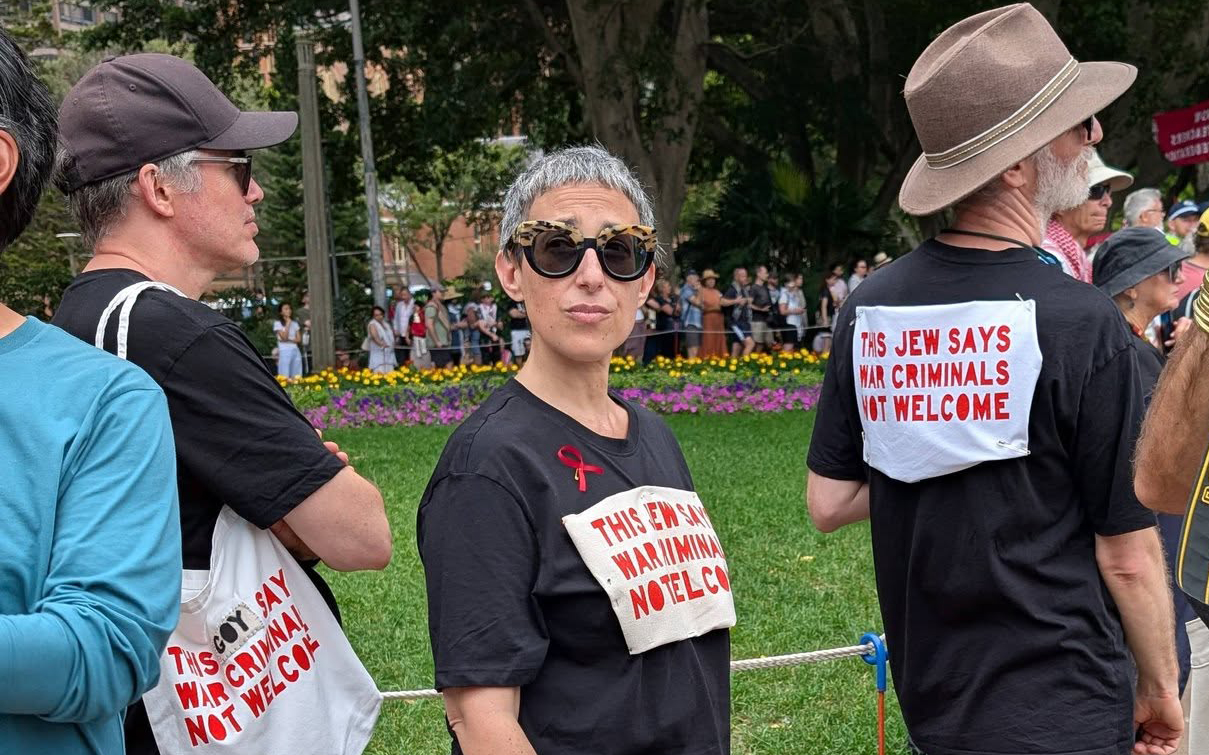
At the heart of this agenda is the deliberate attempt to equate anti-Zionism with antisemitism – a false and politically dishonest framing. However, the flip side of this, is that Zionists and the State of Israel seek to convey the idea that they speak for all Jews.
Zionists don’t speak for all Jews
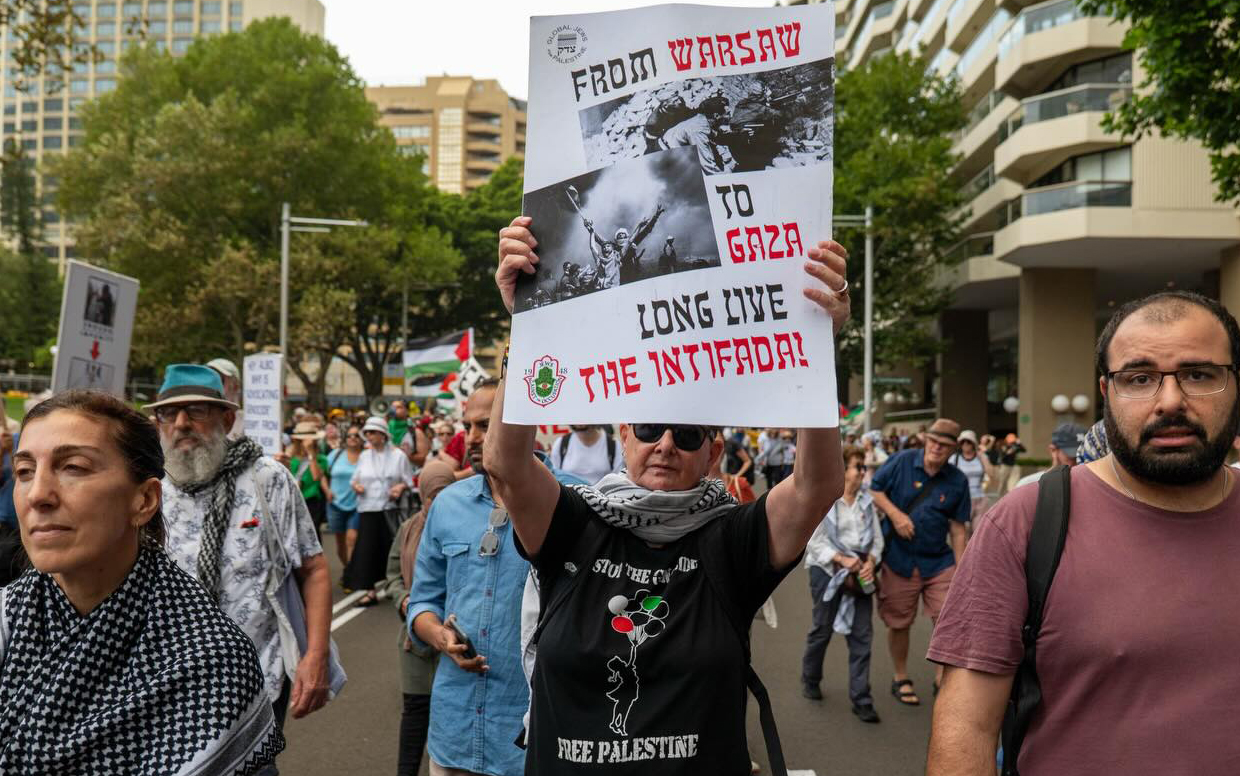
But this is not the case. Like any community, Jews in Australia are heterogenous. While Zionism is supported by most, it is far from unanimous. And many young Jews from Zionist families are breaking from this racist ideology, appalled that a genocide is being undertaken in the name of all Jews.
Former director of the Adelaide Writers’ Week, Louise Adler, has written to supporters of the Jewish Council of Australia on this matter.
She writes: “We must not allow the pro-Israel lobby to speak for Jews as a whole, we must not accept the racism being fomented in the aftermath of the tragedy at Bondi. As witnesses are called to give evidence to the [royal] commission, it is essential to present an accurate picture of the Jewish community in Australia. The front page of the Australian Jewish News once devoted its entire front page to the headline ‘One People One Voice’. You and I know that couldn’t be further from the truth.”
Her voice shows that many, many Jews in Australia oppose the Zionist onslaught in Palestine. Many Jews – religious and secular – are anti-Zionist, this author included. To claim otherwise is to erase Jewish dissent while seeking to instrumentalise Jewish suffering to silence political opponents.
On the exclusion of Abdel-Fattah, she writes: “A long line of propagandists has deliberately argued that the mere Palestinian-ness of an author is a sufficient threat to the Australian Jewish community that they should not be permitted to participate in public life. They have, with great effect, convinced decision-makers that what is good for Benjamin Netanyahu and his murderous regime in Israel is good for all Jews in Australia also. They have already successfully inflected the Albanese government’s so called hate speech legislation. What next?”
Unfortunately, what is next is the ongoing push by Zionists to bury the Palestinian solidarity movement in Australia.
Antisemitism Envoy, Jillian Segal has appointed former Vice-Chancellor of the Australian Catholic University, Greg Craven, to prepare ‘report cards’ on all universities in Australia and how they handle antisemitism.
Craven’s approach to this was made clear last week in an opinion article in The Australian, where he says the fight is now about “national defence”. He claims, quite outlandishly “As a nation we are faced not by the occasional act of terrorism but a focused, armed insurrection.”
Craven says that if you accept his framing that we are engaged in “defence of the realm” then legislative weapons are needed “typically used in times of war”.
He then casually says:
“We are not talking about conscription, martial law or internment here, although a couple of decades’ house arrest for Louise Adler is appealing. But it is entirely right that we are looking at carefully modulated restrictions on expression of hateful ideas and the suppression of hateful organisations.”
Greg Craven
Craven, under the auspices of a government body, will seek to silence and crush the Palestine solidarity movement on campuses and beyond.
Labor Tribune, and Marxists more broadly, are for unresricted free speech – especially political speech. We oppose the banning of organisations. We oppose the criminalisation of ideas. We seek to overcome backward ideas through political debate, persuasion and organisation where necessary. And we reject the notion that democracy can be defended by narrowing the space in which people are allowed to speak.
Anti-Zionism is not antisemitism. Consistent democrats oppose all forms of racism, chauvinism and, indeed, nationalism – ideologies that divide working people and sanctify state violence. Solidarity with Palestine is not hate. It is a democratic, internationalist demand for equality, freedom and justice.
After the horror of Bondi, we will not accept a political settlement in which solidarity is policed and dissent criminalised. And we will not accept laws that outlaw critics.
We will not be silenced.