
Imperialist intrigue in the Middle East is, of course, more than a century old. Michael Karadjis looks at how the US and Israel have sought to manipulate Iran, Iraq and the whole region since the Iranian revolution of 1979-81.
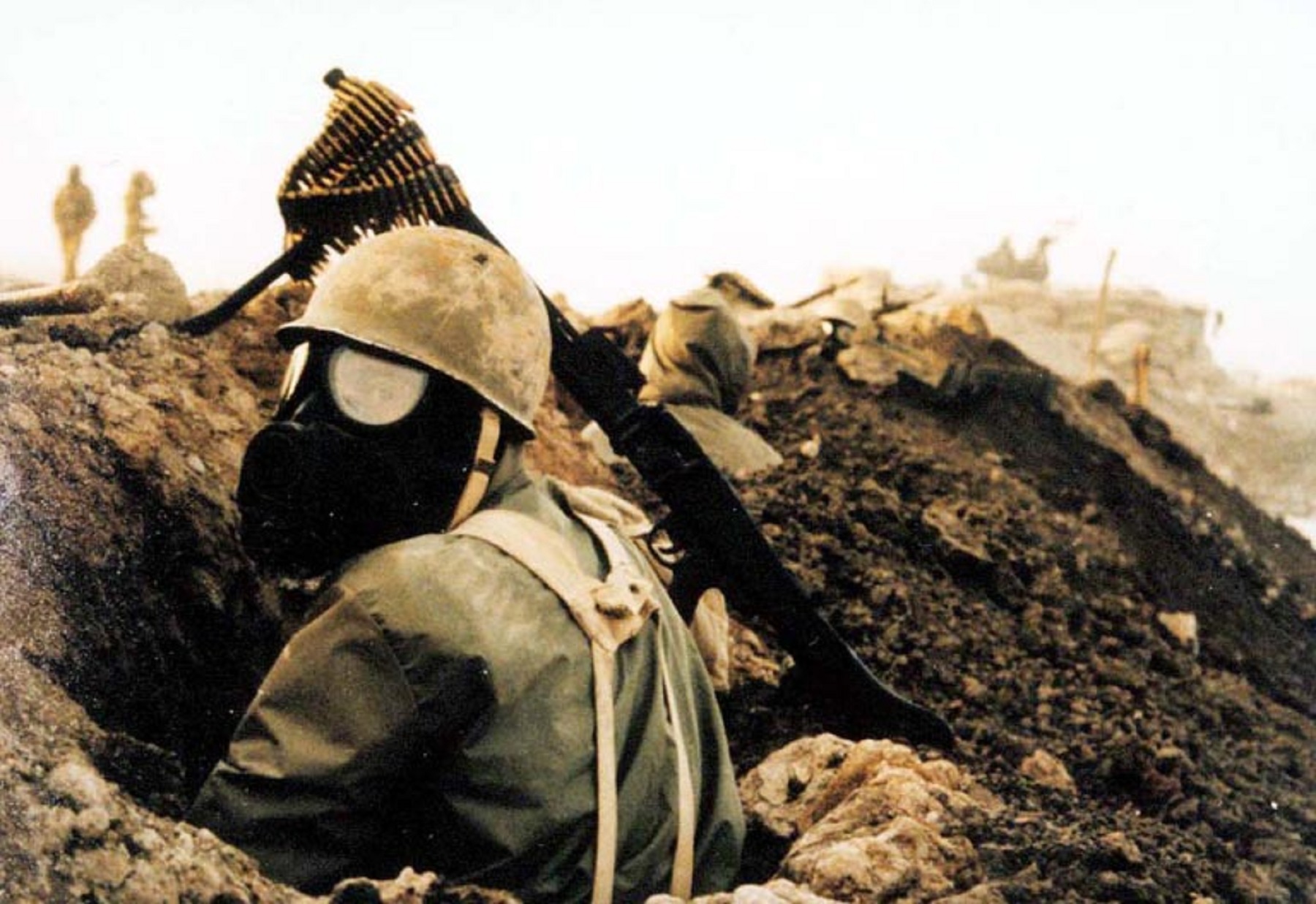
In 1980, a year after the Iranian revolution deposed the Shah’s dictatorship and, against the wishes of many Iranians, established the new Islamic Republic dictatorship, Saddam Hussein’s Iraq invaded Iran.
While Saddam had his own nationalist objectives, he was backed by the reactionary Gulf monarchies, and initially by the US, in order to attack the Iranian revolution as a whole. Even though Iraq had no relations with the US and was officially one of the “rejectionist” states against compromise with Israel, the US wasn’t concerned with rhetoric and quietly dropped Iraq from its clearly meaningless list of states which “sponsor terrorism.”
Israel, by contrast, likewise unconcerned by the even fiercer “anti-Zionist” rhetoric emanating from the new Iran, backed Iran from the outset, some leaders openly declaring support for an Iranian victory.
In 1983, Defence Minister Ariel Sharon openly stated that Israel was arming Iran because it regarded Iraq as a more dangerous enemy (and it was closer). Israel became Iran’s main arms supplier throughout the 1980s. According to the Jaffe Institute for Strategic Studies at Tel Aviv University Israel on average supplied $US500 million in arms per year from 1981-1983.
One leg of this vast supply consisted of 40 truckloads of weapons a day moved from Israel to Iran, via Syria and Türkiye, following a meeting that involved Rif’at al-Assad, the brother of then Syrian President Hafez al-Assad. France and the USSR supplied massive quantities of arms to Iraq, and China armed both sides, but Iran’s US-made weapons systems (inherited from the Shah) needed American arms which Israel could supply.
Two years later, in mid-1982, Iran drove Iraq’s forces out of its (Arab-majority) Khuzestan province and began a six-year invasion of Iraq aimed at seizing (Shiite majority) Basra and Iraq’s opening to the Gulf. Notably, just as the Iranian Arabs of Khuzestan showed no interest in joining Iraq’s attempt to “liberate” them, so Iraq’s Shia showed no interest in joining Iran’s attempt to “liberate” them either.
For eight years, hundreds of thousands of Iranian and Iraqi workers slaughtered each other on behalf of two of the most vile regimes on Earth, both backed and armed by various global and local imperialist regimes, even if both offered rhetorical and empty “anti-imperialism” as a poison to murder their own people and each other’s.
Kissinger probably represented much US ruling class thinking best when he offered his famous “it’s a pity they both can’t lose” remark, matched by Israeli prime minister Menachim Begin’s “we wish both sides success”.
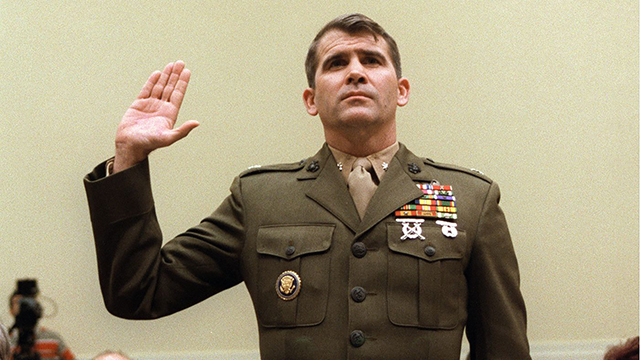
In the mid 1980s, the Reagan administration piggy backed on Israel and started secretly supplying weapons to Iran in the Iran-Contra scandal. A secret US delegation travelled to Tehran, led by National Security Adviser Robert McFarlane and his crooked aide Oliver North, meeting in particular with Ayatollah Akbar Hashemi Rafsanjani, considered over the decades to represent a pro-American wing of the ruling elite.
While the US did not directly send arms to Iraq, it was later revealed that US, UK and other companies were supplying Iraq the know-how and material for developing chemical weapons. The US, in other words, was in the mid-80s supplying both sides at some level.
Meanwhile, the Iranian regime used the cover of war – even though it was now the invader – to slaughter the entire left-wing opposition within the country, finishing the counter-revolution within the revolution.
In 1988, a prison massacre killed thousands of leftist prisoners (numbers range from 5000 to 33,000) – many of them had been those who had initially given the Islamic Republic the benefit of the doubt, and so had not been killed in the massacres of the early 1980s. It was revealed that British intelligence under the Margaret Thatcher government had provided the names and details of Tudeh (Communist) Party members to the Khomeini regime.
At the end of the 1980s when Iran was hitting Gulf oil ships, as the Gulf was backing Iraq, the US again changed tack and intervened against Iran to protect the ships, effectively siding again with Saddam Hussein. Around this time Hussein carried out the Halabja chemical massacre of 5000 Kurds alongside a larger mass killing of up to 180,000 Kurds throughout 1987-89, the infamous Anfal campaign, while also sending waves of chemical weapons against Iran, while Iran itself was busy sending thousands of children “to heaven” by getting them to walk over minefields inside Iraq.
No US or western leader cared about Hussein’s chemical weapons, or the Kurds, at that point.
Saddam Hussein seemingly got the wrong idea from this and thought he could get away with annexing the US-backed Gulf oil sheikdom Kuwait, which he declared was Iraq’s 35th province. Instead, the US assembled a coalition and destroyed Iraq in 1991, backed by the UN Security Council with the USSR on its last legs and not wanting to unsettle its growing economic reliance on the west.
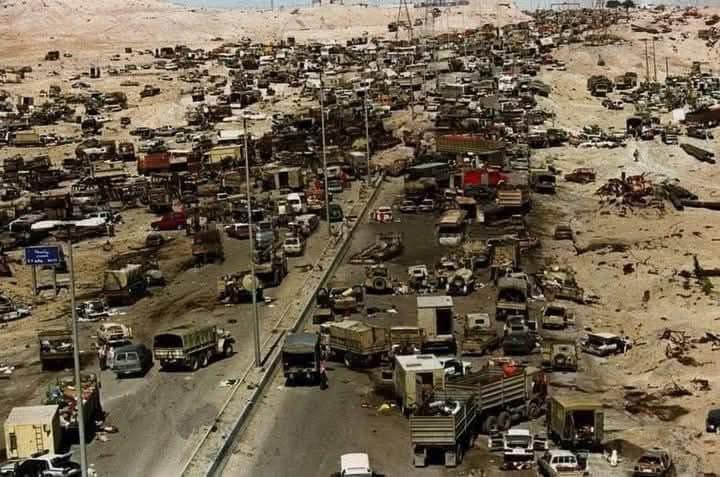
It was a horrific massacre of a war, which destroyed so much of Iraq’s military and industrial infrastructure that it essentially ended it as a state. The war which included the infamous “turkey shoot” when the US airforce bombed retreating Iraqi conscripts for some 36 hours after Saddam Hussein officially surrendered and as they marched back from Kuwait to Basra, killing tens of thousands.
Once in Basra, the largely Shiite conscripts, despite such horrific treatment by the US, had good reason to blame the recklessness of their uber-repressive ruler, so they took up US President George Bush senior’s call on them to rise against Hussein. The regime responded with a large-scale aerial slaughter of the population, and the US forces – still fully present – did nothing to prevent it. One US official cynically declared that “Mr Hussein is the only one that can offer stability at this moment.” Despite this, the invasion of Kuwait had landed Iraq magically back on to the list of countries “sponsoring terrorism”.
With the Iraqi bogey now largely neutralised, and placed under a decade of criminal sanctions despite its surrender – sanctions which killed half a million people – Israel, which had armed Iran through the whole 1980s, now began stating that Iran was the main threat to Israel, that it was always minutes away from a nuclear weapon, and that Israel was always weeks away from an attack.
That worked as a good bogey for the next 30 years to bolster Israel’s uncompromising program of occupation, colonisation, apartheid and destruction of any possibility of even a Palestinian mini-state. Any Palestinian action was implied to have behind it some powerful Iranian regime which wanted to drive Jews into the sea, as the Iran regime similarly bolstered its theocratic project on empty rhetoric of forever being on the road to “liberate Jerusalem”.
At a certain point, however, farce and rhetoric slipped up and broke, forced by the fateful events of 7 October 2023. Israel decided that fragmenting states throughout the region and setting the whole region on fire might be a good way to advance the Greater Israel project. Its leaders are increasingly openly talking about this, alongside completing the ethnic cleansing in Gaza and completing the destruction of the West Bank – projects made easier with Trump in the White House.
That’s not an argument for US, still less, Trumpian, innocence, don’t get me wrong – but at this moment I believe the actual outcome of the US-Israeli joint decision to decapitate the Iranian leadership is much more favourable to known Israeli objectives than to known US objectives, the US needing to take into account broader capitalist objectives in the region rather than only those of the Greater Israel fanatics.