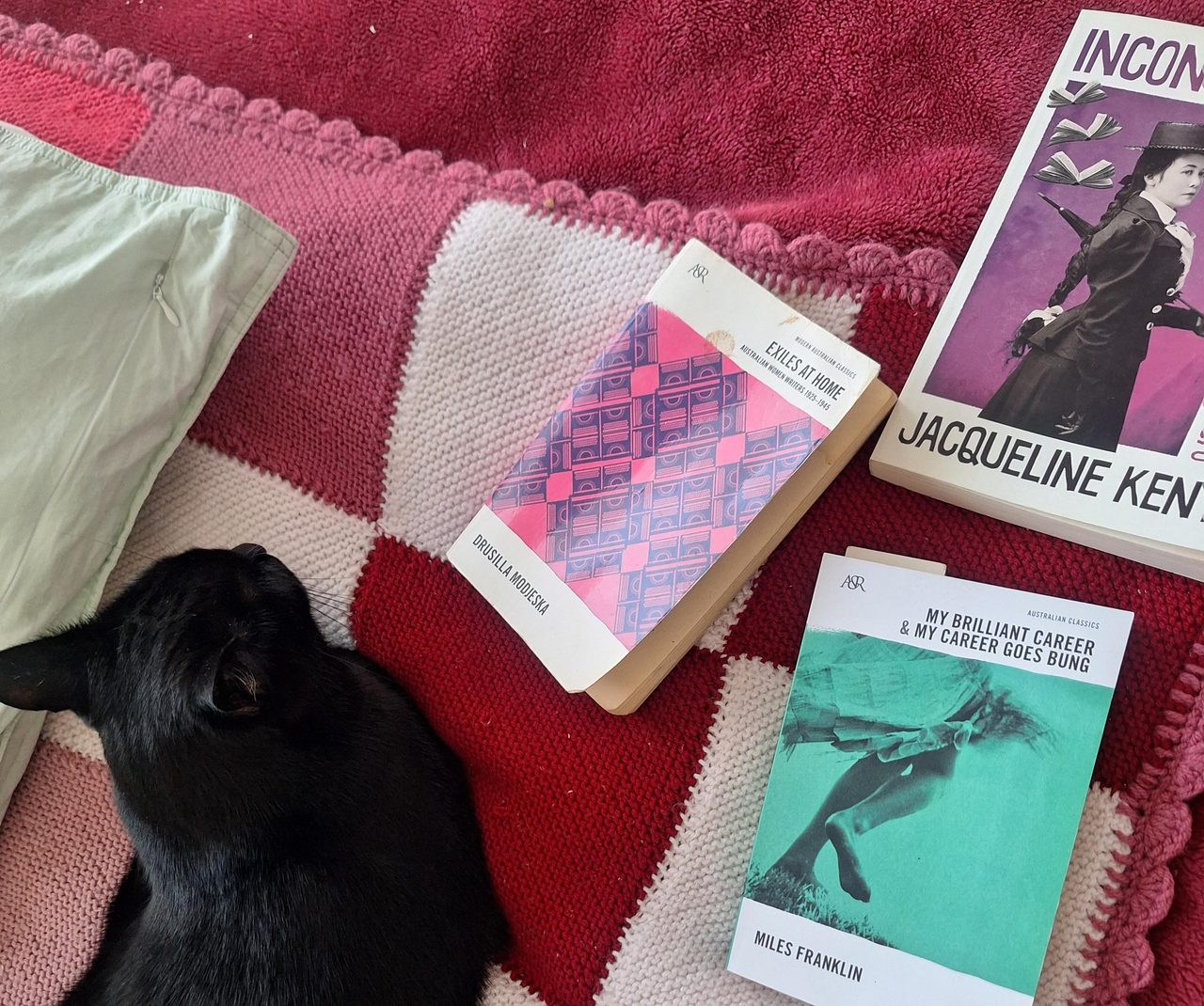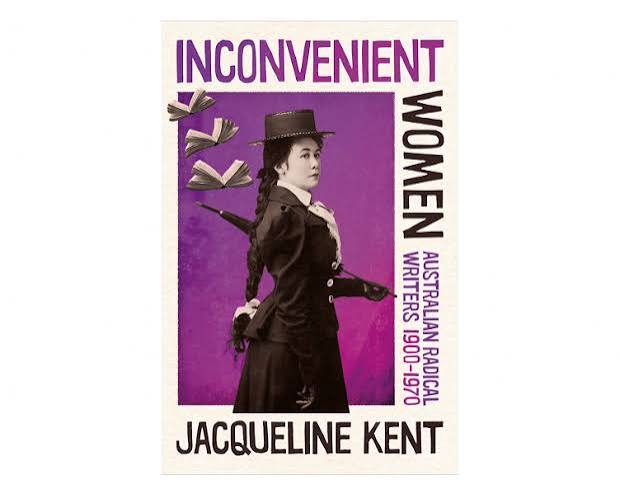
Nina Stacks reviews Inconvenient Women: Australian radical writers 1900-1970 by Jacqueline Kent.
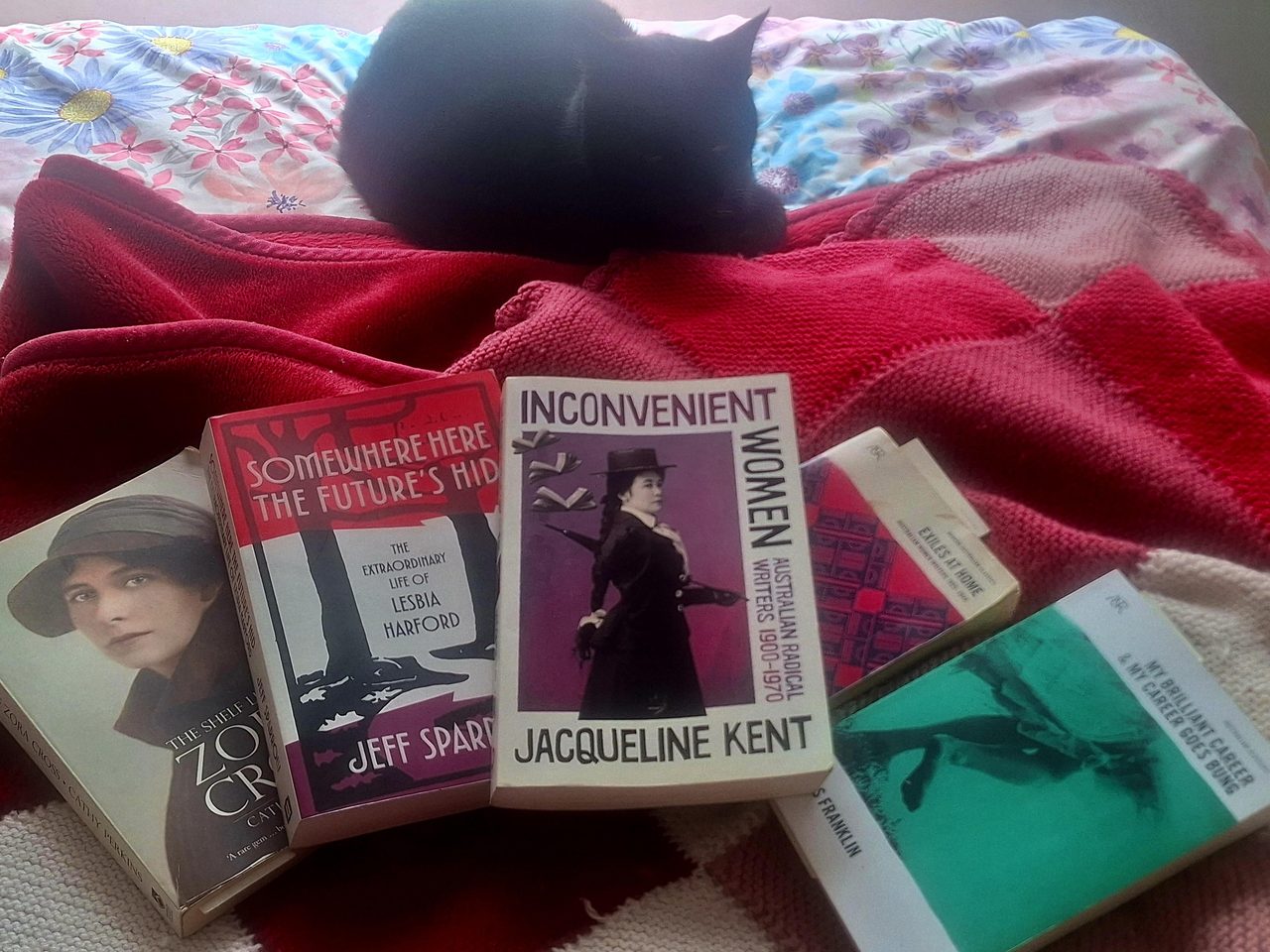
Women writing in the early part of the 20th century faced similar challenges we face today – economic collapse, failures of institutional politics, rise of fascism, censorship and war. Nina Stacks examines how they responded and what we can learn.
The media attention from Liz Doran’s Australian miniseries adaptation of Miles Franklin’s novel My Brilliant Career, the passing of feminist icons Dolly Parton and Gloria Steinem, and recent discussion within Labor Tribune around how socialism can be achieved, male entitlement, misogyny and violence gave me cause to reflect on the nature of social and political reform and how much of the material basis of women’s oppression has remained. In particular, why Sybylla Melvyn’s insouciant voice and rejection of marriage in My Brilliant Career is still as shocking to 21st century audiences as it was originally in the 20th century. So I turned to Franklin’s original text and two novels about the history of Australian women writers by Druisilla Modjeska and Jacqueline Kent.
As I see it, one of the main barriers to change are the inability of a society to understand the origins, history and causes of its discontent and to imagine an alternative. We can see this with the focus of the socialist left on issues-based protest movements. For example, the Palestine solidarity movement has been effective in raising consciousness around the plight of Palestinians in Gaza, but not as effective in building a movement against its causes; imperialism, militarism and capitalism. Similarly, Shulamith Firestone’s 1970 criticism of the early feminist movement in The Dialectic of Sex was that by failing to ground feminism in its historical base, it overlooked the origins of male entitlement and privilege and how it has evolved and maintained itself.
Jacqueline Kent’s 2025 book Inconvenient Women: Australian radical writers 1900-1970 and Drusilla Modjeska’s 1981 book Exiles at home: Australian women writers 1925-1945 both explore the social, political and economic conditions in which women like Miles Franklin, Mary Gilmore, Jean Devanny, Katherine Susannah Pritchard, Eleanor Dark, Dymphna Cusack, Zora Cross and Lesbia Harford wrote and how they used their power with words to question the conservative world they knew. In recentering women between the first and second waves of feminism, both books show how women writers laid the foundations for later feminist activists and that literature and the arts have long been at the centre of consciousness-raising for social and political movements. They also show the difficulties associated with challenging the prevailing modes of capitalist production represented by mass media, in particular the publishing industry, and the patriarchal ideologies, American cultural imperialism and representations of women in it.
Miles Franklin and My Brilliant Career
In the case of My Brilliant Career, the timing of its publication was crucial to its success. Australia in the 1890s was characterised by depression and strikes and drought, but social attitudes were changing slowly. In 1894 women won the right to vote and stand for parliament in South Australia. Despite this, after being rejected by Australian publishers in 1899, it took the intervention of a man, Henry Lawson, for My Brilliant Career to be published in 1901 by William Blackwood & Son in Edinburgh under the male pseudonym Miles Franklin for the author whose full name was Stella Maria Sarah Miles Franklin.
As Kent shows, once published, Franklin’s bold, relaxed and engaging writing style resonated with young women who still felt frustrated with their lack of social and economic prospects. It invigorated the emerging women’s movement. The book’s protagonist, Sybylla Melvyn, represents what we would now call “a difficult woman”. She defies patriarchal expectations and ideals of womanhood and proclaims: “Yes, I once was foolish enough to try and be polite, but I’ve given it up”.She longs to rise above the drudgery and anti-intellectualism of rural life for a life of music, art and literature, which at that time was almost impossible for an unmarried woman to achieve.
Interestingly however, when presented with that chance to live a more comfortable life through marriage to the rich Harold Bercham, she rejects it with: “I am given to something which a man never pardons in a woman… I am given to writing stories, and literary people predict I will be an authoress.”
As Modjeska writes, part of the impact of My Brilliant Career as a feminist novel is its use of the romantic structure which abandons a traditional resolution. Its ironic undertones invite the reader to see the love affair as satirical and it ridicules conventions of romantic love expected of young girls, which is not always what they want. Sybylla’s refusal to surrender her intellectual and economic independence to the institution of marriage can be seen as not just a personal rebellion but a rebellion against British imperial and domestic ideology.
In a preface to My Career Goes Bung some 40 years later, Miles Franklin expresses surprise at its success and impact noting what she called “the absurdity of girls from all over the continent writing to tell me that I had expressed their innermost lives and emotions”.
My Brilliant Career was reissued in 1966 as modern feminism was emerging and has been in print ever since. Then in 1970, a 31-year-old Australian woman published a book that began with a single, explosive sentence: “I’m sick of being told I’m too aggressive, too loud, too ambitious, too much.” That woman was Germaine Greer. The book was The Female Eunuch. Like My Brilliant Career, it challenged everything society had taught women to be, and how women saw themselves.
On social change
As Miles Franklin wrote in the Fellowship of Australian Writers pamphlet Australian Writers Speak, writers are the “creators of a climate of national consciousness in which politics take form and gather force”.
In her book Exiles at Home, Modjeska shows how Miles Franklin’s years in Chicago from 1906 to 1915 were marked by similar tensions we are facing today around how social change is achieved. Working for National Women’s Trade Union League of America (WTUL) and as an editor with Alice Henry of its monthly publication Life and Labor, Franklin’s influence was seen in the book review, literary and interview sections of the journal. Modjeska argues that “while the journal’s politics took place in the context of the American labour movement, many of the feminist ideas and concepts were echoed in Australian feminism and by Australian women writers”.
The WTUL was committed to social change through peaceful and legal means. Its aim was to achieve industrial democracy through education, organised bargaining and legislative change rather than revolution and class conflict. The shortcomings and contradictions of this approach in the context of violent industrial upheavals of the time were evident in the Life and Labor’s disapproval of the militancy of the International Workers of the World (IWW) and IWW’s support for the militancy of the Women’s Social and Political Union (WSPU) and British suffrage campaigns.
As Modjeska observes, the relationship between class, race and feminism in Life and Labor remained ambiguous, and obstructed a class analysis of the oppression of women, instead adopting a conservative approach to family, marriage and sexual relations.
This linking of feminism with national rather than class interests was also reflected in Miles Franklin’s writing. Her novels deal with feminism and nationalism, however no attempt is made to analyse the Australian pioneering legend in terms of class and race. Similarly, Mary Gilmore’s Women’s Column in the socialist magazine Worker sought to educate women about the benefits of socialism and defended women who rejected marriage, however, when it came to questions of race, like most Australians at the time, she supported the White Australia Policy.
The appeal and influence of communism
In her book Inconvenient Women, Kent argues Australians’ enthusiasm for communism in the early part of the 20th century did not come out of nowhere. Kent applies a historical perspective to show how the hardships and horrors of the First World War, the depression and rise of fascism in 1930s, and various conflicts between labour and capital made the idea of a social system created by organised workers without war, race and class division appealing to a number of citizens.
This enthusiasm resulted in the establishment of Communist Party of Australia at a meeting 30 October 1920 in Sydney. Twenty-six delegates attended, including three women; Adela Pankhurst Walsh (activist), Marcia Reardon (speaker and writer) and solicitor Christina Jollie Smith. Writer Katherine Susannah Prichard became a founding member of the CPA. Soon after, the Fellowship of Australian Women Writers (FAW) was established in Sydney 1928. With Mary Gilmore at forefront, it was more politically active than the Society of Women Writers, and brought together writers like Katherine Susannah Prichard, Eleanor Dark, Dymphna Cussack, Jean Devanny and Nettie Palmer.
By the time the depression hit in the 1930s, ideals of communism were growing more attractive, and women writers were a dominant influence in Australian literature. By the mid 1930s Fellowship of Australian Writers had a branch in most of Australia’s large population centres, and Australians were buying more books by local authors. At that time the CPA provided lectures, ran library circles and supported theatrical activities. The motto of Sydney’s New Theatre, which was established in 1932, was “art is a weapon”.
The threats of facism and war in the mid 1930s gave rise to the anti-fascist Australian Writers League in 1935 with the aim to “mobilise Australian writers behind anti-fascist and working-class causes, and to encourage creative writing that would reflect and promote these ideals”. Though there were disagreements around the nature of art and politics, FAW and the Writers League amalgamated in 1938. Soon after Marjorie Barnard and Flora Eldershaw put together a book of essays called Australian Writers in Defence of Freedom, with contributors including Miles Franklin and Dymphna Cusack condemning authoritarianism, militarism, infringements to civil liberties and attacks on free speech. Less than a week after then prime minister Robert Menzies’ announcement of war on 3 September 1939, the National Security Act became law which enabled the censorship of reading material. The CPA was declared illegal, and the homes and property of avowed communists and writers were raided.
After the ban on CPA was lifted by the Curtin government in 1942, it was decreed that music, cultural entertainment and education through literature, art and film should be prominent activities. TheAustralian New Writing magazine was initiated with Katherine Pritchard, Bernard Smith and George Farwell on the editorial executive board. Courses at Marxist schools were set up in Sydney and Melbourne. In 1944, the CPA acquired Marx House in George Street, Sydney. It included a book shop, meeting room and editorial facilities for Tribune, enabling the CPA to become a forum for ideas. After attempts were made by Menzies in the 1950s to ban CPA, a group of leftwing writers who felt the Tribune and the Australasian Book Society were too conservative, helped to establish a network of socialist realist writers and readers. The result was Overland in 1954.
Political differences and alliances
As Modjeska observes, although the political differences between women writers in the CPA and those who were not were profound, they built alliances based on their friendships and common identities as women and writers.
Writers more aligned with the CPA like Jean Devanny, Dorothy Hewett, and Katharine Susannah Prichard wrote novels dealing with social realism and adopted a more didactic and proselytising style than writers like Miles Franklin, Lesbia Harford and Zora Cross.
As Jeff Sparrow points out in his biography on poet Lesbia Harford Somewhere Here the Future’s Hid, Harford was a writer of desires unbound by conventional categories. She did not want to lecture her readers, she wanted to tear them apart. Her novel The Invaluable Mystery, not published until 1987, focused on the internment of enemy aliens during the First World War from the point of view of a working-class woman of German heritage. It took the advent of second wave feminism for her poetry to be known and appreciated. Similarly, as Modjeska observes, Zora Cross’s poetry inSongs of Love and Life, were the first autonomous expression of female sexuality and erotic passion from a women’s point of view.
As both books show, being a writer and woman in the CPA was difficult and marked by a struggle to balance their political work with their writing, which was often dismissed as propaganda. Jean Devanny had various internal struggles with the patriarchal authority of the CPA which she felt did not treat women, intellectuals or creative writers with enough respect and clashed with its leadership over cultural policy. Unlike Katherine Sussanah Prichard’s discreet diplomacy, Devanny argued for the rights of writers and was openly critical of the party’s authoritarian interference in the Workers Art Club and lack of support for women and writers.
Katherine Susannah Prichard‘s early novels Working Bullocks, Coonardoo and Intimate Strangers are characterised by a dramatic tension between the competing influences of Marxism and romanticism. In Intimate Strangers she drew upon her own experiences of estrangement and the financial and emotional interdependencies in marriage. After her husband’s suicide she threw herself into party work which had a detrimental effect on her writing. Although an enthusiastic party member, Dorothy Hewett saw the “fatal contradiction” experienced by writers in CPA, the primacy of discipline over creativity. When Prichard died in 1969, Hewett wrote of “the fierce self-immolation in a political dream … the sensuousness, sexual energy drained out of her writing, leaving only the husk of schematic politics to sustain her and her work”. Hewett’s novelBobbin Up published in 1959 was perhaps closest to the modern feminist movement with its focus on the lives of women working in a woollen mill in Sydney in the 1950s.
For others like Nettie Palmer, their political misgivings about Marxism and the CPA were around its capacity for intellectual, artistic and creative freedom. This was due to the CPA leadership’s tight control over cultural policy and insistence on the social realist method of writing. Instead, Nettie Palmer wrote cultural criticism for the socialist press, influenced by ideas of New Liberalism and guild socialism. Central to this was the idea that a strong national culture would bring social equality, dignity of labour and social evolution. Her ideas were deeply rooted in liberalism over class struggle and “enlightenment gradually through education”.
Importantly, Nettie drew together writers across the country to foster the development of a national literature that would be tied to progressive social reform. She established a network between many Australian and overseas writers and intellectuals. However, her faith in national culture was increasingly challenged with the rise of fascism.
For writers like Eleanor Dark and Dympha Cusack, their alliance with communism was based on the pressing needs of the moment. In her 1938 novel Waterway, one of Eleanor Dark’s characters says: “Of course I am a communist. Anyone of any intelligence is… nowadays”. HerTimeless Land trilogy, later turned into an ABC miniseries, broke new ground emphasising the effect of European invasion of Australia.
Dympha Cusack’s first novel Jungfrau, published in 1936 was one of the first to question social attitudes to sexuality and their consequences for women’s lives, and deal with abortion. One character says: “Women are cursed, all right. If you wither on the virgin stem, you go all pathological, if you go off the deep end, you get some foul disease, and if you marry and have dozens of young you die of exhaustion.”Cusack also collaborated with Florence James on a highly controversial novel Come In Spinner about the effects of war on women at home in Sydney. It was entered in The Daily Telegraph’s writing competition in October 1946, and after a long tussle with publishers went on sale in Australia in April 1951.
While the majority of the women discussed in both books are white, Kent’s book includes a discussion of Indigenous women writers and activists, including the poet Oodgeroo Noonuccal (Kath Walker) and the activist and writer Faith Bandler. As Kent notes, Kath Walker, a member of the CPA since the 1940s, brought the Indigenous rights movement into public attention with her writing, and was mentored by Jean Devanny and Mary Gilmore. Her We Are Going published in 1964was the first book ever published by an Indigenous woman. Unlike Prichard’sCoonardoo, which when it was published in 1929 was the first Australian novel with an Indigenous woman at its heart, Kath Walker’s poems provided First Nations perspective on the impacts of colonisation, loss of land and cultural survival. It blended deep emotion with political consciousness and calls for justice.
Questioning the institution of marriage
Interestingly as Modjeska points out, while women writers of the 1930s were critical of the effects of marriage, none of them, with the exception of Jean Devanny, questioned the institution of marriage itself. Modjeska notes that this confidence in the institution of marriage as a means of organising domestic and social relations was based on the premise that with economic independence and intellectual respect, marriage would become a “companionship of like minds”. This assumption, however, was based on the availability of conditions such as intellectual work, domestic comfort and fertility control available to a privileged social group and was reflective of their bourgeois backgrounds.
Devanny’s 1926 novel The Butcher Shop, asserts a woman’s right to choose how they want to live, rejecting the capitalist model of marriage as ownership of woman by man. The title itself is a brutal reference to how society devastates women’s lives. Despite big overseas sales, with 15,000 copies sold in the UK, it was banned in New Zealand and later Australia.
In the introduction to the 1981 edition of The Butcher Shop, Heather Roberts writes that two theories central to the book are feminism and socialism. Specifically, Devanny advocates that women should be equal in both mind and body with men, and she sees that as being achieved through a socialist form of government and society. Roberts also points out that many of Devanny’s ideas on the history and development of the family and the effect on women came from Frederick Engles book The Origin of the Family, Private Property and the State first published 1884 and in English 1902. Central to this was that in prehistoric times when property was held in common, there was no notion of private property and relations between men and women were equal.
The more things change, the more they stay the same, or go backwards?
While it is true that workforce participation and access to female contraception has provided women with choice in relation to their marriage and childbearing intentions, in many respects societal attitudes towards that choice have not changed. Women’s reproductive rights and bodily autonomy are also subject to constant attack by conservative political forces.
With the current wave of misogyny and the emergence of “the manosphere” as a political reaction and backlash to the gains won by the women’s movement, you could be forgiven for thinking we are going backwards. A recent University of Melbourne study on Misogyny, Online Radicalisation, and Youth Extremism in Australia led by Dr Sara Meger surveyed 1,122 young people aged 13 to 17 and 2,307 adults, to compare attitudes on women, gender equality, online influences and violent extremism.
The study shows that many young Australians hold concerning attitudes towards women, with a third of teenage boys expressing misogynistic attitudes, mistrust of women and a belief in traditional gender roles. Nearly a quarter of teenage boys surveyed believe feminism is damaging to society and should be resisted with violence if necessary. More than 31% of boys aged 13 to 17 believe that attempts to give equal opportunities to women in Australia have gone too far.
Statistics from the report Gender-based violence in Australia at a glance (August 2024) show one in four women have experienced violence by an intimate partner since the age of 15. As of November, the Australian Feminicide watch shows that 60 women have been killed in 2026, and a total of 80 in 2025. The Australian Institute of Criminology (AIC), Homicide in Australia website shows 28 women were killed by a current or former intimate partner in 2025. The statistics also show that men who strongly endorse norms that reflect socially dominant forms of masculinity were more likely to have perpetrated acts of physical or sexual violence against and intimate a partner.
In this context, Simone De Beauvoir’s “one is not born, but rather becomes, a woman” could not ring more true. The problem is not just a matter of biological gender, but one of social conditioning around masculine and feminine traits. Patriarchy conditions men to self-mutilate and kill off the feminine emotional parts of themselves emphasising dominance, power and aggression, and in so doing denies them their humanity.
In much the same way women are conditioned towards passivity, kindness, tenderness and vulnerability at the expense of their own ambitions, independence and freedom. This perception of femininity as less than or second to masculinity creates the social conditions under which women are seen as less than or second to men. This manifests itself in toxic masculinity and male entitlement, which is not only harmful to women, but harmful to men.
Women who do choose the well-trodden path of marriage and children face the challenge of “having it all”, juggling marriage, children, caring duties and a career. The Status of Women Report Card 2026 shows Australian women are working more than ever, with workforce participation reaching a record yearly average of 63.1% in 2025. However, Australian women still shoulder most unpaid care, face high rates of intimate partner violence, and continue to earn less than men. In 2025, women did 32 hours of unpaid work and care a week, nine hours more than men, and that this is highest for women in a couple family with a child under 15 years (47 hours a week). While there may be exceptions, it is quite clear that men are still the primary beneficiaries of marriage.
Is it any surprise that the latest Intergenerational Report (IGR) shows that women in Australia are, as Shulamith Firestone would say, “seizing the means of reproduction” with Australia on track to record more deaths than births by the 2060s as the nation’s fertility rate falls (1.481 births per woman in 2024 according to the Australian Bureau of Statistics).
National statistics for 2025 also show that there were 1.7% fewer marriages registered than in 2024, while the number of divorces granted increased by 4.1%. Research on childless women by Deakin University in 2013 showed women’s reasons for choosing not to have children include a focus on careers and lifestyle, a rejection of culturally assigned gender roles, not having the right partner, economic or financial circumstances, insufficient childcare, lacking maternal instinct, population and health concerns and a desire for independence and freedom.
Despite all this, the idea that getting married and having children is a choice and not an inevitability is still controversial. Women who express a refusal to marry or have children are still met with shock and disbelief, and the familiar “you’ll change”. Gloria Steinem addressed this in late night talk show Chelsea Lately in October 2011 with “everybody with a womb doesn’t have to have a child any more than everybody with vocal cords has to be an opera singer”. Research by Deakin University in 2013 shows that “female childlessness continues to be characterised by Western society as unconventional, undesirable and socially deviant”.
The case for revolutionary women’s liberation
Women writers of the early 20th century were at the centre of social and political change demonstrating that “a woman’s place is in the revolution”. Personally and professionally, they lived unconventional lives and embodied alternative forms of womanhood. They expressed their socialist and feminist views against a background of political conservatism and, in doing so, challenged and reshaped the systems around them, proving that art itself can be revolutionary.
As Shulamith Firestone argues in The Dialectic of Sex: The Case for Feminist Revolution (1970): “The end goal of the feminist revolution must be, unlike that of the first feminist movement, not just the elimination of male privilege, the elimination of sexual classes and sex distinction itself”. This requires seeing ourselves as humans, not just as men and women. A vision of ourselves that recognises the full breadth of our humanity beyond gender, race, class or sexuality. Or as Simone De Beauvoir concludes in The Second Sex, a rejection of the status of women as the “Other” and their full economic and social equality and freedom as independent human beings.
The Labor Tribune article “Male entitlement and the material roots of sexual violence” shows how the culture of sexual violence and male entitlement is deeply embedded in institutions and broader society, and not just a problem of individual behavior. As I argue in my letter to the editor “Seize the means of reproduction”, sexual liberation of women needs to also involve addressing the social and economic expectations and pressures placed on women around relationships, marriage and bearing children, and empowering women to reject abusive or unequal sexual relations with men. This means liberation from all kinds of social, cultural or economic dependence on men that is only really possible in a socialist society. In this light we should also reconsider the institution of marriage as a means of organising domestic and sexual relations, which is responsible for tying women in a web of dependence and subservience.
In a world on the verge of social, economic and environmental crisis with the impacts of global warming and war being felt around the world, all evidence shows we are not really creating the kind of world you really want to bring children into. While the human race continues to sow the seeds of its own destruction through capitalist exploitation, imperialism and militarism, women are rightly seizing control of the means of reproduction. To them I say, join the revolution and adopt a cat instead!