
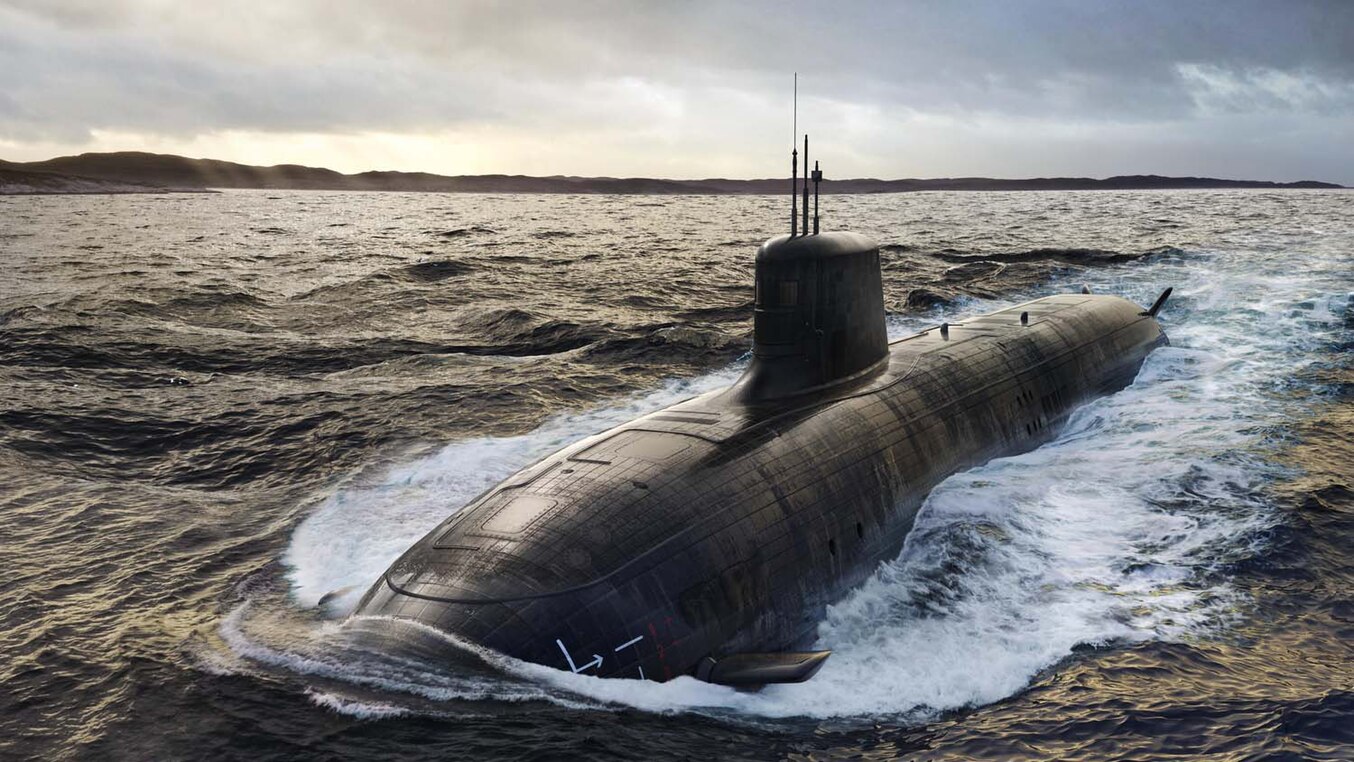
Marcus Strom welcomes a landmark exercise in citizen democracy, but argues that the workers’ movement must develop its own class position on defence and foreign policy.
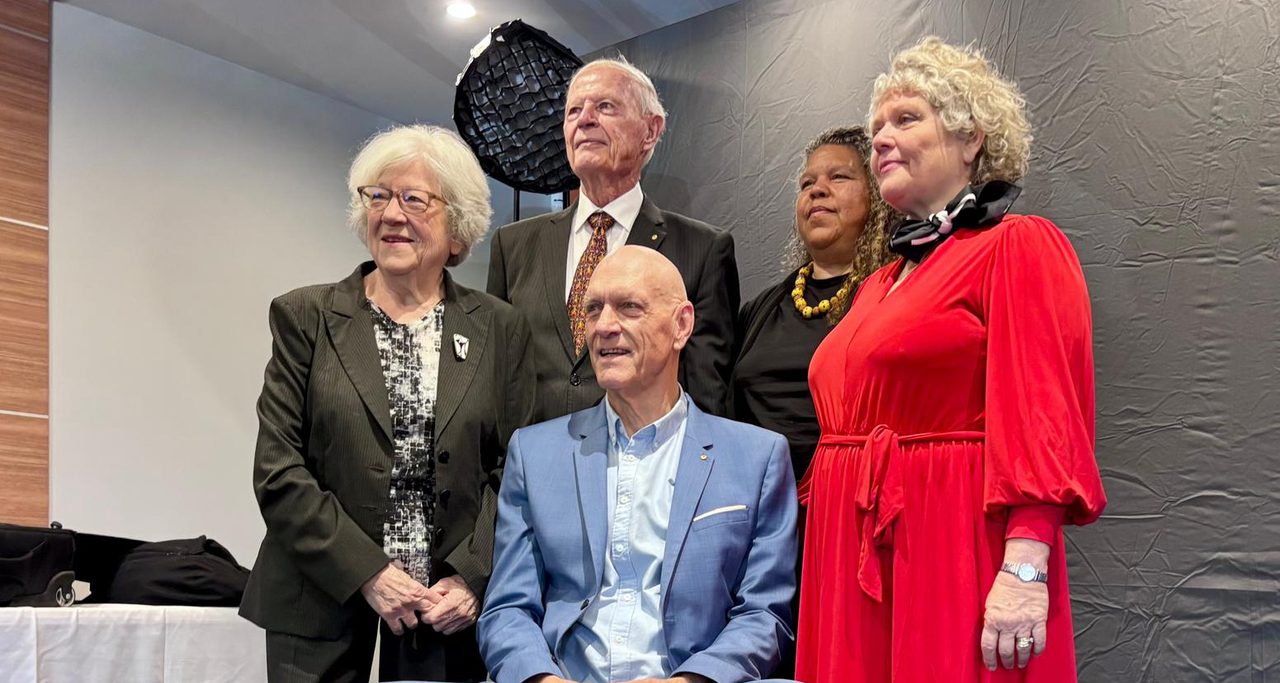
The publication of Surrendering Australia – the AUKUS Deception, the Commissioners’ Report of the Public Inquiry into AUKUS, is a welcome and timely development in the campaign against the $368 billion nuclear submarine pact. It is also a triumph of citizen democracy.
Faced with the refusal of government to properly scrutinise one of the most consequential decisions in Australian history, a publicly supported, crowd-funded and union-backed initiative set out to investigate whether Australia needs AUKUS at all. The inquiry brought together a distinguished group of commissioners, including former Chief of the Australian Defence Force Admiral Chris Barrie, former Western Australian Premier Carmen Lawrence and former federal minister Peter Garrett.
Their standing gave the inquiry considerable authority. Its public hearings attracted contributions from military and strategic experts, former politicians, academics, union representatives and Australians from all walks of life. More than 1,000 submissions or appearances were received or heard, including from former conservative Liberal Prime Minister Malcolm Turnbull, former Liberal defence minister turned AUKUS shill Christopher Pyne, and former Labor foreign ministers Bob Carr and Gareth Evans.
But it was the participation of ordinary citizens that demonstrated the real strength of the exercise. Labor Against War national patron and inquiry secretariat co-chair, former Senator Doug Cameron, summed it up: “As a member of the inquiry secretariat, I was blown away by the thoughtful submissions made by ordinary Australians as well as people with deep expertise in these areas. This is a report the government cannot afford to ignore.”
The report’s release on 4 November attracted considerable media attention, despite it being sandwiched between the fifth interest rate rise of the year and the US midterm elections. It has also been met with an extraordinary public response, with 83,000 downloads of the report within 24 hours.
Albanese government cowardice
The need for this inquiry is itself an indictment of the Albanese government. AUKUS was initiated by the discredited Morrison Liberal government, but it is the government of Anthony Albanese that has given the project life and poured billions of taxpayers’ dollars into the US war machine.
The cowardice of the government in refusing to allow any serious parliamentary examination of AUKUS meant that citizens had to step in and do the job that our elected representatives refused to perform.
AUKUS – plus the Albanese government’s near immediate support for the US-Israel strikes on Iran – put Royal Australian Navy personnel on a ship that sunk an Iranian navy ship off the coast of Sri Lanka, far from the war zone. This put RAN crew at risk of being accused of participating in a war crime.
The government’s position is that AUKUS is essential to national security, but the commissioners’ report found time and again that it has consistently failed to explain what security threat justifies this enormous expenditure, or why Australia must surrender so much control over its military and strategic future to the United States.
This is not for want of opposition within the Labor Party. Former prime minister Paul Keating, foreign ministers Bob Carr and Gareth Evans and branch members, trade unionists and Labor Against War activists have repeatedly raised the issue.
Victorian and Queensland Labor state conferences voted overwhelmingly against AUKUS. Yet at this year’s ALP National Conference, the Left and Right factions combined to close down any debate.
It seems they are concerned that an open debate – even one where they had the numbers on the floor – would prompt complaints from the Pentagon that Labor’s internal opponents have not been properly sorted out.
We have not been sorted out. And we will not be.
The hundreds of Labor Against War activists, the branch motions and the thousands of people who have contributed to the public inquiry demonstrate that opposition to AUKUS is not going away.
The report of the AUKUS Public Inquiry should be a weapon in our ongoing fight in the labour movement against a pact that ties Australia into war fighting plans of the United States..
At the launch of the Commissioners’ Report in Canberra on 4 November, former Labor minister Peter Garrett, best known as lead singer of Midnight Oil, made an important observation when asked by a reporter about the absence of debate within Labor.
“I’m a member of a party where vigorous debate should be the norm. Where was the vigorous debate in the caucus? Where was the vigorous debate in the cabinet? We don’t have any sense that there’s been a debate,” he said.
Garrett also criticised the procedural manoeuvres used to prevent a substantive discussion at the national conference.
The findings: scrap AUKUS
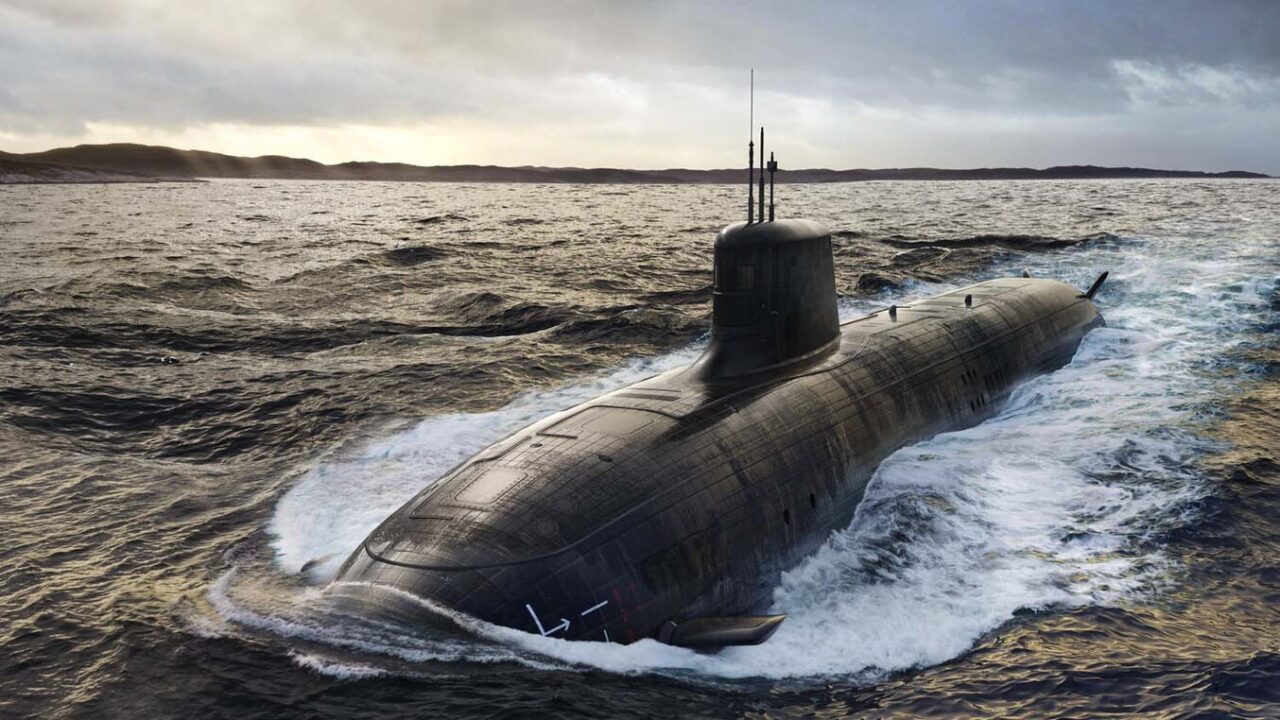
The commissioners’ central conclusion is unambiguous. They describe AUKUS as “the worst, most costly and riskiest defence decision ever made by an Australian government”, and call for its termination.
The report finds that AUKUS undermines Australia’s capacity to independently determine military and strategic objectives. Delivery of the promised submarines remains uncertain, subject to enormous production and delivery problems, and dependent on the willingness and capacity of the US and British governments to fulfil their commitments.
The financial burden is staggering. The estimated cost is already around $368 billion, with the commissioners warning that the eventual cost could approach half a trillion dollars when the long-term management and disposal of radioactive waste is included.
The inquiry also warns about the implications of the growing US military presence in Australia. The proposed submarine rotation facilities at HMAS Stirling in Western Australia risk turning the installation into a de facto American naval base. The presence of nuclear-powered and potentially nuclear-armed submarines raises serious questions about Australia’s exposure to a major-power conflict and Australia’s commitment to nuclear non-proliferation and the Rarotonga Treaty.
The report identifies the exaggeration of employment benefits, conflicts of interest associated with the military-industrial complex, and the growing militarisation of education and research institutions as further consequences of the AUKUS project.
The evidence concerning nuclear waste is particularly disturbing. Former Labor leader Kim ‘bomber’ Beazley, when questioned about disposal arrangements, reportedly waved his hand and suggested that the waste could be disposed of “somewhere in the desert”.
This casual attitude to a problem that will confront generations of Australians is extraordinary. It can only raise the prospect of radioactive waste being dumped on the traditional lands of Aboriginal people, with all the historical injustice that would entail.
The disdain for the future displayed by AUKUS boosters, while political and military figures move into lucrative defence industry positions, is revolting.
The commissioners make a series of recommendations, including terminating AUKUS Pillar I (the submarine component), suspending development of the base at Stirling in WA and the Osborne facility in Adelaide. Futher it calls for a Royal Commission into AUKUS, for the Australian National Audit Office to examine AUKUS expenditure and commitments, and to end the Australian Federal Police’s AUKUS Command. You can read the full list on the AUKUS inquiry website.
These recommendations provide a substantial basis for further public and political debate.
What sort of military?
There is, however, a weakness in the report from a Marxist perspective. Its framing around the “national interest” and “national security” means it does not provide a socialist analysis of the state, the armed forces or the class interests that shape Australian foreign policy. And to be fair to the commissioners, they were not asked to provide such an analysis and given their politics, would not do so anyway.
Nevertheless, for the working class, these distinctions matter.
In his strongly argued opinion article in Guardian Australia, Barrie said that the government has continued to refuse to answer the critical question about what the AUKUS submarines are actually for. At the launch of the report, Barrie said that AUKUS submarines only make strategic sense in the likelihood of a US-China war, with Australia opting to participate as an ally of the USA. He said this might be in the US’s strategic interests; it is not in Australia’s.
Barrie’s sharp question, however, needs to be directed at the recommendation of the report for a new submarine fleet, potentially one with low-grade nuclear fuel.
‘What are these submarines for, and against what threat?’ The report does not make a case for them.
I agree with Barrie that defence procurement must proceed from an assessment of strategic objectives and the actual tasks required of a military force. This is not a class-neutral question.
For the Australian ruling class, subordinated within the globalised military hierarchy, that means enmeshing Australia into an alliance with the US.
This is not without contradictions. Sections of Australian capital have become deeply integrated into the Chinese economy, and the prospect of a war that destroys those economic relationships is hardly in their interests. The ruling class is not politically or economically homogeneous, even if its parliamentary representatives maintain a bipartisan commitment to AUKUS.
The working class must not tail one or other faction of the ruling class in these disputes. But we should take advantage of these divisions.
It is not possible for Australia to extricate itself from being radically subordinate to US imperialism within the existing social order.
This means the working class needs its own defence and foreign policy, not one borrowed from either side of the establishment’s arguments about Australia’s place in the US-led military alliance, or balancing its interests for profitability with China.
Of course, Marxists are not pacificists. We should not merely call for a reduction of the defence budget as a ‘transitional demand’, as so many on the left do and leave it at that. We do not argue that a democratic society has no need to defend itself.
Instead, we argue for a military appropriate to the defence of a democratic republic. That means a citizen army, or popular militia, in which the division between the armed state and the people is overcome.
A standing professional army, increasingly integrated into the military structures and strategic priorities of an imperialist alliance, is against our interests as a class and against our global struggle against militarism.
A turning point for the anti-AUKUS campaign
Despite these important criticisms, the report is a welcome tool in the fight against AUKUS. And there are some signs that suggest the bipartisan consensus around AUKUS may be starting to crack.
On 4 November, the day before the inquiry report’s publication, senior Murdoch commentator Robert Gottliebsen published an article in The Australian raising that said the AUKUS program was “taking water”. He said that changes in drone technology and AI raise serious questions about AUKUS’s viability, arguments made by AUKUS critics for the past five years.
“The danger is that we could end up spending hundreds of billions of dollars without acquiring the modern defence capabilities Australia will actually need,” he writes. So is the Murdoch empire getting cold feet on AUKUS?
The international context makes the need for stepping up the campaign even more urgent. The US-Israeli attacks on Iran, supported by the Albanese government, and the wider economic consequences of the conflict demonstrate how quickly Australia can become implicated in US military adventures.
The report found that “decisions about the operational use of AUKUS submarines … would effectively be made in Washington” and that “AUKUS makes it more likely that Australia will be enmeshed into any possible future war between the US and China”.
The US midterm elections, taking place as the report was released, were an important political backdrop. The growing opposition to Trump’s militarism and the consequences of US foreign policy demonstrate that the political establishment in Washington is not immune from popular discontent. Neither should it be here.
Labor members must use the report to campaign
The AUKUS inquiry report provides an important resource for challenging the government’s claims. Where we can, it should be taken into every Labor branch, trade union, workplace and community organisation for discussion and further action.
The report itself makes a recommendation to the Australian public: share its findings, participate in debate and engage with elected representatives.
That is precisely what we should do.
ALP members should organise branch meetings, invite speakers, continue to put motions, and demand that their federal MPs explain their position. ALP members should work with the broader anti-militarism and anti-AUKUS groups to build a real social movement. But we must win unions to this position.
Union members should demand their leaderships take a clear position against AUKUS. It is heartening the inquiry had the support of the NTEU, MUA, AEU teachers’ unions, the ASU (ACT/NSW) and the South Coast Labour Council.
It was an abrogation of leadership for the ACTU to not make a submission. Most unions, with honourable exceptions, did not make a submission.
It is scandalous that the ‘leftwing’ AMWU continues to back AUKUS, particularly as its national secretary Steve Murphy, is a member of the ‘ecosocialist’ SEARCH Foundation, which manages the funds of the former Communist Party.
We must redouble our efforts and Labor Against War activists should use the report to extend the campaign into every part of the labour movement.
The struggle against AUKUS is part of a wider struggle against militarism, imperialist alliances and the subordination of working-class interests to the strategic priorities of capitalist states. It is a vital campaign for socialists to prioritise.