
With the world seemingly headed towards another generalised war, Marcus Strom argues that democratic self-defence is the best option against imperialism and militarism.
The demand for a popular militia can sound strange to the contemporary left. But it was once a central democratic demand of the mainstream socialist movement. The abolition of the standing army and its replacement by the armed people stood alongside universal suffrage, the abolition of monarchy and democratic control of state institutions.
Why has this demand disappeared from socialist politics and why should we recover it today?
At present, the world is massively rearming. Nuclear agreements have expired and US President Donald Trump is urging the states of the Global North to push towards 3.5% of GDP and above on military spending. Across Europe, when faced with the question of guns or butter, politicians are overwhelmingly opting for guns.
Far from heralding an age of peace and stability, the collapse of the Soviet Union 35 years ago has seen the essential militarist nature of capitalism come to the fore. The façade of the ‘international rules-based order’ has collapsed. Capitalism is a system that relies on might being right.
This matter has its own relevance in Australia. With the announcement of the AUKUS military pact, Australia committed itself to spend untold billions acquiring nuclear-powered submarines and deepening its military integration with the United States and Britain. Alongside this is an ongoing propaganda war to justify massive expenditure on the weapons of mass slaughter.
How can socialists respond coherently to this global military buildup?
Three years ago, some ALP activists established Labor Against War, a grassroots Labor Party members’ campaign against AUKUS, organised around three simple slogans: no to AUKUS, no nuclear submarines and no war with China.
As national convenor of Labor Against War, I am often asked, ‘what is the alternative to AUKUS?’. Labor Against War itself does not have a defence policy of its own and nor should it. It is a campaign that unites people across the labour movement with all manner of motivations for opposing AUKUS.
There are, of course, different positions among those who oppose AUKUS. Some are social-pacifist; that is, they support disarmament in favour of spending on social programs. However, they assume this can be achieved within the framework of capitalist society.
Others are effectively social-imperialist; that is, they oppose the AUKUS pact, but support rearming the Australian imperialist state using other means. In Australia there is sometimes an odd combination of the two.
AUKUS is about arming Australia to be part of a US-led containment operation against China. But the nature of war is changing. Even for many supporters of the US alliance, AUKUS is seen as preparations for ‘fighting the last war’.
We have seen in Ukraine that the age of the tank and large troop movements is over. Drone and missile technology – increasingly driven by AI targeting – is emerging on the land and in the skies. The sea is quickly following suit. It is no accident that Britain last week signed a deal with Ukraine in exchange for precious battlefield data to develop yet more AI-powered killing machines.
For some people like Sam Roggeveen, this general shift has prompted proposals for an “echidna strategy”; an Australian variation of the “porcupine strategy”, which was proposed in 2008 by Professor William Murray at the US Naval War College as a strategy for Taiwan to defend itself against China.
Essentially, this means arming a small or middle power so that it cannot be attacked by a larger predator. It is a strategy for asymmetric warfare. Roggeveen argues for a mobile land-based force that uses missiles where large navy vessels are abandoned, and security is increased through close relations with Southeast Asia.
For the socialist movement, this is not a completely bad idea given the likelihood of asymmetric power for any workers’ government that dares to take power.
However most ‘progressives’ in Australia – and Roggeveen himself – imagine the echidna strategy as a rearming of the existing capitalist state, not a strategy for democratic republic led by the working class fighting for socialism.
The development of drone technology and the war in Ukraine are acting as a laboratory for military planning across the capitalist world, contributing to an increase in militarism. We therefore encounter people who oppose AUKUS while simultaneously arguing for increased defence spending on drones and missiles.
The Greens took precisely this position at the last election, calling for investment in Australian-made drones and missiles. When asked whose targeting systems a Green Party run military would use — American, French or Chinese — you either get a blank look or a reply that Australia would make its own. Good luck with that.
Much of the socialist left takes a different but ultimately inadequate position: spend less on war and more on social services. As a slogan, there is nothing wrong with that. But if it becomes the entirety of our politics, it creates the illusion that peace can be achieved simply by changing the spending priorities of the existing government within the current constitutional system.
It cannot.
The military question is a question of the state
This is why the demand for a popular militia or a citizen army is relevant today: consistent democrats and socialists should, today, call to abolish the standing army and replace it with the armed people.
For many on the left this is seen as ‘unrealistic’ – yet at the same time they claim to have a political program for the nationalisation of banking and the abolition of private property. How easy will this be to realise?
For us, it is a clear democratic demand. It is worth noting that the armed forces of Britain and Australia pledge allegiance to the Crown, not the people. And in the US, the armed forces pledge allegiance to the constitution, not the people.
In the Australian context, a citizen army could be organised along familiar lines similar to the State Emergency Service: a broadly based citizens’ organisation with trained professional staff responsible for training and coordination. The SES itself has roots in Australia’s wartime civil defence organisations.

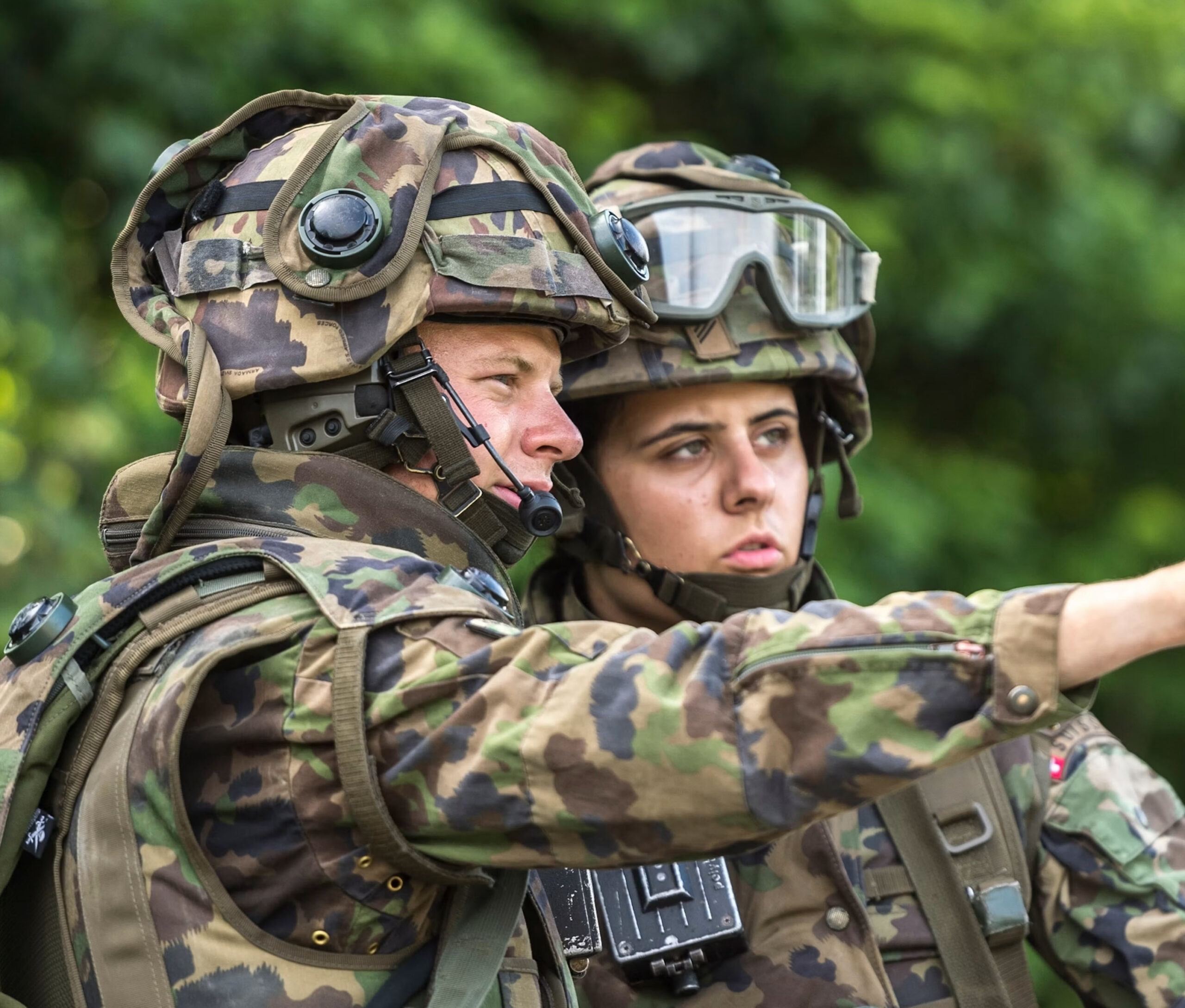
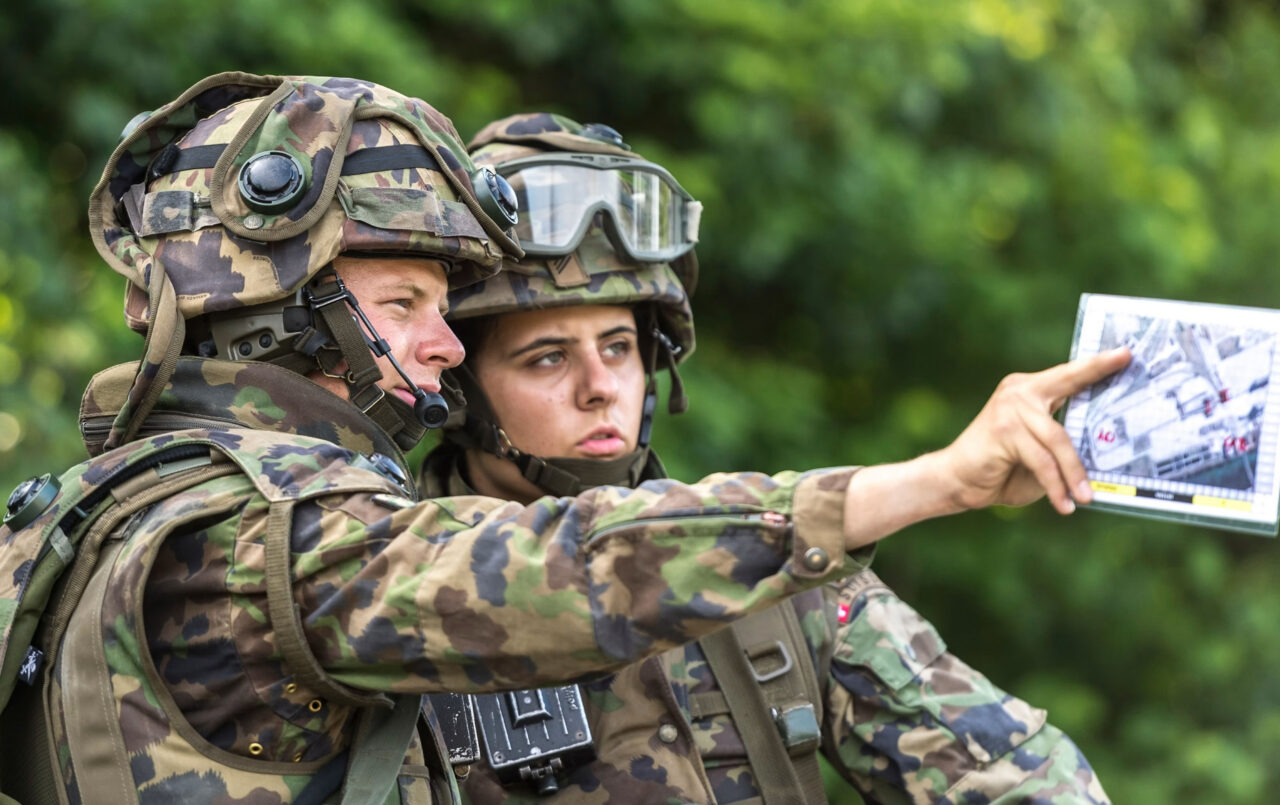
This is not too dissimilar to the Swiss national militia. The Historical Dictionary of Switzerland states: “The term militia system refers to an organisational principle prevalent in Swiss public life, based on the republican ideal that every capable citizen should assume public offices and duties.”
The democratic demand for a citizen army is very different from the approach of most of the Australian socialist left. The Communist Party of Australia has called for a 10% cut to the defence budget. Socialist Alliance calls for a 50% cut.
I asked comrades from the Socialist Alliance during the last election what they intended to spend $29 billion on for defence, given the military budget was $58 billion. After shaking off a blank look, the only response I really got was that it was “just a transitional demand”. No wonder workers don’t take such an approach seriously.
The Australian Socialist Party, emerging from the Socialist Alternative-dominated Victorian Socialists, similarly calls for the defence budget to be “cut” (no percentage given) alongside calls to abolish the SAS because of its role in war crimes in Afghanistan. The Australian Defence Force presumably remains intact. How much should the budget be cut? Apparently, that need not be specified because it is a “transitional” demand.
This illustrates a broader problem. Socialists routinely debate whether military spending should increase or decrease, whether AUKUS or ANZUS should be junked, whether NATO should be expanded or abolished, whether nuclear weapons should be retained or eliminated, and whether particular states or movements should receive arms. All important questions, but not the starting point for Marxists.
In the United States, following the Black Lives Matters movement, much of the left calls to “defund the police”. But this is a meaningless demand unless you have a proposal as to what replaces the police. We are for the popular and democratic self-management of community security and policing through a popular militia.
If we can’t offer working class communities more security than that offered by the police, why would they take the socialist left seriously?
The more fundamental question is: what kind of military and policing institutions are compatible with democracy and with a state form appropriate to working-class rule?
That is a question about the state, not simply about budgets or foreign-policy preferences.
The classical Marxist answer is clear: the standing army should be abolished and replaced by the armed people organised as a popular militia.
Until well into the 20th century, this was hardly controversial within the socialist movement. Throughout the 19th and early 20th centuries, the demand stood alongside other great democratic demands: universal suffrage, abolition of monarchy, democratic control of state institutions, and the election and recall of officials.
Its disappearance reflects the abandonment of the Marxist minimum program, the conception that the socialist movement must fight for democratic transformations of the state as part of preparing the working class for political power.
From the democratic revolutions to Marx and Engels
The demand for a popular militia did not originate with Marxism. It emerged from the great democratic revolutions of the 18th and 19th centuries. And it extends even before that to Machiavelli and the emergence of independent civil states in Italy.
The US Constitutional amendment for a “well-regulated militia, being necessary to the security of a free state” spoke to this. Later political shifts effectively turned this amendment into its opposite: the individualised right to carry arms outside the collective control of a “well-regulated militia”. That is not what we call for.
The French Revolution challenged the standing armies of absolutist monarchies with the concept of the “nation in arms”. Democratic radicals argued that free citizens should not be dependent upon a professional military caste.
Marx and Engels inherited this tradition, as did the First and Second Internationals, but transformed it through their analysis of modern class society.
The question was no longer simply whether a militia was more democratic than a royal army. It became: what kind of armed force corresponds to the republican and democratic rule of the working class?
The Paris Commune of 1871 was decisive. Marx’s analysis of the Commune placed the military question at the centre of the proto-workers’ state that it represented.
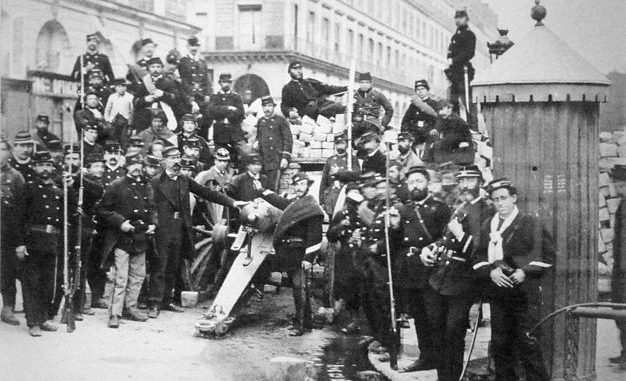
The very first decree of the Paris Commune was for the suppression of the standing army and its replacement with the armed people. The standing army was understood not as a neutral instrument of national defence, but as part of the existing state apparatus, characterised by hierarchy, separation from society, a professional officer class and obedience to established state authority.
Furthermore, the anti-bureaucratic and anti-militarist approach of the Communards – later inherited by the second Socialist International – meant that resources bound up with running a bureaucratic militarised state could be unfettered for the benefit of the Commune.
Writing in the Civil War in France, Marx noted:
The Commune made that catchword of bourgeois revolutions – cheap government – a reality by destroying the two greatest sources of expenditure: the standing army and state functionarism. Its very existence presupposed the non-existence of monarchy, which, in Europe at least, is the normal incumbrance and indispensable cloak of class rule. It supplied the republic with the basis of really democratic institutions. But neither cheap government nor the “true republic” was its ultimate aim; they were its mere concomitants.
Karl Marx, The Civil War in France
The Commune did not seek a better-managed standing army. It sought to abolish the separation between the people and the armed force, an essential component of a working-class government.
Engels returned repeatedly to this question, defending universal military training, democratic control of officers, abolition of the military caste and replacement of the standing army.
The militia was therefore not a secondary organisational question for classical Marxism. It was part of the Marxist theory of the state and the democratic republic.
The forgotten program of the socialist movement
The demand was repeatedly endorsed by the Second International, from its founding congress in Paris in 1889 through to the Basel Declaration of 1912 on the eve of World War I.
At the first congress, one resolution called for abolition of the standing army and general arming of the population. Subsequent congresses repeated this, calling also for democratic control over decisions of war and peace, and rejection of secret treaties.
The question was also bound up with the broader struggle against militarism and imperialism. At its heart is the idea that you can only overcome militarism and the drive to war by overcoming capitalism itself. There can be no pacificist illusions in modern capitalism.
That resolution at the first congress concludes:
Congress declares that war, fatal outcome of the present economic conditions, will disappear entirely only with the disappearance of the capitalist order, with the emancipation of labour, and the international triumph of socialism.
In 1907, at the Stuttgart Congress, an amendment on the Bebel resolution on War and Militarism moved by Lenin, Martov and Luxemburg argued that democratic organisation of national defence through replacing the standing army with the armed people would help make aggressive war impossible and overcome national antagonisms.
This was not pacifism. The socialist movement did not argue that nations should surrender their right to defend themselves. It argued for anti-militarism and anti-imperialism while recognising that lasting peace and disarmament ultimately required the overthrow of capitalism.
The demand was also not confined to small minorities. It appeared in the programs of German, French, Belgian social-democracy and even in the first election manifesto of the British Labour Representation Committee in 1900. The early British labour movement called for “abolition of the standing army and the establishment of a citizen force” and for “the people to decide on peace or war”.
Perhaps the most thorough examination of this question during this period is by Karl Liebknecht in his pamphlet Militarism and anti-militarism.
In that brilliant pamphlet he writes:
“The abolition of the standing army and its substitution by a citizen army, a militia, together with a corresponding reduction in military expenditure … are the demands which the class-conscious proletariat has quite logically inscribed everywhere on its banner.”
Karl Liebknecht, Militarism and anti-militarism
Today, such demands are treated as unrealistic or extreme.
How the militia disappeared
Why did the demand disappear? There was no single moment. It reflected the degeneration of different currents within the workers’ movement.
First came the collapse of social democracy after 1914 and its adoption of social imperialism by these parties. The question ceased to be “How do we abolish the standing army?” and became “How do we regulate the military?” or “How do we make it serve the nation?”.
The institutional question of which class the military served disappeared.
There was also an important development within the communist movement. In the period around the Russian Revolution, the distinction between a popular militia and a workers’ militia became increasingly blurred.
Nikolai Bukharin and Yevgeni Preobrazhensky’s ABC of Communism, published in 1920, argued that the “old program of the socialists” for a citizen army “is futile”. This is because in 1920, they incorrectly assumed the working class was about to sweep to power across Europe. Therefore, they dropped general democratic demands and argued that the Communist Party “does not advocate the universal arming of the people, but the universal arming of the workers”.
This reflected a conception that the workers were on the verge of taking power and had little need for a minimum program. Back in 1917, before the October revolution, Bukharin had called for the dropping of the ‘outdated’ minimum program.
Lenin argued differently: he said the minimum program remained necessary, including after the seizure of power. In May 1917 he wrote “The workers do not want an army standing apart from the people; what they want is that the workers and soldiers should merge into a single militia consisting of all the people.”
At the base here is an important distinction. A popular militia is a democratic demand concerning the character of the state and its armed institutions. A workers’ militia emerges from the struggle for working-class self-defence.
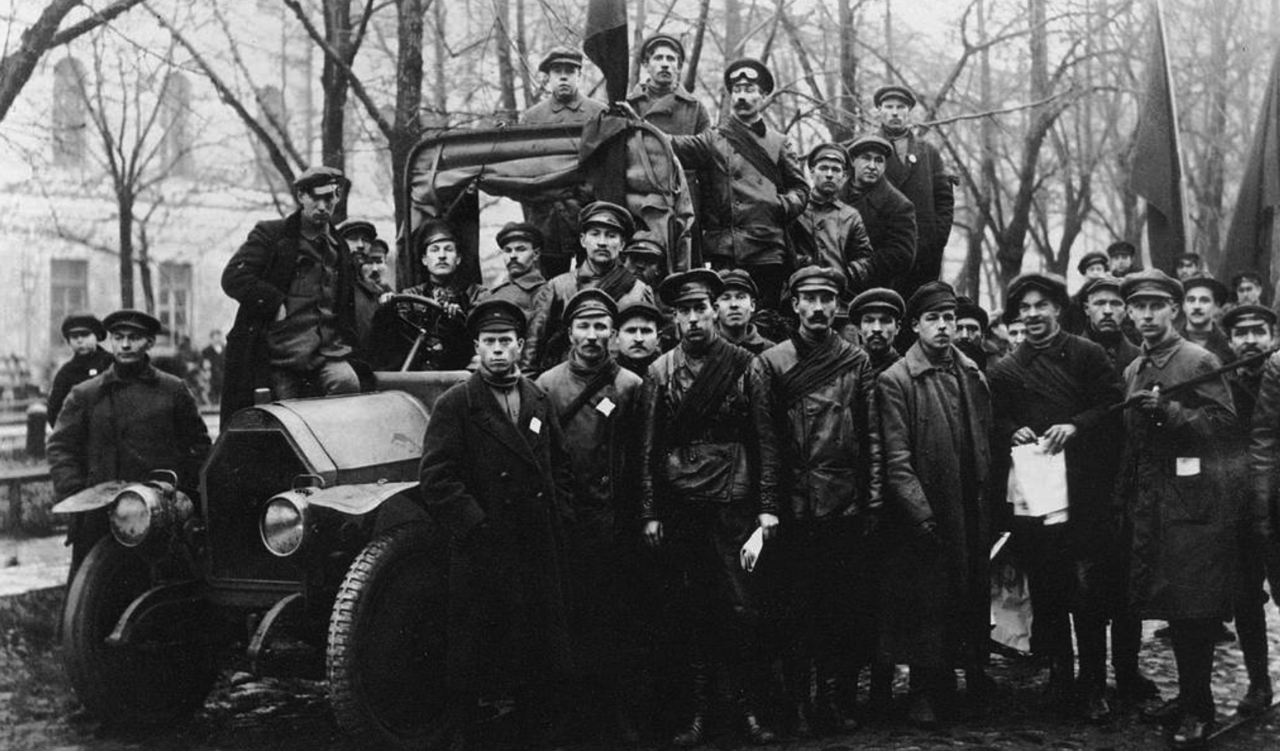
After the Tsar fell in revolutionary Russia of 1917, there was no police, the army was falling apart. The workers’ Red Guards in Petrograd and Moscow started to play the role of a general militia. But they are not the same category; one is a democratic demand about the question of the state, the other is about workers self-defence. But in the concrete circumstances of revolutionary Russia, they merged into one another.
The later Stalinist degeneration of the communist movement compounded the problem. Popular-front politics meant that the standing army could be presented as the army of the democratic nation, particularly in the struggle against fascism.
After the Second World War, communist parties increasingly became parliamentary reform parties. The democratic transformation of the state was no longer central. It was postponed indefinitely.
Trotsky and the transitional method
Trotsky is a more complicated case.
Trotsky did not simply abandon the militia demand. It is present in his 1938 Transitional Program, which called for workers’ military training, democratic control of commanders and replacement of the standing army by a people’s militia.
Trotsky also defended the militia system in his writings on the Soviet Red Army, arguing that the standing army was a temporary necessity arising from the circumstances of the civil war and that the workers’ state should move towards a system based on the armed people.
So, we cannot simply blame Trotsky.
The problem lies more fundamentally with what became the transitional method. Similarly to Bukharin, he confused the demands for a popular militia and workers’ self-defence groups, muddling them up using the ‘transitional method’.
Of course, socialists have always fought for demands that connect immediate struggles with revolutionary transformation. For Marxist social-democracy, this was through our fight to realise our minimum program.
The problem arises when the transitional method becomes a substitute for the minimum program: when any immediate demand can be presented as a step towards socialism without identifying the political bridge of democratic state power as central to the argument.
Instead of asking what democratic demands expose the contradictions of capitalist class rule, the question becomes what demands correspond to existing consciousness and can nevertheless be presented as revolutionary.
That is an opportunist method.
Writing in the Weekly Worker in 2024, British Marxist Mike Macnair identified the beginning of the end of this demand in the early Comintern. He wrote:
The abandonment of the popular militia slogan was a decision of the Russian Communist Party and of Comintern in the time of Lenin and Trotsky. And the result is that those Trotskyist groups that have not collapsed, by way of ‘transitional method’, into economism and pacifism, cling to Comintern formulations and to the syndicalist version of the workers’ militia as an alternative.
Mike Macnair, Weekly Worker
We should reject both approaches as inadequate to our needs today.
A workers’ militia, or workers’ defence, is a product of the class struggle itself: defensive picket lines, protection of strikes, resistance to fascist violence and defence of working-class organisations. Its development corresponds to the tempo and level of the class struggle.
A popular militia is different. It is a democratic demand about what the armed forces of a republican society should look like.
We are not proposing to hand out rifles tomorrow outside Trades Hall. A workers’ militia cannot – and should not – be artificially manufactured. But that does not mean we should abandon the democratic demand for a popular militia.
Between social imperialism and social pacifism
The abandonment of the militia question leaves the left trapped between two inadequate positions.
On one side is social imperialism – increasingly just imperialism – which treats the army and the state as neutral institutions that can simply be put to the “right” purposes. This approaches the Australian state as somehow ‘neutral’, not an integral part of the imperialist world order.
On the other is social pacifism: cut defence spending, reduce military commitments and spend the money on social services.
“Books not bombs” and similar are slogans we can use in particular circumstances. But if that is where we stop, we leave untouched the fundamental question:
Who controls the armed forces in society?
The Australian left opposes AUKUS and calls for restrictions on military spending. But this leaves the question of the state and the armed forces for the future. Left reformists believe we can use the existing state and constitutional structures to win socialism. Chile’s Salvador Allende tried this and died during a military coup.
The socialist opportunists, who privately believe that there should be a “workers’ militia”, ignore this demand about the nature of armed force in society, hoping ‘the revolution’ will solve it. Meanwhile, radical sounding bread and butter issues.
The demand for a popular militia remains relevant today because it addresses three fundamental questions.
First, democracy. Standing armies are institutions of concentrated power. A popular militia places armed force under democratic control.
Second, anti-imperialism and anti-militarism. Professional armies are the institutions through which states conduct imperial interventions abroad. A democratic militia is fundamentally defensive and calls for such a militia should accompany demands for disarmament, particularly of weapons of mass destruction.
Third, socialism. The militia demand restores a Marxist understanding of socialism as something more than economic changes in the interests of the working class within the current constitutional framework. Socialism requires the transformation of political institutions so that they are compatible with working-class self-rule, and ultimately with the withering away of the state itself.
Social-imperialism tells workers to trust the military institutions of their own state. Social-pacifism tells workers to leave those institutions untouched while reducing their funding.
Marxism poses a different question:
What military institutions are compatible with democracy?
Our longstanding answer has been abolish the standing army and arm the people.
That is why the demand for a popular militia belongs in a modern Marxist minimum program. It is an attempt to recover a democratic demand that speaks directly to the nature of the capitalist state and the political transformation required for working-class power.
We should have confidence in it and find ways to make it relevant to people today.