
The fight for control of the United Workers Union has come to an end. The final act in this drama played out at the union’s national convention at which former leaders of United Voice secured every single national leadership position. Bob Sparks assesses the wash up of the fiercest national union election battle seen in years.
The months-long fight for control of the United Workers Union (UWU), one of Australia’s largest unions, is now over. The United For You ticket has emerged victorious. The ticket led by former leaders of United Voice secured every single national executive position at the UWU’s national convention. And it relied on the union’s “winner takes all” electoral system to do it. The victors have since moved swiftly to isolate their Members First rivals and cement their total dominance within the union.
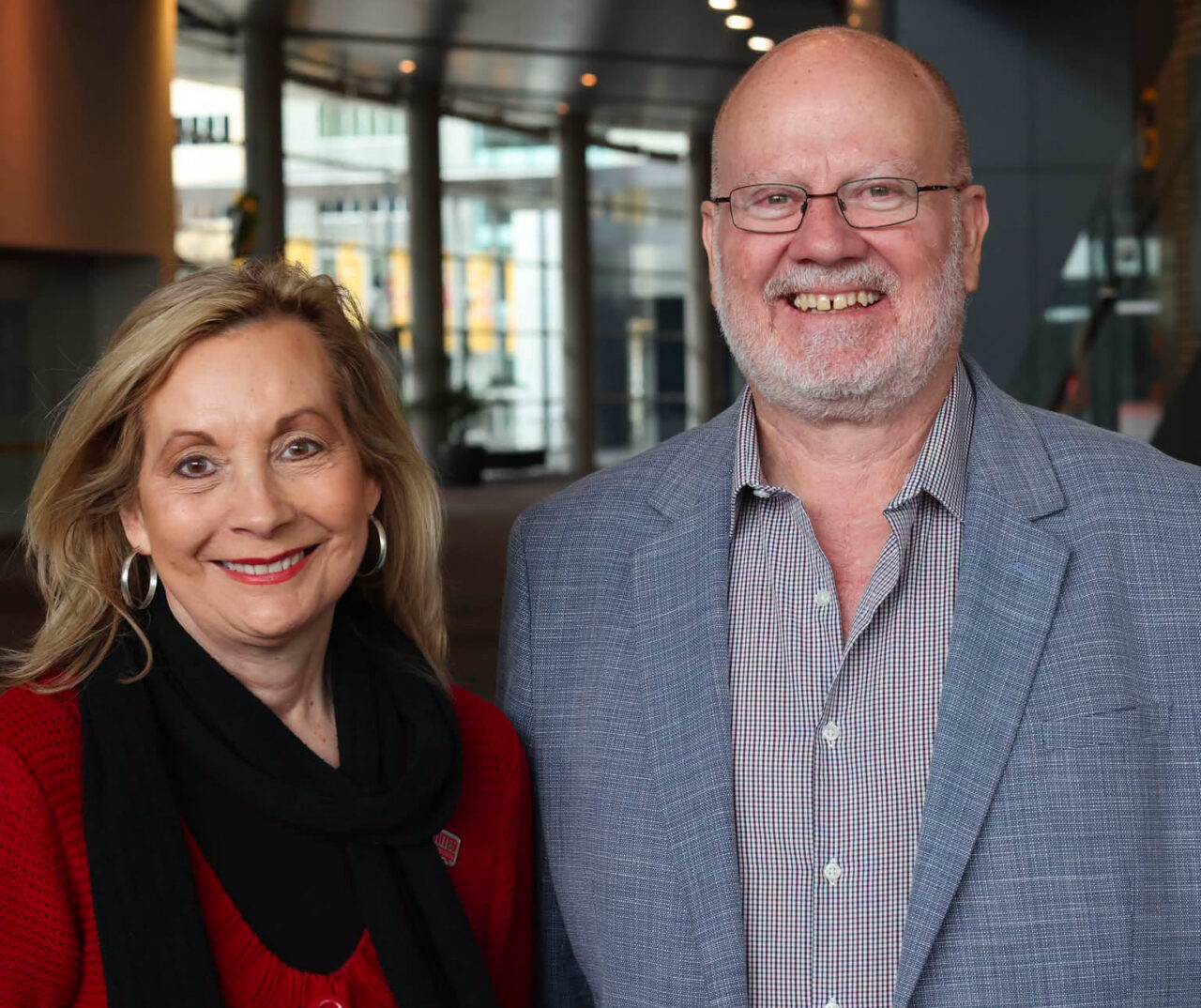
Labor left powerbroker Gary Bullock is now the UWU national secretary. Dubbed “the man who runs Queensland”, Bullock takes the top job from Tim Kennedy who had led the union since its formation in 2019. The new national president Lyndal Ryan replaces Jo Schofield, who missed out on re-election as a convention delegate. The UWU’s four vice-presidents are WA Labor powerbroker Carolyn Smith, Demi Pnevmatikos, Helen Gibbons and Patrick O’Donnell, while the six other national executive positions have gone to Erryn Cresshull, Dominic Rose, Jacqueline Lowe, Catalina Gonzalez, Fiona Scalon and Chris Field. All 12 incoming UWU national leaders hail from a United Voice (UV) background.
These results upend the long-standing balance of power within the UWU. The UWU’s two component parts, United Voice and the National Union of Workers (NUW), have since 2019 shared the national leadership on a roughly two to one basis. That is, two-thirds of the national executive was made up of former United Voice leaders and one-third by former NUW leaders. This post-amalgamation balance of power has now been shattered.
As bitter as this year’s UWU elections were, the actual results changed little. The United For You ticket ended up with 304 (63%) of all 483 National Convention Delegate positions, just a fraction less than that held by former United Voice forces in 2022. To be sure, the ticket did suffer a couple of big name casualties. The best known were former UWU national president Jo Schofield and former NSW state secretary Mel Gatfield who both missed out on reelection as National Convention Delegates. Nevertheless, the result guaranteed the United For You ticket a comfortable majority.
What this election battle has done is finally allow the United for You camp to settle the score with its rivals. The merger deal that balanced representation between former United Voice and former NUW officials was thrown out the window. After years of hostility between the component parts of the UWU, the battle lines were drawn when the hostile sides formed competing tickets to trigger the first contested elections in the union’s history. On the one side was the United For You ticket based on the old leadership of United Voice. On the other was the Members First ticket led by former UWU national secretary and NUW leader Tim Kennedy. Once these battle lines were drawn and the election contested, a political fight to the death was all but inevitable.
The United For You ticket’s comfortable majority gave it the opportunity to finally take control of the UWU. And the union’s national convention was where this was carried out.
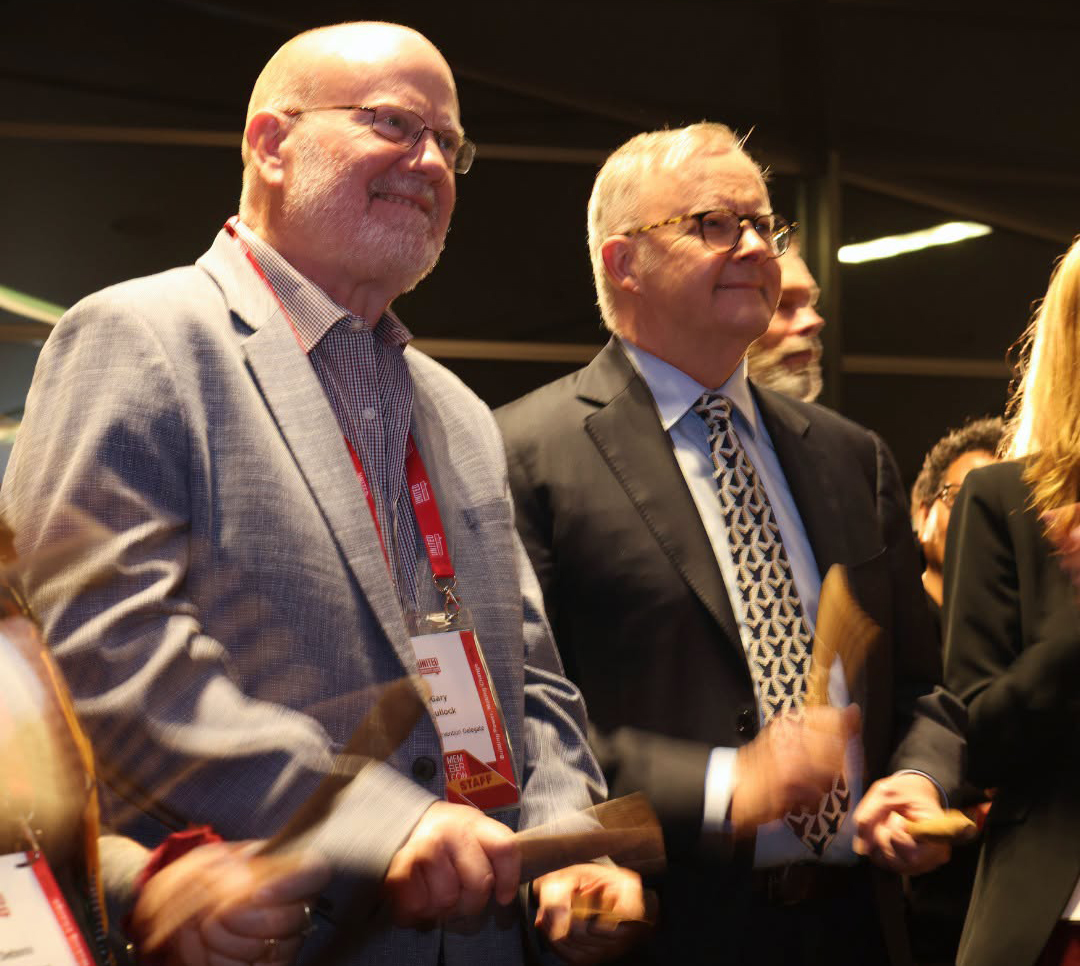
The UWU national convention was held at the Adelaide Convention Centre, just two days after the Labor Party national conference wound up at the same venue. Labor Prime Minister Anthony Albanese even hung around in Adelaide to address the first morning of the convention on 27 July. But once these pleasantries were out of the way, the convention got down to business – elections for the union’s Member Council and National Executive.
It is here that the UWU’s “winner takes all” election system came into its own. This system converted the United For You ticket’s 63% of National Convention Delegate positions into a whopping 84% of Member Council positions and 100% control of the incoming National Executive.
The UWU’s Member Council is generally elected in two parts. Twenty Member Councillors are elected by all National Convention Delegates. The other 30 Member Councillors are elected on a regional basis: the Northern Territory, Tasmania and the ACT elect one councillor each, South Australia four, New South Wales and Western Australia five, Victoria six and Queensland elects seven.
At least, that’s how it works in theory. However, this year the United For You ticket offered up a new “interpretation” of the rules which allowed every convention delegate to vote for every Member Council position – both national and regional – regardless of which state they reside in. Despite protests, the Members First camp was powerless to stop this.
The United For You ticket fielded 42 candidates for the 50-strong Member Council. And every single one of these 42 candidates was elected. The ticket scooped up all national councillor spots and all regional positions in the states of Western Australia, South Australia, Queensland, New South Wales and the ACT. The United For You ticket could not field any Member Council candidates in the Members First stronghold of Victoria or in Tasmania because it did not win a single convention delegate in either state. Otherwise, United For You could have potentially taken all 50 Member Council positions. In the end, the Members First ticket took the six Member Council positions in Victoria and the single spot in Tasmania, giving it just 7 of the 50 positions (14%) on the incoming Member Council. (The single Northern Territory spot went to a nominally unaligned delegate).
The only real contest was the fight for the union’s five NSW region Member Council positions. Members First won five of the seven union electorates that cover NSW, including all four in Greater Sydney and the Central Coast, and over 70% of all NSW-based convention delegates. Yet the United For You ticket won all five NSW Member Council positions. How? By fielding candidates from the two electorates it did win, Northern NSW and the Gold Coast (which includes South East Queensland) and Southern New South Wales (which includes the ACT), and then letting the new rule “interpretation” with its convention-wide vote for all regional positions take care of the rest.
The United For You ticket’s comfortable Member Council majority meant that the union’s national leadership election was a foregone conclusion. The ticket confidently announced its national leadership lineup via social media on 15 July (eg. Facebook and Instagram). Less than two weeks later, the ticket secured its National Executive clean sweep and unceremoniously ousted former UWU national secretary Tim Kennedy and his Members First colleagues Caterina Cinanni, Godfrey Moase and Dario Mujkic from their national leadership positions.
So assured was the United For You ticket of its sweeping victory that it started moving against its rivals before the national convention even began. Reports suggest that several Members First-aligned organisers were offered lucrative payouts to resign before the convention (which some accepted and others refused), while other organisers saw the writing on the wall and quit. This reduced the numbers of Members First representatives at the convention even further, as those organisers elected as National Convention Delegates who did resign were no longer UWU members and thus ineligible to attend. The union then began advertising for new organiser positions in Sydney, Melbourne and Adelaide while the convention was still in full swing.
The defeat of the Members First ticket has disappointed much of the socialist left. Many took the ticket’s rank-and-file feel and more militant rhetoric at face value. This speaks to the militant economism held by much of the far-left, which elevates industrial action into strategy and downplays the importance of political intervention. Put simply, because Members First seemed more willing to engage in industrial action, many thought that it must be the better of the two UWU tickets. But as Labor Tribune has noted previously, neither of the two competing tickets had anything like the adequate industrial and political platform required to take UWU members forward.
The United For You ticket is now cementing its control of the United Workers Union. Along with ending the careers of Members First leaders, it is also moving to win back sections of the Members First base. The United For You ticket didn’t hesitate to adopt Members First policies, such as a freeze on membership fees and more delegate conferences and industry commissions, during the election campaign. The incoming UWU leadership will now feel obliged to implement these and other Members First policies and adopt some of their more militant rhetoric – a small price to pay for control of the union.
UWU leader and Labor left powerbroker Carolyn Smith’s recent comments to the Australian Financial Review are instructive. Before the union’s national convention, Smith flagged the idea of the UWU getting industrially “ambitious” in the warehouse and logistics sector, traditional NUW and Members First territory: “Why aren’t we fighting in Amazon? There’s some real dangers for members in logistics in Woolworths and Coles if we’re not organising those unorganised sites”.
The incoming UWU leadership can afford to be loose with its rhetoric and talk of organising Amazon. This is because, for the first time in the union’s history, one united group of union apparatchiks has won full control of the union. And if the experience of other unions with similar delegate convention elections systems is any guide, this undivided leadership will remain in control of the UWU for decades.