
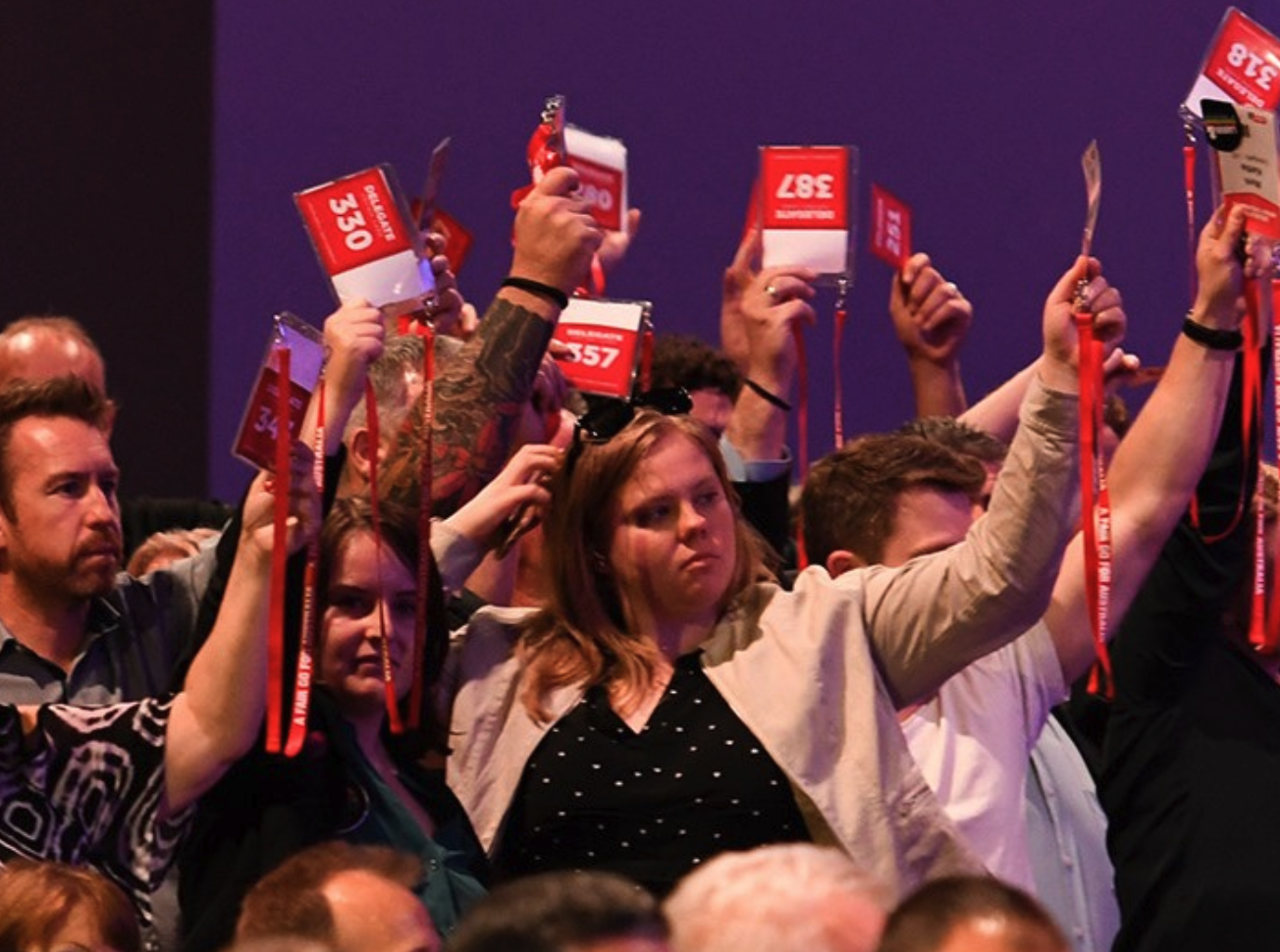
Labor members are finding the limits of party democracy in the lead up to the ALP National Conference in Adelaide, writes Iain Kerr.
National Platform
Conference determines the ALP National Platform which is supposed to guide the actions of the Federal Labor government over the next three years.
A Consultation Draft National Platform has been released to members and affiliate unions for feedback, with submissions due by 25 May in Victoria, or by 4 May in New South Wales. Other states and territories may have other deadlines. The process is overseen by the National Policy Forum (NPF), which is composed of the Prime Minister, National ALP President, 20 elected ALP branch members, 20 delegates of affiliated trade unions and 23 members of the Federal Caucus. Exactly who is on the forum is unclear, as the delegates are unnamed, and requests to release the names have been ignored.
The NPF was established about a decade ago to lengthen and formalise the process of pre-conference consultation and deal making between different sections of the party, the trade unions and the political leadership.
According to NPF Secretary Kate Thwaites MP, the platform “sets out our priorities and vision as a clear expression of our values and commitment to the Australian people. The 2026 platform builds on this, providing the policy scaffolding for a long-term Labor government.”
The platform is certainly a comprehensive document that spans social, economic and political spheres. The construction of a political platform is a worthwhile goal. It speaks to the historic and potential mission of a politically conscious working class to remake society.
However, in general terms the current platform prioritises modest incremental reforms within a limited vision – of a somewhat more civilised capitalism, albeit one subservient to the global imperialist world order.
This falls far short of what is meant to be the first objective of the ALP under its constitution. That states clearly that “the Australian Labor Party is a democratic socialist party and has the objective of the democratic socialisation of industry, production, distribution and exchange, to the extent necessary to eliminate exploitation and other antisocial features in these fields”.
The current draft platform largely avoids the type of bold and ambitious reforms needed to deal with the challenges we face: accelerating climate change, a dysfunctional housing market, socially segregated education, regressive taxation settings, wealth and intergenerational inequality, and rising imperial rivalry, militarism and war.
Labor Tribune encourages readers to review the Consultation Draft National Platform and make submissions that favour more decisive democratic socialist demands to redistribute social, economic and political power in favour of working people and the majority. Some political goals are outlined here in our draft programmatic document.
While the basic direction of the platform is unlikely to be shifted anytime soon, we can contribute to challenging the carefully stage-managed process of the NPF and National Conference, a process that seeks to bury real political debate in the interests of much party unity under the direction of the parliamentary party. It is clear we need a cultural revolution in the ALP in order to open it up to the working class and ensure that elected parliamentarians are the servants of the party, not the other way around.
Rebuilding a culture of discussion and debate in the party and labour movement are worthwhile goals – especially if it challenges the ethos of centrist and capitalist managerialism that currently prevails among party leaders.
National Conference delegate elections
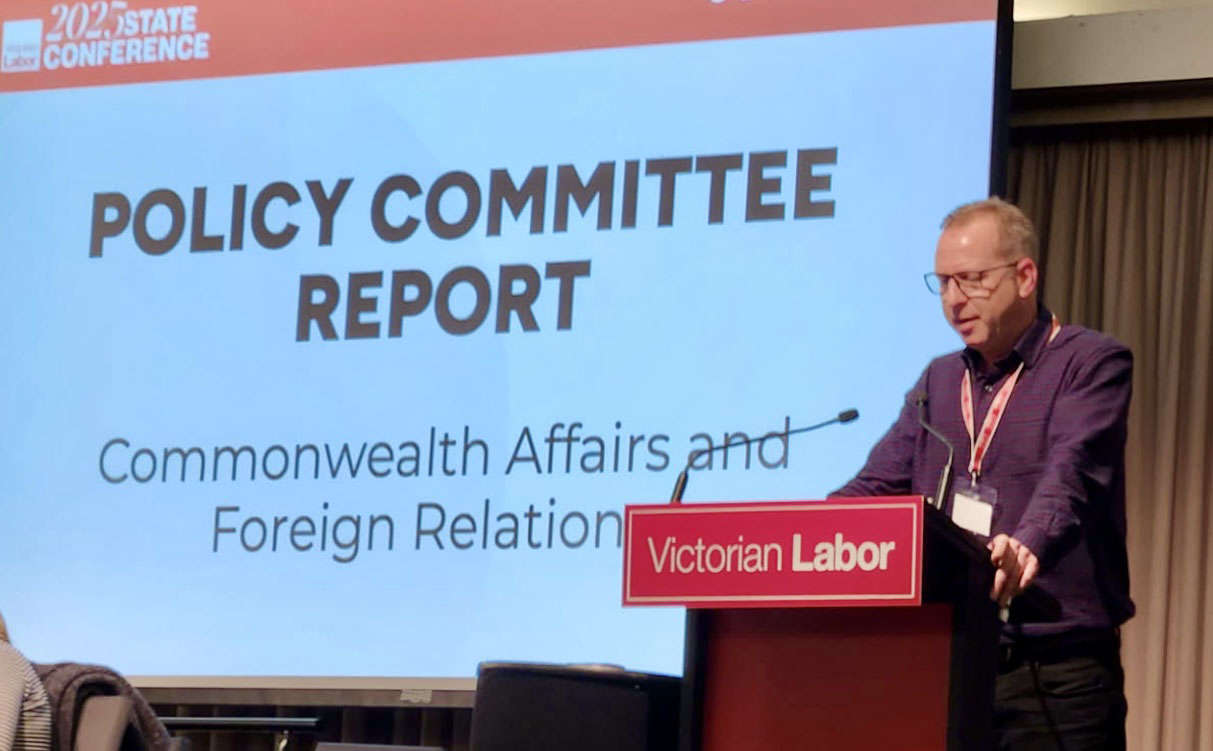
The elections for state and territory branch delegates to National Conference also indicates the limitations of democracy and the need for cultural change within the party, as shown by the outcomes in the three main eastern states.
In NSW each electorate selects a single delegate, effectively ensuring that factional power blocs maintain control. There were only 11 contested ballots in NSW out of 46 federal electorates. Almost half of those 46 delegates (22) are members of state or federal parliament, just 10 could be considered rank-and-file delegates, with the rest either sitting councillors, former councillors or staffers.
In Queensland we see the worst example, with party democracy being completely supressed. There the party administration has cancelled the membership vote entirely, citing the unexpected byelection in the seat of Stafford, triggered by the sudden death of 44-year-old MP Jimmy Sullivan. Sullivan had been sitting on the cross bench having been expelled from the Labor caucus last year following allegations of domestic violence.
Notwithstanding the difficult circumstances surrounding this byelection, it should in no way justify the cancellation of a key democratic process within the party. Apparently, the main factions in Queendland will now appoint delegates based on their existing tickets.
The election in Victoria is a better case study in democracy in that it was a closely contested statewide election for 44 delegate positions. All candidates had access to the full voter roll (member emails) and could thus make their policy positions clear.
The contest was largely dominated by rival Socialist Left and Right faction tickets, with some high-profile independents also standing.
Voter turnout was higher than last time, at 72% with just over 6,000 ballots returned. The election was conducted on an optional preferential system. The resulting quota for election was just under 140 votes. The median primary vote of all candidates was 97.
The highest primary vote of 271 was recorded by independent Eric Dearricott, previously a left faction member who campaigns for internal party democracy as convener of the independents sub-faction. His preferences elected fellow independent Janet McCalman who convenes the Labor Academy, which hosts Labor political education forums. Both candidates stood for ‘progressive’ Labor reforms including a review of the AUKUS pact.
The next four highest primary votes were gained by Socialist Left faction federal MPs Julian Hill, Basem Abdo, Andrew Giles and Ged Kearney, with an average of 173 votes.
A standout result was gained by Dustin Kim, a younger rank-and-file Socialist Left candidate from the eastern suburbs of Melbourne, with 144 votes. Kim is a branch activist who has supported the campaign positions of Labor Friends of Palestine (LFOP) and Labor Against War in his own branch.
Overall, the official Socialist Left gained 22 positions, the Right 18, the Industrial Left 2 and Independents 2.
In a disappointing result for socialist politics, Hamish McPherson narrowly missed out on being elected. He stood with the support of LFOP and LAW members and ran an active campaign which directly contacted members across regional and metropolitan branches. He was placed 34th on the Socialist Left preference ticket and got a strong 87 primary votes and preference flows. This saw him elected as the 40th delegate, before an affirmative election recount resulted in him being unelected.
The final three delegates elected were rank and file Socialist Left comrades, including Jess Stone (SL policy co-convener) and Georgia Kennelly, who have both supported LFOP and LAW campaign positions in their respective branch and factional roles. We look forward to supporting elected delegates at conference to ensure our messages to remove AUKUS from the platform are heard.
However, the most obvious aspect of the Victorian result is the over-representation of state and federal MPs and Senators, who make up 27 or the 44 delegates, 61%.
This reflects the higher profile, organisational heft and resources available to MPs, and also that both right and Socialist Left HTV tickets generally preferenced the MPs above rank-and-file members.
Overall, this outcome will favour the National Conference being a more managed process that largely endorses the pro-capitalist centrist settings of the Albanese government.
Despite the inevitable challenges, as activists and socialists in the Labor Party it is worthwhile to continue to make use of and test the limits of party democracy, to challenge the cosy deal making and build a political culture of open political debate.