
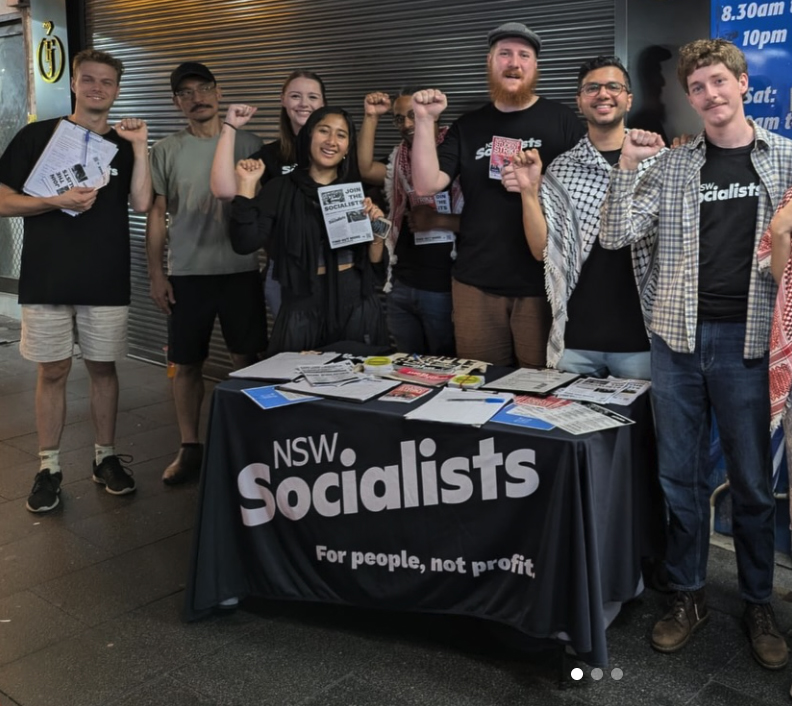
Clarrie Lewis, a member of the Bread & Roses caucus, reports in a personal capacity on a tense pre-selection meeting.
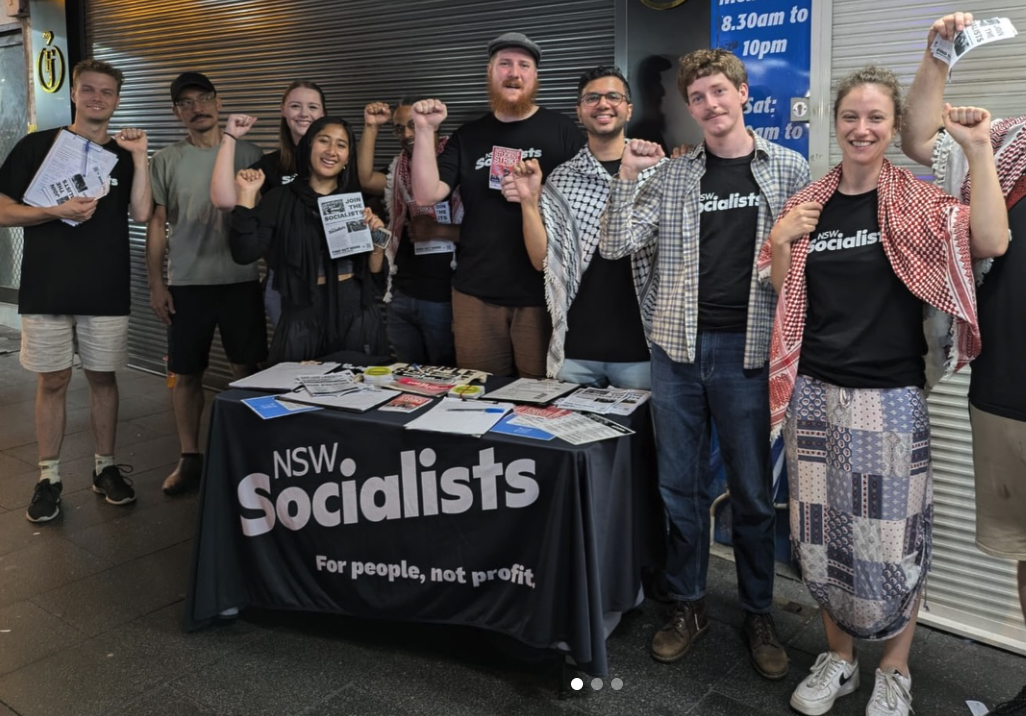
The recent NSW Socialists pre-selection meeting for the seats of Newtown and Summer Hill has laid bare significant political and organisational tensions within the party. While pre-selection processes are inherently contested, the conduct witnessed raises serious questions about internal democracy and comradely debate within the NSW Socialists.
It is good to see NSW Socialists being ambitious. It will stand six lower-house candidates in the state elections next year: Summer Hill, Newtown, Granville, Auburn, Wollongong and Wallsend.
It was not made clear who had a vote for the Sydney Inner West pre-selection and voting had to take place in person. Just one candidate nominated for the seat of Summer Hill: Emma Norton from the dominant Socialist Alternative group. Three candidates nominated for Newtown: Tony Nolan (Bread & Roses Caucus), Shovan Bhattarai (Socialist Alternative), and Tim Alouani-Roby (independent), though the latter did not attend. There were about 50 NSW Socialists members there, with Socialist Alternative having a clear majority in attendance.
Comrades unfortunately reported an atmosphere that many described as hostile, and divisive and far from a healthy spirit of constructive, comradely disagreement.
Rather than a rigorous debate on political strategy, campaign focus, or policy, the discussion was often diverted into a series of personal and factional attacks.
Members of the Bread & Roses Caucus were subjected to baseless accusations of “Stalinism”, a label deployed not as a materialist analysis but as a blunt instrument to discredit, ostracise and shepherd less experienced Socialist Alternative comrades away from genuine engagement with competing ideas.
Comrades reported being accused of everything from being “crypto-Stalinists” to sympathising with “evil” foreign governments, while also being paradoxically labelled as both “soc-dem” and “right-wing”.
The task of a pre-selection should be to assess which candidate can best build working-class power and advance socialist politics in the community. Instead, the meeting became a platform for factional manoeuvring, with deliberate attempts to alienate and bully those outside the dominant tendency. One comrade noted feeling “lynched” politically; others described “cultish vibes” and a “Twilight Zone” atmosphere that stifled genuine discussion.
For Marxists, democratic process should not be used as a cover for bureaucratic control or factional hostility. It requires full and free discussion, followed by united action. When healthy debate is replaced by smears, when differences are framed as existential threats, and when members feel targeted for their associations, the organisation risks becoming a shell, alienating dedicated activists and new members alike.
Unsurprisingly, in the first round of voting, Socialist Alternative candidate Shovan Bhattarai won with 42 votes. Tim Alouani–Roby received 37 votes and Tony Nolan received 7 votes. (In the first round, members could vote for more than one candidate. Voting was by a show of hands.) In the run-off ballot (also by a show of hands), comrade Bhattarai won with overwhelming support.
Comrade Bhattarai will no doubt be an energetic and enthusiastic candidate. Bread & Roses caucus members look forward to campaigning for her and for socialism.
However, the process has done damage to party cohesion. Looking ahead, rebuilding trust and recentring political clarity must be priorities. The suggestion made by Tony Nolan to use the campaign for a broader outreach to unorganised members of NSW Socialists and collectively organised education workshops are constructive proposals. The socialist project in NSW cannot afford to be consumed by internal vitriol or smothered by one dominant faction while the struggles of workers, tenants, and climate activists demand our full attention and unity.
We must reflect honestly on this meeting, reject toxic factionalism, and reaffirm our commitment to a culture of solidarity, rigorous debate, and working-class politics. The alternative is a slow fragmentation, a luxury none of us can afford in the fight ahead.