
Ken Davis, a Mardi Gras ’78er, says the democratic gains to protest made by lesbian and gay activists in the 1970s are being wound back by corporate and establishment elites.
On 6 February NSW Arts Minister John Graham – no stranger to shirtless dancing with the unions in Mardi Gras parades in his earlier life – rejected Liberal Party calls to defund Sydney Gay & Lesbian Mardi Gras (SGLMG) parade (and the Newcastle Writers’ Festival), while giving the nod to Rainbow Labor’s anti-democratic rhetoric about ultraleft queers infiltrating the Mardi Gras to destroy it. The demands for defunding Mardi Gras from the rightwing link the political conflict in queer community to a broader crisis in democratic civil society, exacerbated by local reactions to the ongoing genocide in Palestine.
While the continued funding is welcome, it clouds deeper political issues at play.
Governments fund the annual Mardi Gras, which runs on volunteer labour and creativity from workplaces and communities. This free labour enables enhanced profits for retail, hospitality and travel businesses, as with other major sporting or cultural events.
Undermining the democratic governance of Mardi Gras
At the last Sydney Gay & Lesbian Mardi Gras (SGLMG) annual general meeting on 28 November last year, two campaigns faced off against each other. Pride in Protest (PiP) represents a significant minority of the membership, and is a loose grouping of queer, Green, anarchist, sex worker, trans, union, anti-racist, internationalist and socialist activists.
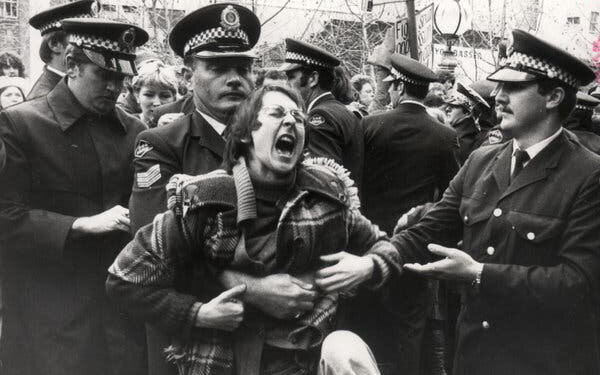
Peter Murphy, badly beaten by police on the night of first Mardi Gras in 1978, fronted a well-resourced campaign called Protect Mardi Gras, supporting Labor and Liberal political staffers to the board. The catchcry of Protect was “inclusion”, but the focus was ensuring the NSW Police Force march in the parade officially, armed and in uniform, enforcing NSW laws, not as LGBTIQ workers fighting for their rights against their employer. The other side of inclusion was ensuring the big business advertising floats have disproportionate presence in the parade.
Protect’s real rationale is to exclude the troublesome queer and trans activists from Pride in Protest, denounced in The Sydney Morning Herald as Trotskyist infiltrators. Protect has an agenda which serves the Minns government, sensitive to Mardi Gras opposition to his draconian anti-protest laws, to his obstruction of equality legislation and drug law reform, to his solidarity with Israel, and to his defence of a corrupt, racist, repressive and violent NSW Police Force.
At the AGM there were four blocks of proxies. Just shy of a half (46.6%) of Mardi Gras members voted against having the NSW Police Force officially in the parade. In this they were motivated around the record number of Aboriginal deaths in custody in NSW last year, “unfinished business” around a history of gay murders, invasive drug searches, transphobia, and instances of violence against peaceful protesters.
A motion on rejecting SGLMG linkages with Israel was very narrowly defeated 557 to 563 votes. Pride in Protest motions on Trump and transphobia, public funding for the parade, and on pushing federal and state politicians towards meaningful anti-discrimination law reform were passed.
There were 1627 members voting in the elections for four director positions on the board. According to PiP scrutineers, Luna Choo, topping the PiP ticket, gained 528 first preference votes. Kathy Pavlich, incumbent SGLMG Co-chair, gained 358. Aspiring ALP politician, Savannah Peake, gained 293, and Liberal Party member and former Dave Sharma staffer, Jarrod Lomas, gained 199: both were on the Protect Mardi Gras ticket.
Instead of respecting the strength of the more radical minority of members, on 13 January the board declared it would not implement resolutions passed at the AGM, in particular about encouraging floats to advocate for trans rights in face of intensified international repression. Later in January, the board majority, inevitably, censured the two board directors from Pride in Protest. In previous years, most Pride in Protest members elected as SGLMG directors have been suspended.
Political and sexual edginess is vital
This fight is about the spirit, soul and identity of the parade, and the independence of a significant community, civil society and social justice movement event from big business and government.
This is a conflict evident around the world, with Pride marches bifurcating into establishment or radical incarnations. Sydney’s Mardi Gras has sexual, cultural and political significance. Broadcast and in-person spectators can feel solidarity and celebrate the groups of LGBTIQ workers, volunteers, unions, sports, local and ethnic-international groups.
The satirical and sexual edginess is vital. But the show is being dialled down, with “curatorship”, restrictions on groups and numbers of participants, and censorship. Since 1981 Mardi Gras has had rules against sexism and racism. Now sponsors, police, broadcasters, governments and the Mardi Gras leadership itself prevent imagery or messages that are too sexual, satirical, subversive or political. With new federal and state laws, slogans about genocide, intifada and “from the river to the sea” might be removed from the parade, possibly any symbolism or mention of Palestine.
The party is over
On 3 February, the Mardi Gras Board announced the post-parade party could not proceed, due to problems with headline acts. Mardi Gras has held fundraising dances since June 1978. But the business model of big dances or concerts seems to have passed away, not just for queer people; a demise possibly accelerated by COVID.
There are other issues: lack of a suitable venue, high ticket costs, high cost of running events, for example with increased insurance and security fees, the kill-joy impact of intensified police and Mardi Gras regulation of sex and drugs at the parties, big business sponsors who no longer want to be seen as supporting equality post-Trump, and allegations that SGLMG business partners in events management-promotion are linked with Israel.
To avoid any perceptions of incompetence, the establishment coalition dominating the SGLMG board are scapegoating Pride in Protest or at least diverting attention to the efforts the board majority needs to take to contain the left.
Herzog visit deepens conflict
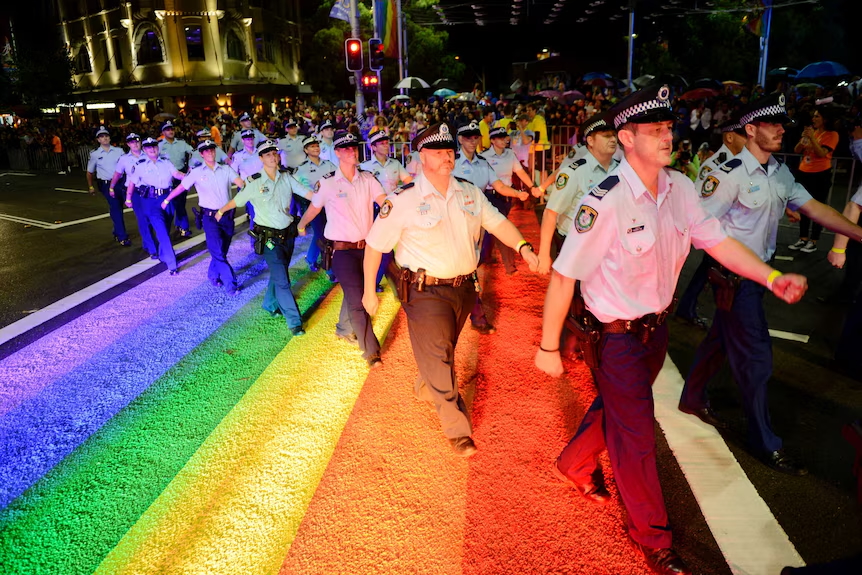
Police brutality against the large protest against Israeli President Isaac Herzog’s visit in Sydney on 9 February has reignited calls within Mardi Gras constituencies to ensure the NSW Police Force does not officially participate in the parade on 28 February. Elite capture of the SGLMG will incline the board majority to remain loyal, not only to the police, but to the big business sponsors and Premier Minns.
The first Mardi Gras in 1978 won a massive victory in the right to protest, a democratic gain now being reversed by Labor and Liberal-National governments in Australia. The fight to defend the right to peaceful assembly is a central task of the labour and social justice movements.
With international law and democratic rights under assault globally, the freedom and solidarity messages at the Mardi Gras parade need to be clearer than ever, and not submerged under promotions for the NSW government, the NSW Police Force, or big business.
Ken Davis was an activist in the Gay Solidarity Group which organised the Mardi Gras parades and other protests in 1978, 1979 and 1980. He has been an internationalist, socialist and gay liberation activist since 1972.