
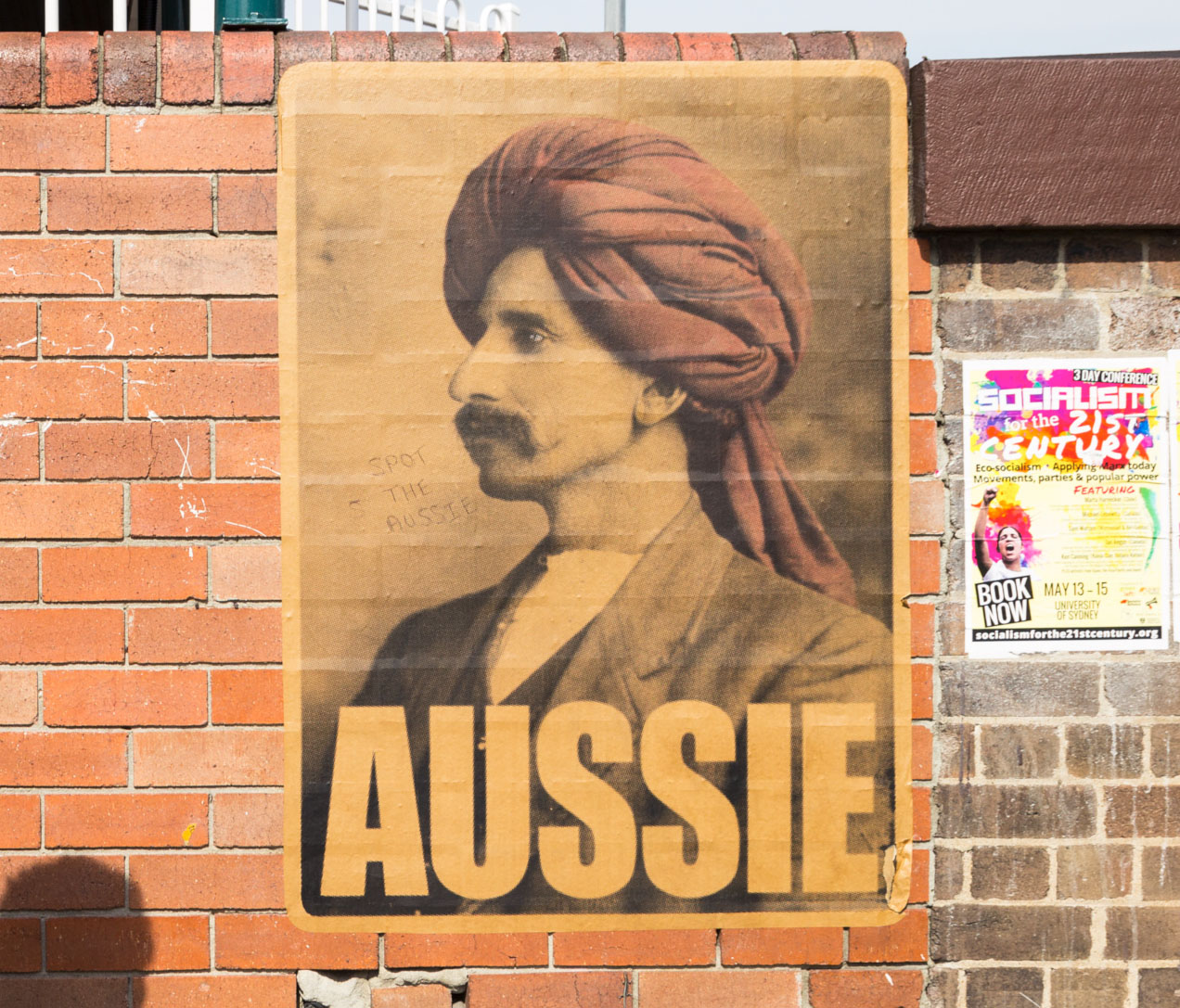
David Lockwood argues the left must not form the extreme left of the liberal establishment to see off the ‘radical right’, but must take on all the pro-capitalist parties.
‘Australians aren’t buying this crap from the political establishment and its media supporters anymore.’
Pauline Hanson, National Press Club, 17 June 2026
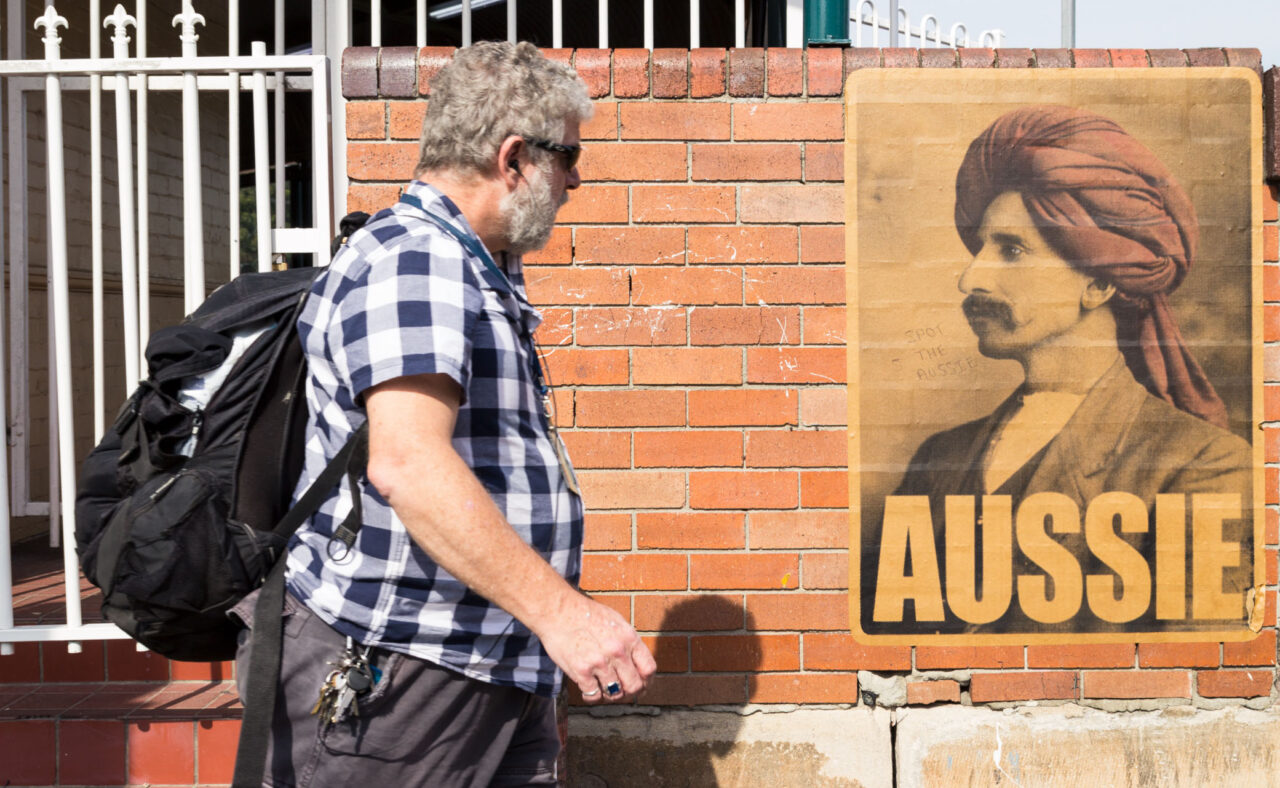
One Nation leader Pauline Hanson’s visit to the National Press Club was built into a major event beforehand, treated as a tour de force in its execution and buried under a mountain of commentary in the aftermath. It revealed how much policy she shares with the rightwing of the Liberal/National parties and the extent to which she goes beyond them.
She was unflustered by a lack-lustre media – with one or two exceptions, including the GetUp stunt that pointed out her self-serving anti-worker stance. Professor Wanning Sun pointed out in Crikey that the “watchdog journalism” we may have expected was reduced to “a performative act”. (Crikey 19 June 2026)
Hanson kicked off (“I’ll tell you what the issues are”) in fairly orthodox fashion with housing and immigration, blaming the shortage in the former on the increase in the latter. Running the through the ABS statistics, she concluded that “housing demand in Australia substantially outstrips supply”. As usual, her solution to the problem is unclear – but state intervention and public housing is not it. The minor steps in this direction in the recent Budget won’t help, either. They are just an exercise in “Punishing ambitious and aspirational young people who are trying to build a future, to build wealth, to build independence and to invest in Australia”, apparently.
Her explanation for the housing shortage was both familiar and straightforward. “Unsustainable demand,” she said, “is being driven by several factors, but the biggest is high immigration.” More than that, “immigration policy has our country in a state of crisis.”
Hanson did not go into a lot of numbers on this – which may indicate, rather disturbingly, that she thinks for many this is becoming common sense. Unfortunately, she may be correct. But she rehearsed her party’s previous bright ideas: deport 75,000 ‘illegal’ immigrants, cut immigration from current levels and conduct a harsh administrative tightening-up of the system (rorts, student loopholes, no refugees from ‘extremist’ nations, withdraw from UN Refugee Convention and so on).
The difference this time (moving beyond the Liberal/National right) was this: “At the centre of this [immigration] crisis is the utterly flawed policy of multiculturalism.”
She continued:
“We cannot be a multicultural society. We are a multiracial society, but we must be monocultural. Australians must live under the one cultural umbrella.”
Again, difficult to know what this means. What is the monoculture? Hanson believes that we have too many immigrants of the wrong sort (just as Angus Taylor declared in his immigration speech a few weeks back). This threatens ‘our identity’ and our precious ‘social cohesion’. These are slippery terms. What is ‘our’ (Australian) identity? Is it the same for the filthy rich as for those in poverty? And are the bonds within it so fragile that they can be threatened by differences in language, dress and culture – as Hanson clearly implied?
In the days that followed, this was the point in Hanson’s speech that the media latched onto and much comment was forthcoming trying to work out what ‘monoculture’ actually meant. In an incomprehensible interview with Sky News (‘a great place for news’ she told the Press Club), she said “it’s not just about the culture of persons, it’s about the culture of the nation, who we are: our traditions, our own culture, our dress, our laws – these are all the monoculture.”
A day later she was telling us that the monoculture was embodied in the Socceroos football team, which as we all know comes from all over the place and includes a number of refugees. But they all wear the same uniform and play under the same flag. Go figure.
Just like Humpty Dumpty in Through the Looking Glass, the way that Hanson uses it, the term means whatever she wants it to mean, which is nothing at all.[1] Cultures are moving things which are constantly developing, usually in relation to the organisation of the economy. To say ‘we should be a monoculture’ means to take a particular point in this path of development and freeze society at that point. Impossible, of course, but one wonders where One Nation would like to do this? Somewhere in the Australian of the 1960s I imagine. To speculate on this is to confront its fantastic unreality.
It is all too easy to point out that One Nation’s vision is misplaced, wrong, irrational and stupid. And we have a mass of statistics with which to do it. The problem is, if polls are to be believed, their ideas are gaining support.
One Nation is not an isolated phenomenon, despite its pretensions to represent the true Australian way of life. It is part of the general collapse in the West of the liberal bourgeois visions of free trade and globalisation into a renewed nativism that aggressively attempts to pit established societies against ‘outsiders’ who are blamed for all manner of ills including poverty, unemployment, homelessness and so on. We can see the same sort of thing in the UK, France, Germany, Hungary, the US, and so on.
Much of this is linked to the failure of capitalist economies. It was evident in the 1929 Depression when, following a period of post-WW1 globalisation, economic collapse drove states into protectionism and military aggression. And towards the political forms of the 1920s and 1930s with which we are familiar.
It didn’t work then and it won’t work now. Halting immigration and deporting immigrants will not solve the housing crisis. Providing housing as a right rather than a source of profit will.
Putting up walls against the poor and the dispossessed will not preserve ‘our culture’ nor create bonds of solidarity between our people. Directing funds towards social services and infrastructure for all, including immigrants who want to come here, will.
Rubbishing the science of climate change and refusing to take action against it will not make our lives better but will put them in greater danger at an earlier date. Seriously tackling the problem, at first in our region, but crucially on a world scale, is the only way forward.
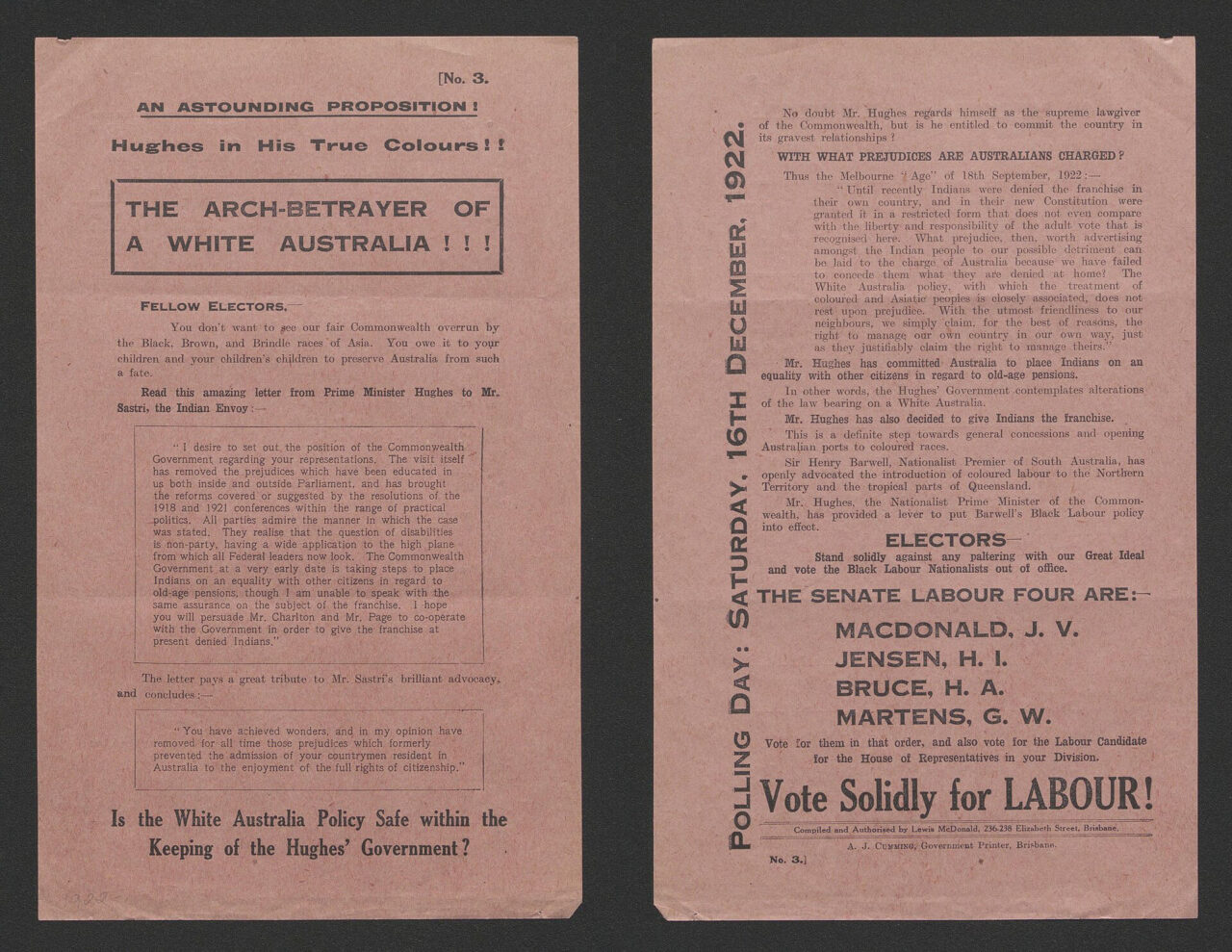
One Nation, despite all its ‘anti-establishment’ posturing, will do none of these things, because all of them threaten capitalism. And One Nation is a capitalist party – something which Hanson, the small business proprietor, who directed her speech at ‘the bloke in the corner store’ would be only too happy to admit.
It is vital to understand One Nation as reflecting divisions not only in the working class, but in the ruling, capitalist class. The Liberal Party is being stretched thin as its coalition for uniting the various fractions of capital strain.
The urbane ‘globalised’ fraction around finance, insurance and retail is being strained by the Teals. The fractions of capital around mining and agriculture are being dragged to the nativist end of the spectrum.
One Nation is on the extreme right of the Australian political establishment. It has some support among those reactionary elements – in the mining, agricultural and extractive industries – of Australia’s ruling class. But its politics are locked into Australian capitalism of which it is sometimes critical, but beyond which it cannot go. It has one foot (Hanson and her little band in Canberra) in the genteel, consensual world of parliamentary politics. But it has another outside that – in its rallies, marches and Hanson’s wilder speeches.
While the ‘nativist’ tendency in global capitalism is reminiscent of the drive to war in the 1930s, what is absent is the organised working class, which was a mass phenomenon between the wars that genuinely threated the rule of capital. Fascism was a movement to smash the organised working class.
The left is correct to be concerned with the rise of One Nation. But opposing One Nation is not, at this stage ‘the fight against fascism,’ as Red Flag asserts (‘One Nation needs to be fought, not just analysed,’ 14 June 2026). Nor will it conjure up ‘the broadest anti-fascist, progressive movement possible’, as the CPA’s Guardian hopes (‘One Nation under Genocide Gina,’ 22 June 2026). As a capitalist party, One Nation has to be fought as a capitalist party like the rest.
The working class and the socialist left must enter electoral politics to challenge the capitalist establishment, not form its radical left wing to see off the ‘radical right’.
[1] Strictly speaking, it is an agricultural term meaning growing one crop in a field at a time. This increases efficiency. It’s worth noting however that monocultures are generally regarded as less resilient than crop diversity and lead to the depletion of the soil on which they rely. (en.wikipedia.org)