
Sally Ly of the Vietnam Marxists group looks at Yanis Varoufakis’s compelling thesis but finds it wanting.
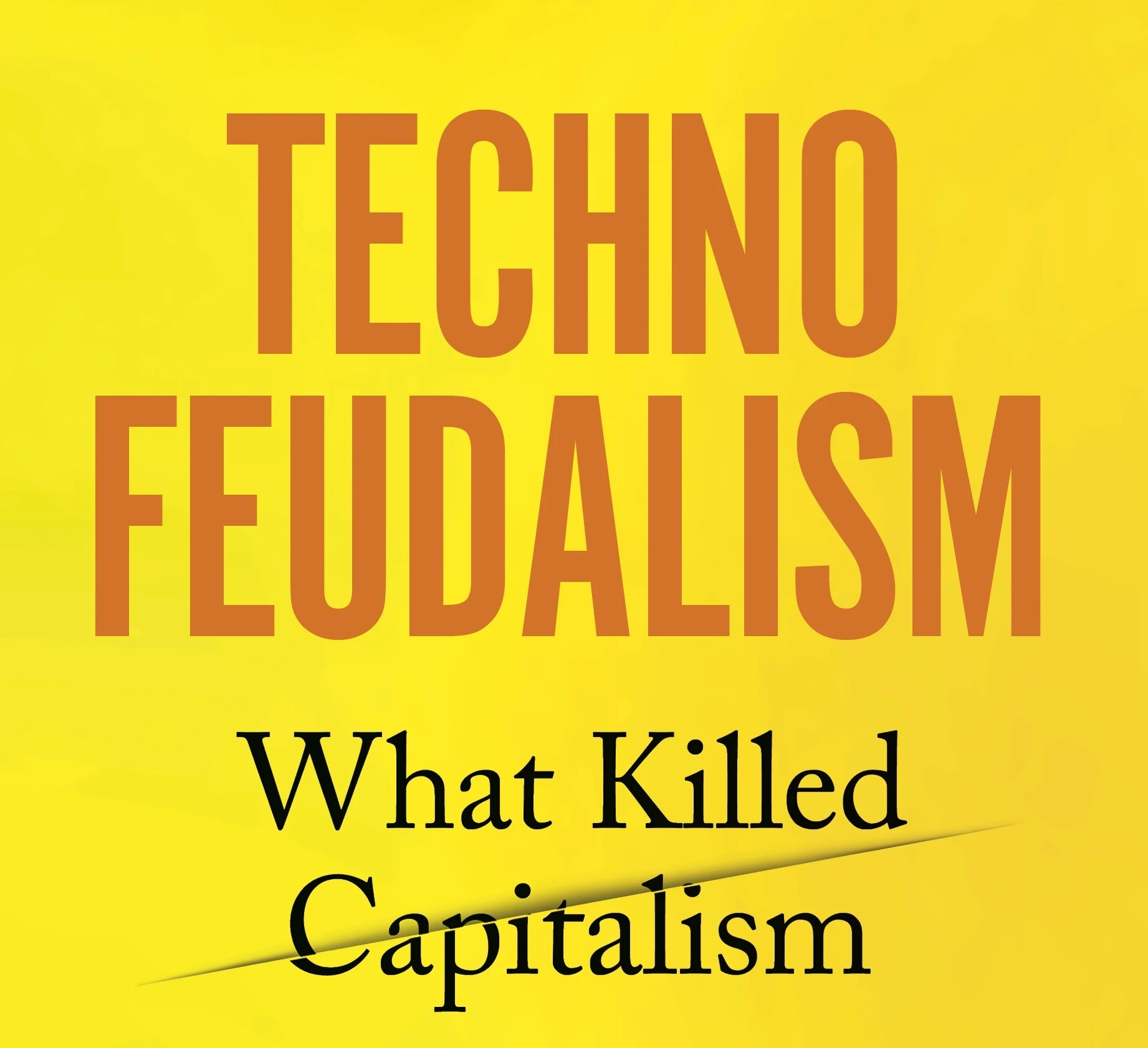
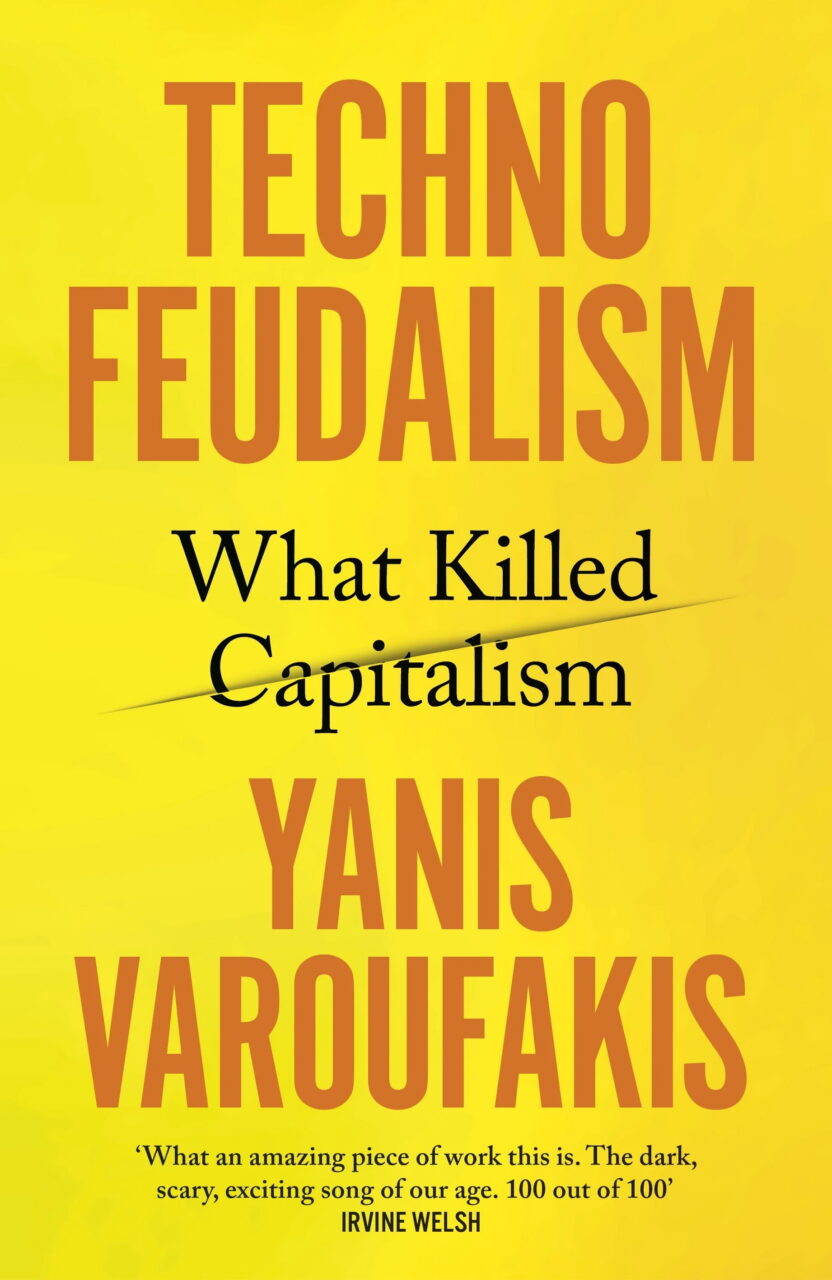
Yanis Varoufakis’s Technofeudalism has attracted attention because it gives a strong name to a feeling many people already have: that Big Tech has become too powerful, that platforms control more and more of daily life, and that ordinary people are constantly turned into data, attention and profit.
The image is clear and memorable. Google, Amazon, Apple, Meta, TikTok and other platforms do not simply sell products or services. They control the roads that others must use. If someone wants to sell, they may have to go through Amazon. If someone wants to be seen, they must satisfy an algorithm. If an app developer wants access to users, they must go through Apple or Google. Digital platforms increasingly decide who gets visibility, who gets access, and who gets pushed aside.
This part of the argument is useful. It captures a real change in contemporary capitalism. Platforms are not ordinary firms. They own infrastructures, collect data, shape behaviour, organise markets and mediate relations between buyers, sellers, workers, users and advertisers. In that sense, Big Tech often looks less like a participant in the market and more like a private owner of the space in which the market takes place.
Modes of production
The problem begins when this observation becomes the claim that capitalism has been replaced by “technofeudalism.” The power of platforms is real, but it does not follow that society is now living under a new mode of production. A more careful Marxist reading suggests that what is being described is not a break from capitalism, but a new form of capitalist domination.
Marx’s critique of capitalism was never limited to the factory floor. Capitalism, for Marx, is not simply a system of open markets and wage contracts. It is a social relation in which capital accumulates by organising, controlling and extracting value from labour-power. This process does not take only one form. Capital can dominate through factories, machines, credit, rent, monopoly, finance, trade, logistics, technology and the state. It constantly changes its forms in order to survive.
This is why the language of “technofeudalism” can be misleading. If “feudalism” simply means that rent exists, then the concept becomes too thin. Feudalism was not just rent. It was a whole social order based on land, personal dependency, legal hierarchy, inherited privilege and extra-economic coercion. Capitalism, by contrast, is based on wage labour, commodity production, resource extraction, private ownership, competition, profit and accumulation. Rent can exist inside capitalism. Monopoly can exist inside capitalism. Dependency can exist inside capitalism. Their existence does not automatically mean that capitalism has become feudalism.
Marx already had the tools to understand much of what appears new today. In Capital, machinery is not treated as neutral technology. Machinery under capitalism becomes a weapon in the hands of capital. It increases productivity, disciplines workers, reduces their control over the labour process, and turns collective human knowledge into the property and power of capital. In Marx’s words in Capital Volume I, “it is not the worker who employs the means of labour, but the means of labour that employ the worker”. This remains one of the clearest ways to understand platform work, algorithmic management and AI under capitalism.
In the 19th century, this meant machines, factories and assembly lines. Today, it means AI, cloud systems, platforms, logistics software and algorithms. The technology has changed, but the social relation remains recognisable. Workers are still confronted by systems built from human labour, but owned and controlled by capital. The machine appears independent. The algorithm appears objective. The platform appears natural. Yet all of them are social products organised through private power.
The key question is therefore not whether AI or platforms are new. Of course they are new in form. The key question is how they are used within capitalist relations. Who owns them? Who builds them? Who trains them? Who is managed by them? Who is displaced by them? Who profits from them? These are Marxist questions, and they remain central.
Behind the “cloud” there is no actual cloud. Behind AI there is no magic. Behind platforms there is no automatic world running by itself. There are still people: coders, delivery workers, warehouse workers, content moderators, data labelers, creators, and users producing data every day. Some are paid wages. Some are underpaid. Some are unpaid. Some are called workers. Others are called users. But all of them are part of the process through which platforms grow and extract value.
This is why Marx helps reveal hidden labour. When people post pictures, write reviews, make videos, click, like and share, they may appear to be relaxing or communicating. But these actions also make platforms more valuable. They generate data, attention, engagement and behavioural patterns that can be sold, analysed, predicted and monetised. When data labelers train AI for low wages, they help make AI appear intelligent. When content moderators clean up the worst parts of the internet, they keep platforms usable. This labour does not disappear simply because it is hidden behind an online interface.
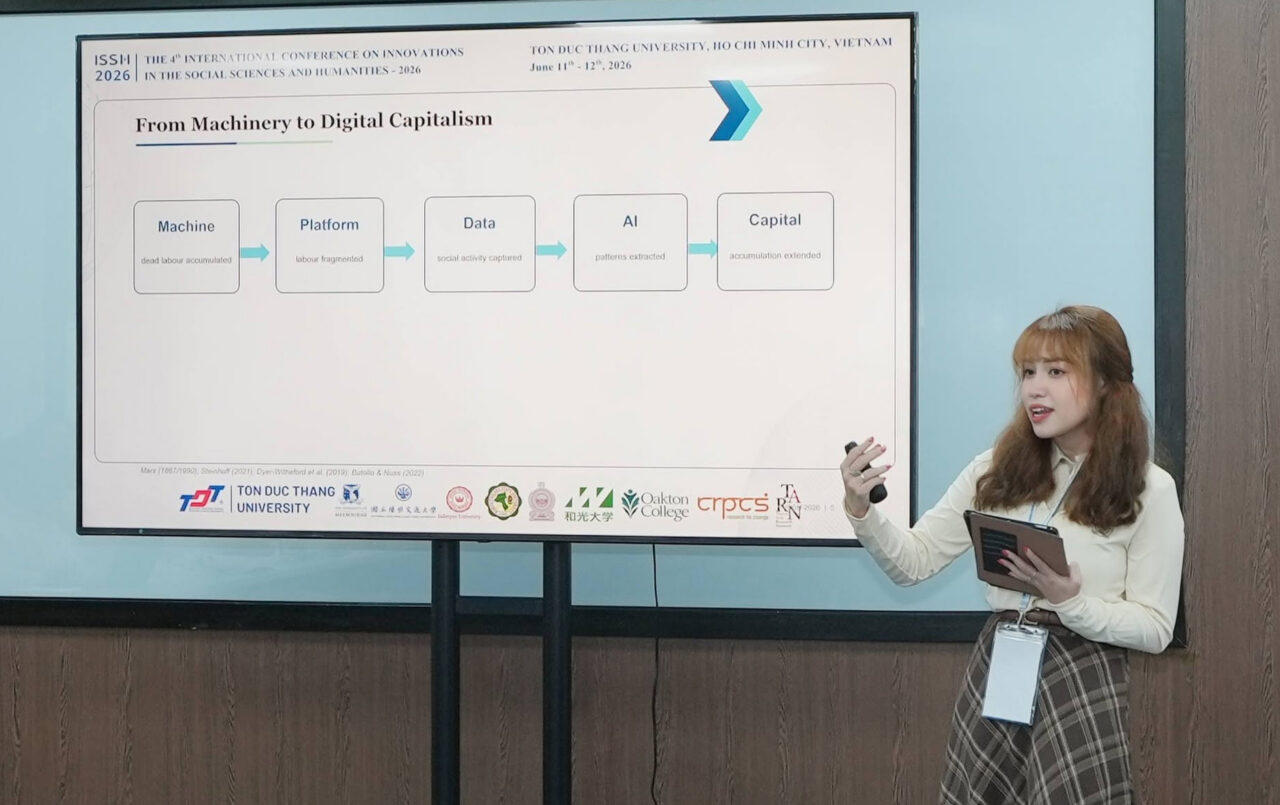
AI therefore does not abolish labour. It reorganises labour and often makes it harder to see. Behind “automated” systems are data labelers, content moderators, programmers, warehouse workers, delivery workers, users, and many other forms of visible and invisible labour. What appears as automation is often the fragmentation of labour into small tasks, spread across platforms and hidden from the user. The more AI appears to work by itself, the more important it becomes to ask what kinds of human labour have been pushed out of sight.[1]
To say that “AI exploits people” may sound dramatic, but it is not precise enough. AI is a product of human labour, social knowledge, infrastructure and accumulated data. The real issue is ownership and control. In the hands of capital, AI becomes a tool to speed up work, monitor workers, cut jobs, collect data, increase productivity and generate profit. The danger is not technology as such. The danger is technology organised through capitalist social relations.
AI as a new form of Marx’s ‘dead labour’
This is also where Marx’s idea of alienated labour remains powerful. Human beings create machines, data, algorithms, platforms and AI. But under capitalism, these products return to face human beings as something separate and powerful. Workers no longer recognise their own collective power in what they have made. They see AI threatening them, platforms ruling them, and algorithms punishing them. Yet what confronts them is still human labour taken over by capital and turned into a power against human beings.
Marx’s image of dead labour remains especially important here. Capital, he writes, is “dead labour” which “lives only by sucking living labour.” This is not just a colourful phrase. It describes the heart of capitalist domination. Capital is accumulated past labour that gains power over present labour. Machines, buildings, software, platforms, patents, data and algorithms are all made possible by human labour and social knowledge. But once they become capital, they stand over living workers as an alien power.
AI, platforms and cloud systems are not outside this relation. They are forms of accumulated labour, knowledge and infrastructure that capital uses to command living labour. Workers are managed by systems they do not control. Users generate data that strengthens platforms they do not own. Social cooperation becomes private property. Human creativity returns as corporate power. This is not the end of Marx’s critique; it is one more reason why that critique is still needed and why it is so powerful.
A Marxist critique must also go beyond the workplace as narrowly understood. AI and digital platforms do not only capture paid labour. They also absorb activities from everyday social life: communication, care, emotional expression, attention, social connection and interaction. These activities are often treated as natural, personal or non-economic, but platforms turn them into data. That data can then be analysed, sold, used for prediction, or fed back into AI systems. In this way, capitalism extends accumulation into the field of social reproduction itself.[2]
Gendered forms of labour
This matters because social reproduction has never been neutral. Care, emotional labour and the maintenance of social relations have historically been pushed onto women and treated as if they were not real labour. Digital capitalism does not escape this history. It often absorbs these gendered forms of activity into data systems while still refusing to recognise them as labour. AI does not only depend on coders and engineers; it also depends on the wider social world that produces language, emotion, care, attention and interaction.
For this reason, the problem is not that society has entered a new feudal order. It has not. The problem is that capitalism has developed new ways to survive. It is more financialised, more dependent on central banks, more data-driven, more platform-based, and more able to manage people through algorithms. These changes matter. They should be studied seriously. But they are still changes within a capitalist system structured by wage labour, private ownership, profit, rent, monopoly, value extraction and alienated labour.
The same applies to the crisis of 2008. Some argue that capitalism died after 2008 because states and central banks had to rescue the system. But this does not prove that a new mode of production had arrived. It shows that capitalism cannot stand on its own in the way it claims. It survives through credit, debt, state rescue, finance, speculation and public money. The crisis exposed capitalism’s dependence on the state and on finance. Capital was not replaced by feudalism; it was rescued and reorganized by its own state.
Categories matter
This point matters politically. If capitalism is declared dead, the target becomes unclear. The enemy becomes “AI,” “the cloud,” “technology,” or “platforms” in the abstract. But these are not independent forces. They are tools and infrastructures organised by capital. The problem is not that machines have betrayed humanity. The problem is that the products of human labour are owned and controlled by capital, and then used to discipline the people who made them possible.
New names can be useful. Terms such as “platform capitalism”, “surveillance capitalism”, “rentier capitalism”, or even “technofeudalism” can highlight important features of the present. But a new name does not mean a new mode of production. If a concept helps show who is being exploited, how labour is hidden, and how power is organised, then it is useful. If it makes capitalism sound more mysterious while moving analysis away from labour and capital, then it hides more than it explains.
The same problem appears in some forms of environmental politics. Too often, critique becomes a matter of personal consumption: boycott this company, avoid that product, live greener, choose the right brand. These actions can have value, but they are not enough. Capitalism does not destroy the environment simply because individuals buy the wrong things. It destroys the environment because production is organised around profit, endless growth, fossil fuels, resource extraction and the transfer of ecological costs onto workers, poor communities and weaker countries.
The central questions are therefore not only about ethical consumption. They are about production and power. Who decides what gets produced? For whom? Under what conditions? Who benefits? Who pays the ecological price? Who controls the process? Without these questions, environmental critique risks becoming moral performance: strong feelings, boycott language and individual guilt, but little challenge to the structure of production.
A more precise account would say that contemporary capitalism has become more stagnant, more financialised, more platform-based, more ecologically destructive and more dependent on illusion. It sill lives because of human labour, human data, human attention, debt, the state, monopoly, rent, and the products of human beings returning to dominate human beings. These are not signs that Marx has become outdated. They are signs that the Marxist critique of capital remains necessary.
Technofeudalism is a striking image. It captures the feeling of being ruled by Big Tech. But as a theory that claims capitalism has been replaced, it goes too far. Big Tech may resemble a digital lord. The platform may resemble a private domain. The algorithm may feel like an invisible ruler. But beneath this appearance, the old relations remain: capital against labour, dead labour dominating living labour, and human beings ruled by the products of their own work.
The task is not to look for a dramatic name for every new form of domination. The task is to understand how capital changes while preserving its basic power over labour. The cloud may look new, but the social relation beneath it is still recognisable. Capitalism has changed its clothes, moved into new infrastructures, and found new ways to survive.
Sally Ly is a PhD student in sociology at York University, Canada, and a member of Vietnam Marxists.
Footnotes
[1] This paragraph draws on the argument developed in Ly, Sally. “From Machinery to Social Reproduction: AI, Data, and Gendered Labour.” Unpublished manuscript, Department of Sociology, York University.
[2] Ly, Sally. “From Machinery to Social Reproduction: AI, Data, and Gendered Labour.” Unpublished manuscript, Department of Sociology, York University.