
Brendan Laws from Socialists in Schools and Victorian Socialists replies to Lucy Honan’s letter alleging ‘scab’ behaviour.
Lucy Honan’s letter (9 September 2026) to the Labor Tribune [see at bottom of article] is a dishonest and unprincipled account of events related to the Australian Education Union’s (AEU) industrial campaign. Her characterisation of those who didn’t support the tiny, isolated actions organised by Fight the Crisis as “scabs” is ridiculous.
Throughout Term 2 (April-June), the AEU Victoria leadership stalled and demobilised our campaign for a new agreement while they waited for an offer from the Victorian Labor government. Union members, buoyed by the first strike in 13 years and rebuilding their sub-branches (school-based union chapters) through the campaign, were tired of waiting. Leftists in the AEU campaigned for members to vote against the offer endorsed by officials and, for the first time in the history of state-wide public school agreements, a majority of members rejected it. The momentum from this victory was carried into a second no vote and a second strike in July, alongside two improved offers from the government.
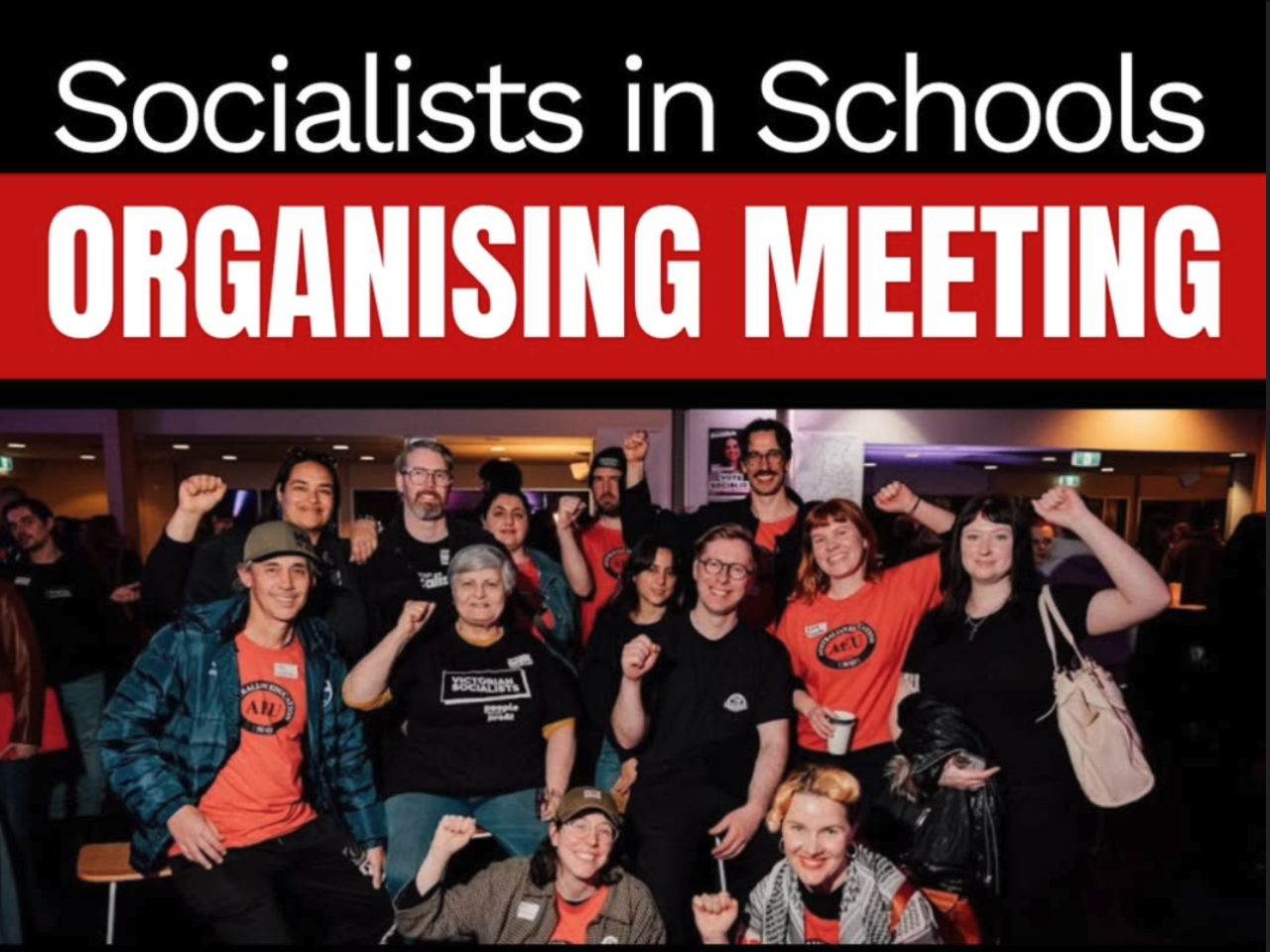
Socialists in Schools was the biggest and arguably the most effective of the forces involved in the Vote No campaign. We had countless conversations with workmates and teachers across the state, pumped out materials that armed rank-and-file members with arguments against the bad offer, cohered a network of fighters at every sub-branch and regional meeting we could, and galvanised the confidence in workers to fight back against the union officials’ undermining strategy. Voting no and demanding a better deal became synonymous with socialist politics for many school staff, because of how fervently we took on this fight.
In this context, Fight the Crisis proposed a strike date for August 4th and encouraged sub-branches to pass motions to support striking on this date.
However, these motions were vague to the point of dishonesty. They said, “[s]hould the Allan government fail to make this satisfactory offer by 30 July, this sub branch commits to a 24 hour stop work action and rally on 4 August,” without clarifying the question of this being protected or unprotected action. Many members who considered these motions were led to believe this was part of a pressure campaign for union officials to call another strike, rather than a commitment to strike regardless of what the officials endorsed.
Fight the Crisis members defended the ambiguity of this “strike” call by talking out of both sides of their mouth. They stated it would be protected under the various work bans members were permitted to take – and simultaneously – that the state government wasn’t in a position to punish school staff for breaking bad laws.
Judging by the rest of their motion, Fight the Crisis Branch Councillors planned to take a list of these schools to the Branch Council on 31 July to “force the hand of the leadership” to call a strike on this date, further muddying the waters on the question of unprotected action. As 4 August approached, both management and union leadership declared that any strike on the date would be legally unprotected, and many staff felt they had been tricked into voting for something without the implications being explained.
As members and supporters of the Socialist Party, we are not strangers to unprotected action. We have many comrades who have helped lead legally unprotected strikes, from retail walkouts to warehouse shut-downs to the only strikes in solidarity with Palestine to happen in Australia. There should be a lot more of these sorts of strikes in defiance of Australia’s appalling anti-strike laws, but they need to be organised seriously.
All serious approaches to building unions and winning campaigns should involve being honest about your political and industrial strategy. “Never lie to the class” is a timeless piece of socialist wisdom. If you want people to take actions which are potentially legally unprotected, you need open discussion about the strengths and utility of the action, and to prepare them for the possible consequences.
Fight the Crisis did the opposite, but the media still picked up the story. There ended up being a distorted sense of importance and momentum around 4 August, but reality was reflected by the numbers who participated.
Nothing actually happened on the date. In the two weeks after, 25 to 30 members handed out leaflets as part of work bans – spread across three schools on three separate days. For context, the Victorian branch of the AEU has a membership of 65,000 across 1,600 schools in Victoria. The majority of schools who passed motions about the “strike” did not participate, nor did the majority of Fight the Crisis members. In fact, at Lucy Honan’s school, it appears that only seven out of more than four hundred staff (fewer than 2%) participated.
The push for 4 August also suffered from a decline in momentum of the campaign overall. The strike on 23 July was an amazing day; tens of thousands of AEU members went on the strike we earned by voting against bad offers twice. This also released much of the pressure from dissatisfied members demanding immediate action, because they had just taken it. There was a distinctive lull across the industry after the strike, yet Fight the Crisis failed to adjust its strategy.
Individual sub-branches taking actions is fine and, if planned seriously, can be quite effective. In fact, Socialists in Schools helped the Keilor Downs College sub-branch organise a 150-strong rally at Ben Carroll’s office on 17 July, with representatives from more than 20 schools. This kept the campaign in the news and set an important precedent for rank-and-file action independent of AEU officials.
Small groups of workers using the union’s work bans to campaign is also fine, but calling these actions a “strike” is simply untrue.
However, to denounce workers (including more than 98% of Honan’s own workmates) who did not engage in Fight the Crisis’s tiny, isolated actions, as “scabs” is absurd and unprincipled – especially given that these actions were planned during a downswing and organised in a dishonest manner. Lucy Honan’s letter represents a disrespectful attack on the vast majority of AEU members. Her approach is toxic and antithetical to constructive work among union militants.
Socialists in Schools members are proud of the role we played in galvanising our sub-branches in this year’s industrial campaign. We were a driving force of opposition to the leaders who wanted to wrap up the campaign prematurely and we cohered an effective openly socialist grouping within the AEU (a much needed project for all unions in this political moment).
We welcome other socialists and supporters to get involved with us, and we look forward to continued work with unionists from other political traditions who fight for the public education that working-class communities deserve. However, we have little time for people acting dishonestly in their organising strategies and putting effort into baseless, unprincipled attacks to posture. The task in front of us is too important for that garbage.
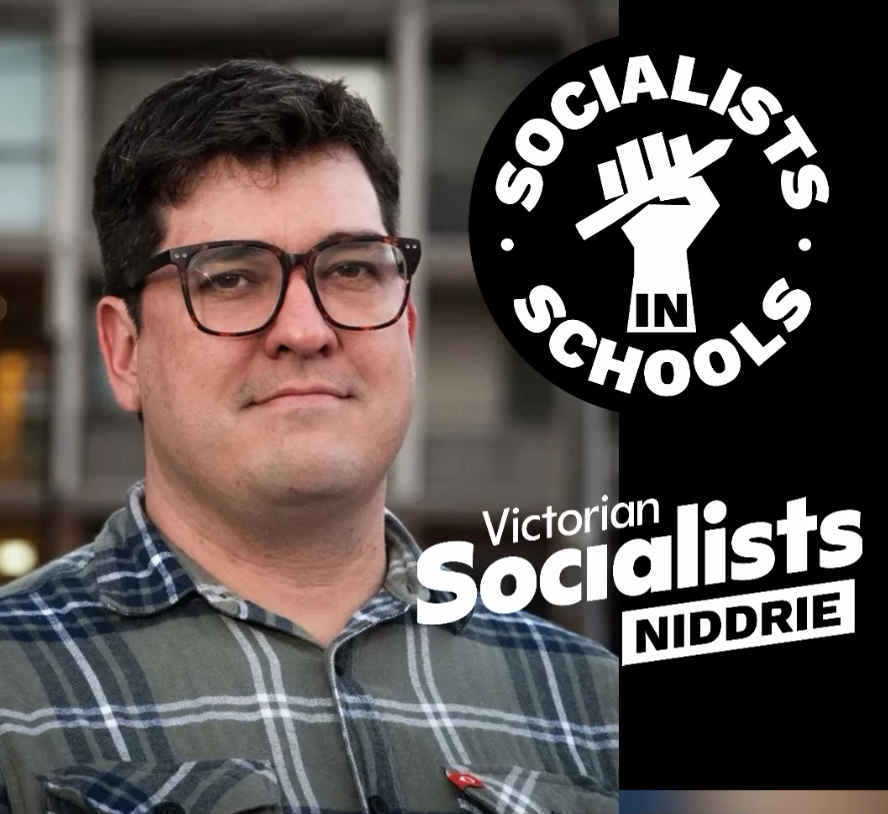
Brendan Laws is a high school teacher and rank-and-file AEU member. He helped start Socialists in Schools and is part of Socialist Alternative. Brendan is also running as the Victorian Socialists candidate for the Niddrie electorate, taking on former Education Minister and current Premier Ben Carroll in the Victorian State Election.
Reprinted from Letters to the Editor, 9 September 2026
Victorian Socialists ‘scabbed’ during AEU fight
Hamish McPherson is right to argue we need a bigger vision for public education (‘Victorian AEU: power and limits of militant unionism’, Labor Tribune 30 August 2026). But he missed a significant dynamic in the campaign (which also distinguished Socialists in Schools from Fight the Crisis), which was the development of the power that might win a radical public education program.
After AEU members rejected the in-principle agreement that was recommended to us by our leaders, AEU council voted against calling another strike. Our rank-and-file group, Fight the Crisis, organised for sub-branches (the union at the school level) to call industrial action, from the bottom up, school by school, and then through regions.
This bottom-up momentum and initiative to set a date and commit to strike action (not just call on our leaders to call us out on strike) was the reason AEU council finally called the second statewide 24-hour strike on July 23: they did not want to be left behind the rank-and-file momentum that we were building.
The school sub-branches that committed to striking on 4 August, before the officials were willing to call the second strike, are the ones who broke through. When it boils down to it, they stood against the fear campaigning and rejected the message that all union initiatives must come from the top to be valid. Those unionists are the ones who won us the halving of meetings, the Education Support Staff pay increases included in their base salary and the overall pay increases. And the school sub-branches who committed independently to strike action a second time after the 23 July strike was called are the ones who won everyone in the department a $2000 bonus.
The transformation of the education system more fully is going to need that kind of direct, bold democratic industrial action at a workplace level – much more of it, and much bolder – but we have now seen its embryonic redevelopment.
There is a lot stacked against us in growing from the bottom up: anti-worker laws, years of passivity and lost traditions. One thing that should not stand in our way – but did – was the actions of Victorian Socialists.
Socialist in Schools (the Victorian Socialists caucus), mobilised to oppose members from directly democratically calling stop work action. Socialists in Schools members mobilised to stop the Inner City region from directly calling industrial action. Their members opposed – and then scabbed – at local sub-branch stopwork actions.
They bought into and participated in the lies and fear-mongering campaign online, destructively misrepresenting and overplaying the already oppressive powers of the Fair Work Commission.
Despite their alarmism, not one of us who took locally called stopwork action were fined. Union officials, the Labor government, the Department of Education and the principals all organised to terrify us about the risks of using our own power. I am still shocked that Socialists in Schools joined their efforts.
There is a huge amount of work to do to build up our rank-and-file confidence, democratic traditions and power. But we have had a taste of it now, and there is nothing like it: electoral campaigning is truly a pale reflection of it.
No matter how radical a party’s education policy, an electoral strategy that overshadows an industrial strategy is not the path to win it. The way forward to a more expansive transformation of schools and in society is building rank-and-file workers’ confidence and power.
Lucy Honan, Melbourne
Organising Committee member of Fight the Crisis, AEU Victoria state councillor and Solidarity member
9 September 2026