

David Lockwood examines the issues raised by Tabitha Lean’s article on her expulsion from the SCA caucus of SA Socialists.
Last month we published an article by Tabitha Lean, a member of the South Australian Socialists, about her expulsion from the Socialist Community Alliance (SCA) caucus (within the SA Socialists) and the issues that gave rise to it. It took up the question of a caucus of First Nations members within the Socialists. Her expulsion was based on what the SCA described (in their motion to expel) as a violation of “the democratic centralist norms that are central to Marxist organisations”.
In relation to these events, I want to look, firstly, at the question of caucuses of the oppressed and secondly what democratic centralism is – and what it isn’t.
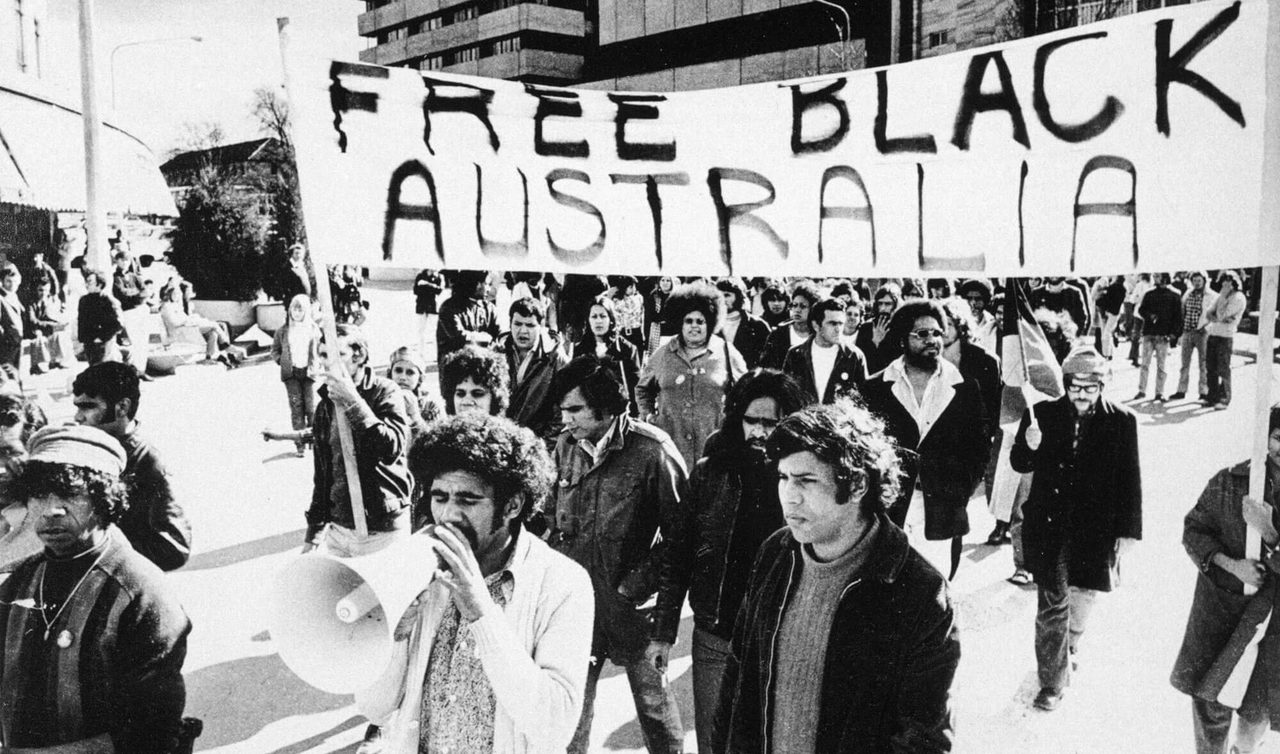
Lean argues that Aboriginal nations are “nations with a political authority of their own” because “our sovereignty preceded this state”. Therefore, she is in favour of “autonomous organising by oppressed peoples, including Aboriginal and Torres Strait Islander peoples exercising our inherent right to self-determination”. How this should be done was suggested at the NSW Socialists’ founding conference, where (Lean writes) “Aboriginal members proposed a self-determining working group with authority over Aboriginal affairs within the party”. This was described by the Labor Tribune reporter at the conference (Clarrie Lewis) as “a principled demand for Aboriginal control over Aboriginal affairs within the party”. (‘NSW Socialists Founding Conference’, Labor Tribune, 2 February 2026).
But should First Nations comrades exercise “control over Aboriginal affairs within the party” solely on the basis of being First Nations comrades? Yes, says Lean, and goes on to argue that the party should respect “the leadership, autonomy and self-determination of the communities most directly affected”. So, in each area of struggle, oppressed groups will take the lead, autonomously and exercising self-determination.
In this model of organisation, there is scarcely a need for a party at all – just a collection of the oppressed, all struggling against their own particular type of oppression. The working class would find itself as one oppressed group among many.
This is where we fundamentally disagree. Our model argues for a party first – and within that there can be room for all of the oppressed, grouped autonomously if they wish, but bound by adherence to the party program overall. Of course, a political party should respect the experiences of oppressed peoples and find ways to give them voice, but arrive at political conclusions collectively and democratically.
For the First Nations peoples, says Lean, the case is particularly strong and obvious because they are not just another oppressed group: “Aboriginal nations [are] nations with political authority of our own.”
I would suggest that this is wrong. An Aboriginal nation (or nations) may have preceded colonisation (“our sovereignty preceded this state”), but it did not survive it. There is no such nation today, nor any realistic possibility of it exercising self-determination, in the Marxist sense. Lean denounces the idea of “Australia as the unquestioned political subject [and] Aboriginal people as one oppressed group within it”. But that is the reality.
To put things bluntly: First Nations comrades have no more right to exert authority in this area than any other comrade simply because of their First Nation origins. The route to Aboriginal liberation lies through a communist revolution – not through every oppressed group organising their own ‘liberation’ and demanding that others accede to their rules.
None of this is to argue that comrades should not group together (in caucuses, factions, self-determining working groups or whatever) in order to develop political positions, argue for them and popularise them.
Developing policy on questions of oppressed people and minorities should be the collective responsibility of the whole party. Women and men should be involved in developing our positions on women’s oppression. It shouldn’t be ‘outsourced’ as ‘women’s work’.
The same for First Nations policy. Quite rightly, Aboriginal people push back that the cultural labour of developing policy on First Nations matters in non-Aboriginal organisations is often dumped on them.
Our approach rejects the liberal supplication that identity should be the determining factor in authority over such policy. We favour a democratic and collective approach to developing program, policy and campaigns in support of the oppressed under capitalist society. This must be owned by all comrades in the organisation.
That is because the Marxist program is cemented in the idea that for the working class (the great majority of contemporary society) to become the ruling class in a socialist society, it must champion the democratic rights of all oppressed people as part of the general struggle for the liberation of all.
As for caucuses within left organisations, freedom of association, no vetoes and no special statuses are essential as organisational principles promoting universal involvement and self-government. That implies that there should be the right for oppressed groups to form caucuses; but that these caucuses should have no official standing, and no more rights than any other faction, because that is what, in substance, they are.
Further, a caucus speaks only for those it organises or who are prepared to vote for its proposals. A women’s caucus does not speak for all women; a First Nations caucus does not speak for all First Nations people. Their weight would come from the numbers they organise and the persuasiveness of their proposals to the wider general membership.
Democratic centralism is not what most lefts says it is
Which brings me to the concept of democratic centralism.
Comrade Lean relates that after the Socialist Party National Conference, she criticised the Socialists’ decision on First Nations organisation and one of their leaders, Omar Hassan. At that point, she says, “Socialist Community Action, my caucus in South Australia, then treated my public criticism as grounds to expel me”. Socialist Community Action says that “the posting of this critique violated the democratic centralist norms that are central to Marxist organisations … upholding the party line externally while criticising and struggling for change within”.
Leaving aside the fact that the Socialist Party is neither explicitly Marxist or organised along the lines of democratic centralism, this characterisation is an oft repeated but historically unsupported view of what democratic centralism means in the Marxist tradition. The idea is that, while maintaining a steely wall of Bolshevik unity towards the outside world, left organisations should conduct discussion and debate in secret on the onside. It seems to have originated in Russia but was only ever really practiced by Russian Marxists in two periods – in the period of repression following the revolution of 1905 and from the Civil War in the 1920s (after which it remained in force, as a state rather than a party policy).[1]
In 1905, the term emerged from a discussion about whether Party committees should all be democratically elected or not in the somewhat more liberal conditions forced on the Tsarist regime by the 1905 revolution. It was generally agreed that they should and the scheme was christened ‘democratic centralism’, at first, by the Menshevik faction. But there was no comment here on the expression of dissenting ideas outside the Party – for the simple reason that this was such a common practice in the parties of the Second International that it would have been regarded as bizarre to try to prevent it.
If you consult the works of either Kautsky or Lenin – or any other significant leader of these parties – you will find them littered with comment, criticism, support for and attacks on the positions of their fellow socialists. The general acceptance of the Marxist program was regarded as discipline enough to maintain the party – regardless of disagreements on strategy, tactic or formulation.
In Russia, once the Bolsheviks took state power in 1917 that changed. In what admittedly were extreme civil war conditions at first other parties were silenced. But for a while, open and publicised dissent within the (now renamed) Communist Party remained – to which the debate on peace with Germany attests. Inevitably, however, the policy aimed at other parties invaded the Communist Party itself. In 1921 factions were outlawed, supposedly temporarily, but this ban remained permanent. Yet dissenting voices, at least within the leadership, were still heard, more and more quietly – until finally crushed by the Stalinist regime.
Unfortunately, it is that version of ‘democratic centralism’ – unity on the outside, secret debate within – that has been inherited by many a toytown Bolshevik sect since then. This is an appeal to the caucus not to be another. The Socialists seem to be avoiding that fate thus far – and we appeal to the Socialist Community Action caucus to do likewise. Debates on the left should be robustly conducted in public – without the threat of expulsion hanging over them. Let’s remember the real traditions of the Marxist movement – and emulate them.
[1] This account relies on Lars T, Lih, ‘Democratic centralism: Fortunes of a formula,’ Weekly Worker 957 11 April 2013.