

After all, it’s our gas, gas, gas. Marcus Strom introduces two contributions to the debate on natural gas policy.
Introduction
We go to print just a day or so before Jim Chalmers hands down his fourth budget for the Albanese Labor government.
Through the smoke and mirrors will be a fiscal document for the safe management of capitalism, even as the global economy enters headwinds that could shake capital accumulation into another generalised crisis.
We will have more on the budget in the next issue of Labor Tribune. Today we publish two contributions (below) on the question of gas. One from Josh who is in Shellharbour Barrack Heights ALP; the other from one of our regular correspondents, Abraham David in Sydney.
With the US-Israel war on Iran feeding warflation and creating shocks through energy markets, front of mind for many labour movement activists has been the debate over Australia’s natural gas reserves and production.
Independent senator David Pocock has proposed a 25% tax on exports of natural gas. Reframing this in a populist format, Pocock has pointed out that the government receives more from tax on beer than it does for taxes on gas.
Last week, Missy Higgins spoke out on this at the Bob Hawke Leisure Centre in the heart of Anthony Albanese’s electorate in Sydney.
Labor backbencher Ed Husic has backed the proposal, saying failure to implement the tax on gas exports would be a lost opportunity to increase government revenue.
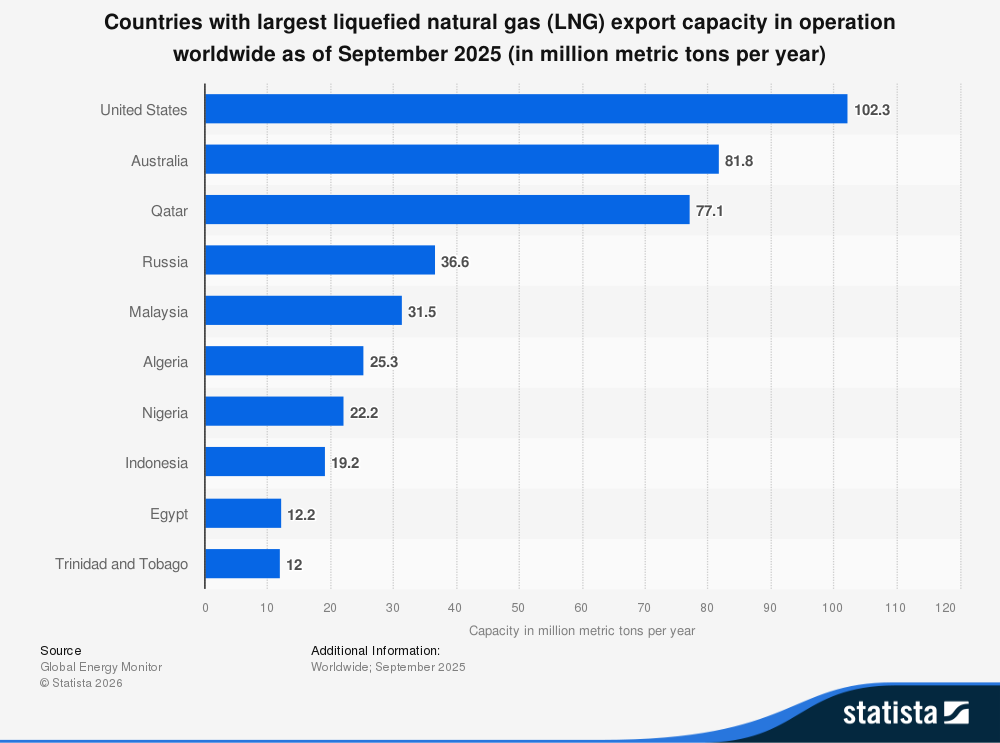
While Australia is a significant exporter of gas (in the top three alongside the US and Qatar), it is ranked twenty-third for natural gas reserves, with just 1.1%.
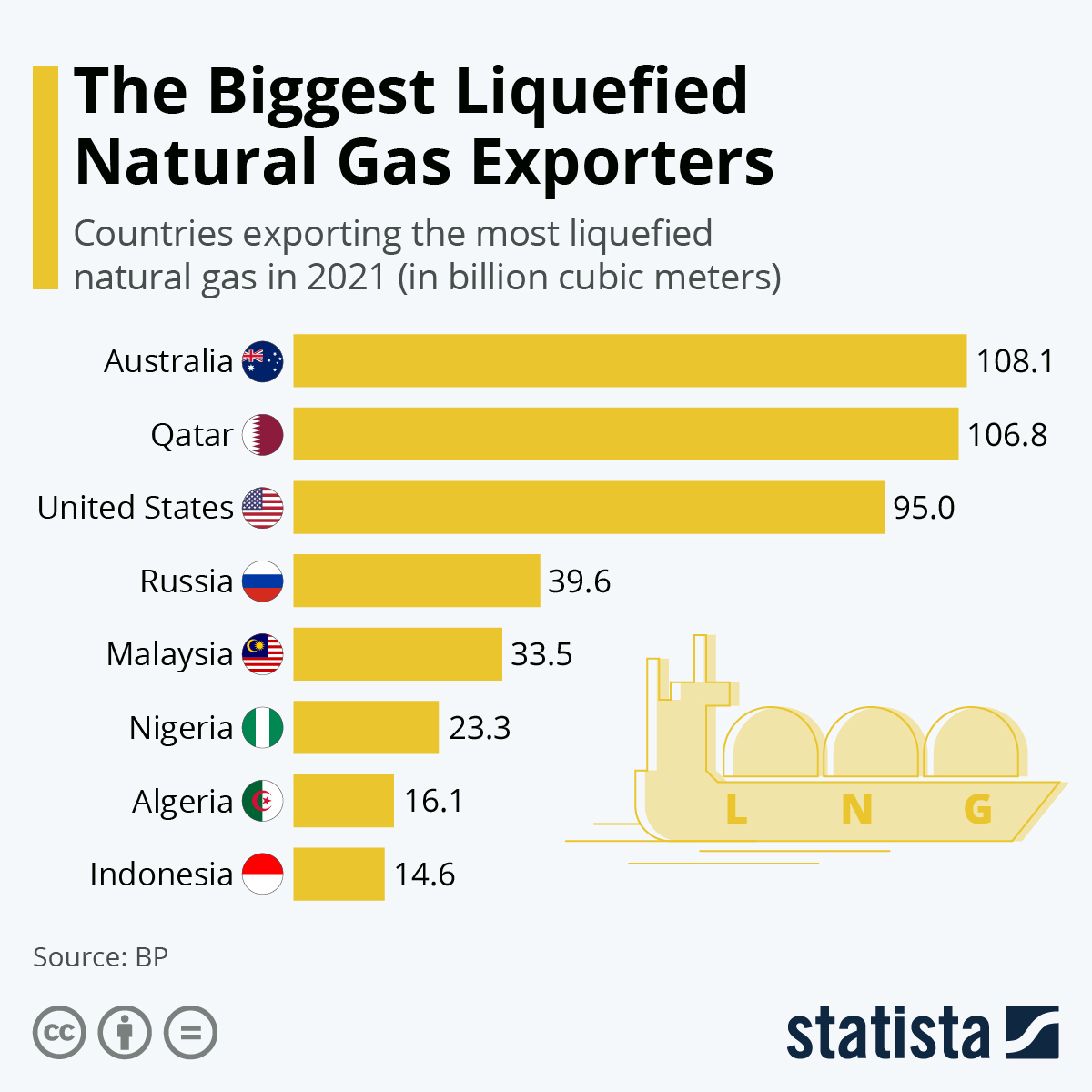
Significantly, Australia is a major provider of gas to Japan, South Korea and China. Continued supply of this gas to Japan would no doubt have been a topic of conversation between Albanese and Japanese Prime Minister Sanae Takaichi during her visit to Australia last week.
According to the International Energy Agency, natural gas supplies 23% of the world’s total energy supply, a reminder that global capitalism remains hooked on fossil fuels, despite all the renewables rhetoric.
Gas tax – a band-aid, not a solution
While we would welcome whacking a tax on the private companies siphoning off the gas from our common wealth for their private profit, it would be barely a band-aid solution.
Nonetheless, it appears the Albanese government doesn’t even have the guts to apply a band-aid, instead opting for a domestic gas reserve policy, forcing gas producers on the east coast to supply 20% of exports for domestic use. (Western Australia already has a domestic gas reserve policy.)
All these proposals are woefully inadequate for the task at hand. A working class government would need to take collective ownership of all our natural resources; and we’d no doubt need a democratic-republic constitution to do so. Handing over natural monopolies for private corporations to feed off makes no sense.
Instead, all our mineral wealth should be owned by we, the people. And the wealth generated should be designed to help accelerate the transition to renewable energies and invested in the development of a sustainable circular economy.
Critically, this transition needs to be coordinated with a global transition to renewable energy. There is no national path to achieving this – that is why Labor Tribune supports not just the establishment of a worker-led government in Australia, but a global economy that can transition as quickly as possible to socialism, which can only be international and democratic.
We publish two contributions below. Labor Tribune supports debate across the movement – but we are not in favour of laissez-faire approach to ideas.
In the opinion of the editorial board, both contributions have merit. Josh from Shellharbour in particular highlights the ownership question that is missing from the current debate.
Abraham David’s arguments, while also pointing to ownership, fail to raise the question of which class is in control, instead framing it about ‘national’ ownership. Without a socialist and working-class transformation of Australia, national control just means state control on behalf of the Australian capitalist class, and gets us no closer to socialism.
Extraction is the key: Josh Leonard
Should or shouldn’t we tax our gas exports has been a large part of political discourse recently. All proponents and (nearly) all opponents of it are all founded on ideas of liberal economics. This, however, is where the issue lies, liberalism, and the solution that is never mentioned, is socialism.
Proponents of the 25% export tax argue on a sound principle that the resources belong to the people of Australia and that we should have a bigger share of the value generated by export. This revenue raised could be used to help fund Medicare, the NDIS and increased Centrelink payments. Commonly cited as examples of these are the petro-states of the Middle East, and Norway.
The Nordic Model, and Norway’s sovereign wealth fund are often highlighted by small “l” liberals as the peak of the social-democrat model, and something to aspire to. This is despite the Nordic nations experiencing the same unwinding of workers’ rights and social benefits found elsewhere in the imperial core as capital seeks more places to extract surplus value from, as the Global South reaches peak exploitation.
Opponents of the export tax come in more variations. One opponent, prominent Australian YouTuber and podcaster, “Mr M History”, argues against the export tax. He says that using a tax on gas to fund your social programs makes little sense when you want to phase out fossil fuels and still have underlying structural deficits in your budget.
Others are currently opposed due to the potential to undermine efforts to secure fuel during the US-Israel attack on Iran and the ongoing fuel crisis it has caused.
Additionally, there are those in the ALP who are mentally scarred from the results of any challenge to the resource extraction industry throughout the party’s history. They just want to carry on without rocking the boat so the party can achieve its aims of Future Made in Australia, the roll out of the renewable grid, and protecting the Same Job, Same Pay, and industry-wide bargaining laws which are now gaining success after Fair Work Commission cases and Federal Court Challenges.
Others say we should be looking at increasing the Petroleum Rent Resources Tax and making it a consistent rate across the country instead
These positions are reasoned and valid in liberal economics. Norway has become very wealthy from its petroleum reserves. Norway’s citizens enjoy one of the highest qualities of life in the world and consistently rate as one of the happiest peoples on Earth. Petro-states like the UAE and Saudi Arabia are desperately trying to diversify their economy, investing in super cities such as The Line or Neom, or tourism infrastructure like the Burj Khalifa, or the Palm Islands Archipelago as demand for oil will eventually decrease with more focussed efforts on tackling climate change and the rise of EVs.
The simple solution to this debate is not what to do with the resource itself, but their extraction. While all these arguments are based on the ownership of our resources and what to do with them, none of them are based on who owns the extraction.
Norway’s state owns about two-thirds of the country’s largest oil producer. Abu Dhabi National Oil Company has a near monopoly on extraction. The Australian people will never be able to get a fair value of their extracted resources while the mechanisms of extraction remain in private hands. Once the means of extraction belong to us, then, and only then, will the debate about how to use our resources will have any meaning.
Josh Leonard, Shellharbour Barrack Heights ALP
Roll over and tickle my tummy: Abraham David
The thinking of Australian governments on foreign investment throughout most of its history has been a dependency mentality by believing we are lucky to have foreign investors coming to develop our abundant natural resources. This stems partly from the colonial history of Australia, where the British founded a colony with their interests being the primary consideration, the original inhabitants of Australia were an historical afterthought as Australia’s wealth, from the gold rushes onwards, became more and more valuable.
Australia has never seen its strategic advantages being used to get a good deal for the Australian people. Seeing ourselves in the role of a childlike dependency, wanting foreign investors to come to develop our country and getting the crumbs off the table.
This comes from the historic colonial psychology of dependence; first on England, joined after the Second World War by the USA.
Always seeing ourselves as lucky to have such great and powerful friends who would look after our interests. So long as we behaved ourselves and did what we were told, as a small European offshoot surrounded by a complex and different world of Asia. If we disobeyed or asked for too much there was always the fear of parental abandonment.
Foreign capital, which has largely been sourced from Britain and America, particularly in the resources sector, has deals in Australia that they can get nowhere else in the world.
Very few countries that are resource exporters allow majority ownership of non-renewable resources. In the world of oil and gas, especially, nearly every producer in the world, from Norway to the Gulf Arabs to Southeast Asia, allows such an important resource to be outside the nation state.
These assets are not just there for profits but are of vital importance to a country’s security.
Beyond energy, other minerals like iron ore, copper and gold have produced massive profits. In the case of iron ore, where Australia is the world’s largest exporter, with mining production costs at $30 a tonne, even at $100 a tonne, large profits are made. At the peak, iron ore was sold for nearly $300 a tonne, achieving massive profits.
While Australia has gained some benefits, the vast majority of the wealth went to the USA and the UK, which are the dominant investors in these areas.
In most cases, the markets for Australia’s resources were in North Asia and increasingly Southeast Asia and South Asia. These countries need Australian resources to keep their economies growing, making our relationship with Asia a necessity.
Every attempt to access Australia’s wealth potential, such as the Whitlam government’s (1972-1975) Buying Back The Farm, the resource super-profits tax of the Rudd government, or the current campaign to tax gas exports, has been met with screams of anger if we alter the profitable status quo for the mining companies. They will run away and leave us, and as a result, we will become a poor country.
We cannot dare frighten the horses. We must be like a little doggy who rolls over and wants their tummy tickled; nobody else will.
This means understanding what our advantages are and developing a policy and a strategy to make sure our interests are looked after. This is not rocket science. We should put Australian capital, which is held in our pension funds, to work developing the country for the benefit of the Australian people and being a mutual trading partner with those countries that need our natural resources, sharing in the upside and taking risks together.
Can Australia find the political will in a rapidly changing world to make sure that the wealth of our resources is used to provide decent opportunities for the Australian people?
This role of the nation state is to make sure that the residents of a country are looked after. Colonialism is increasingly becoming a thing of the past. Australia must make sure that the colonial past is never relived.
Abraham David, Sydney